Doing this work at the same time as the walls? Our siding services in Calgary and Airdrie page compares James Hardie, vinyl and metal side by side, and explains what a complete exterior quote covers — the access and setup are paid for once when the jobs run together.
The assembly
What Soffit and Fascia Do, and Why They Fail First
Soffit and fascia are the parts of a house nobody looks at until something is wrong with them. This page is about repairing and replacing them. If you are looking at the whole exterior rather than one part of it, start with our siding services in Calgary and Airdrie.
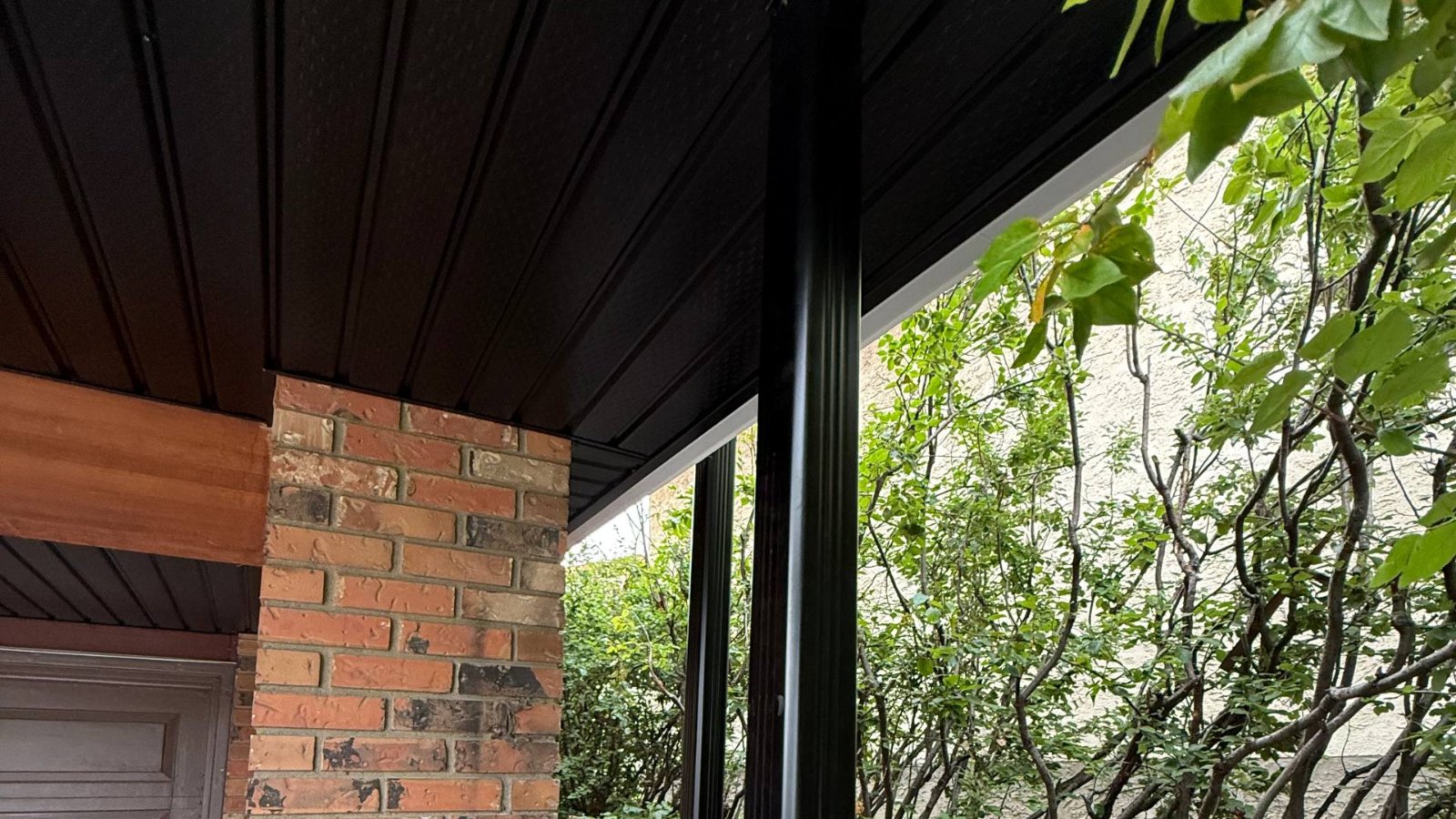
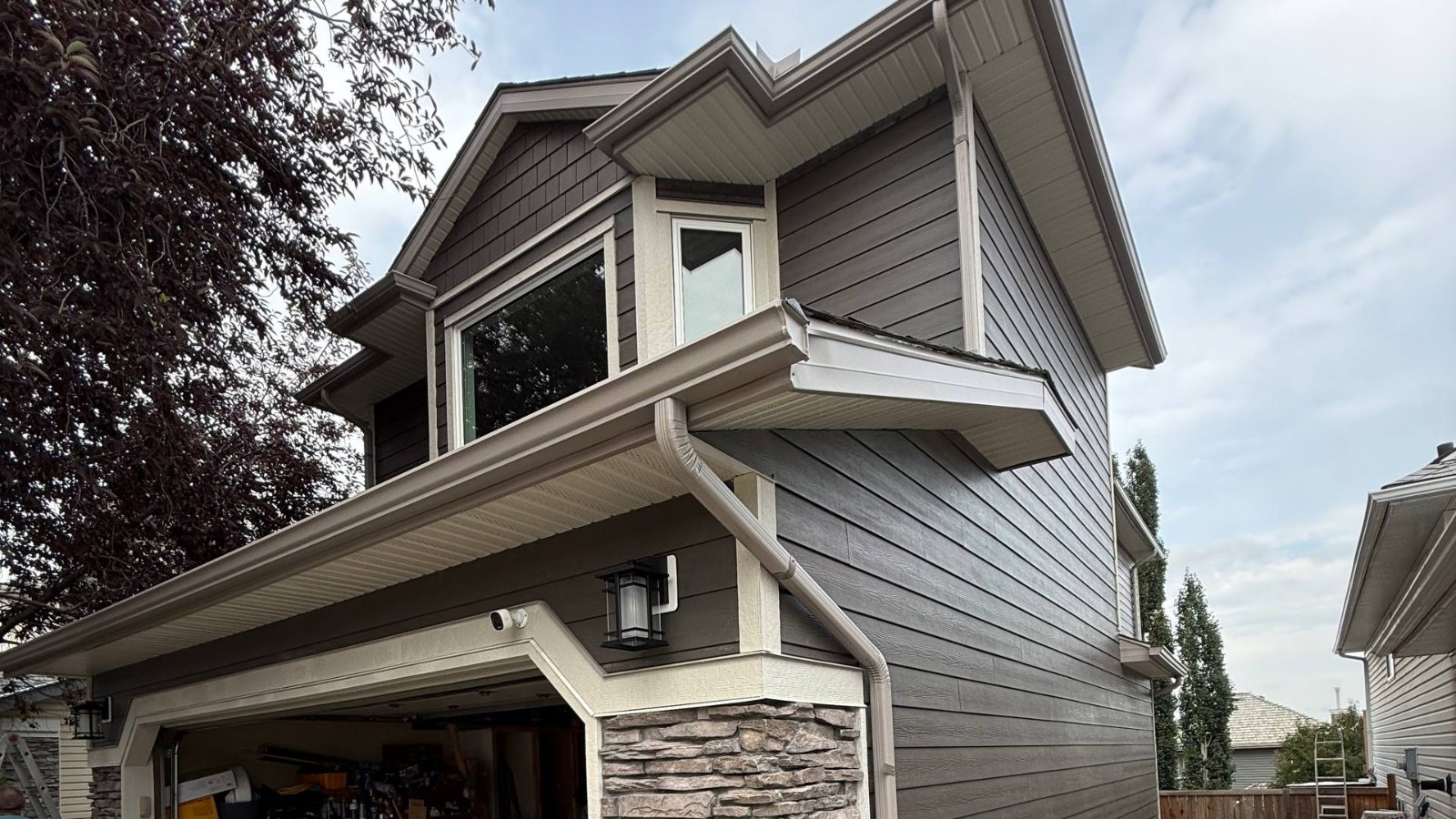
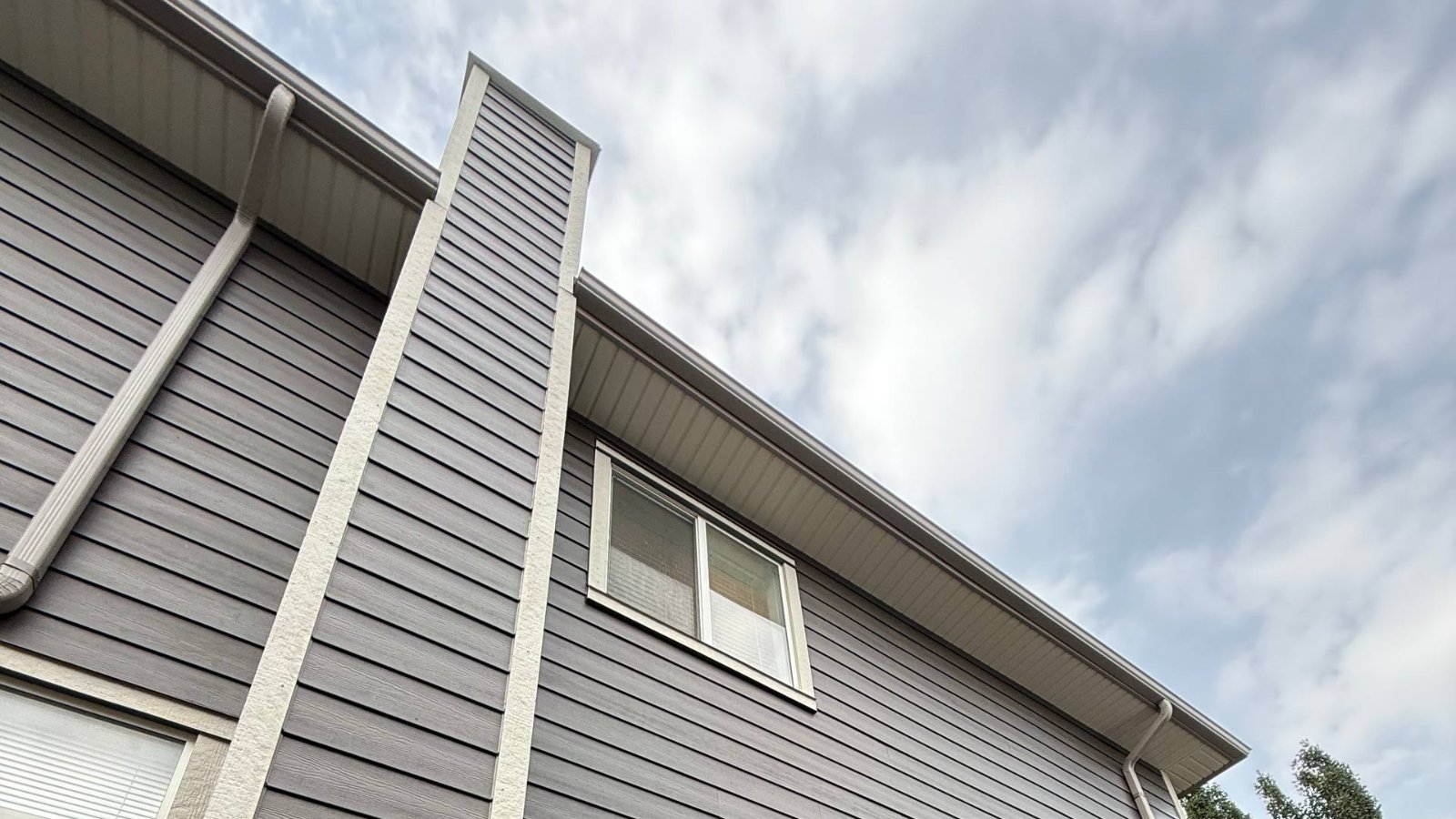
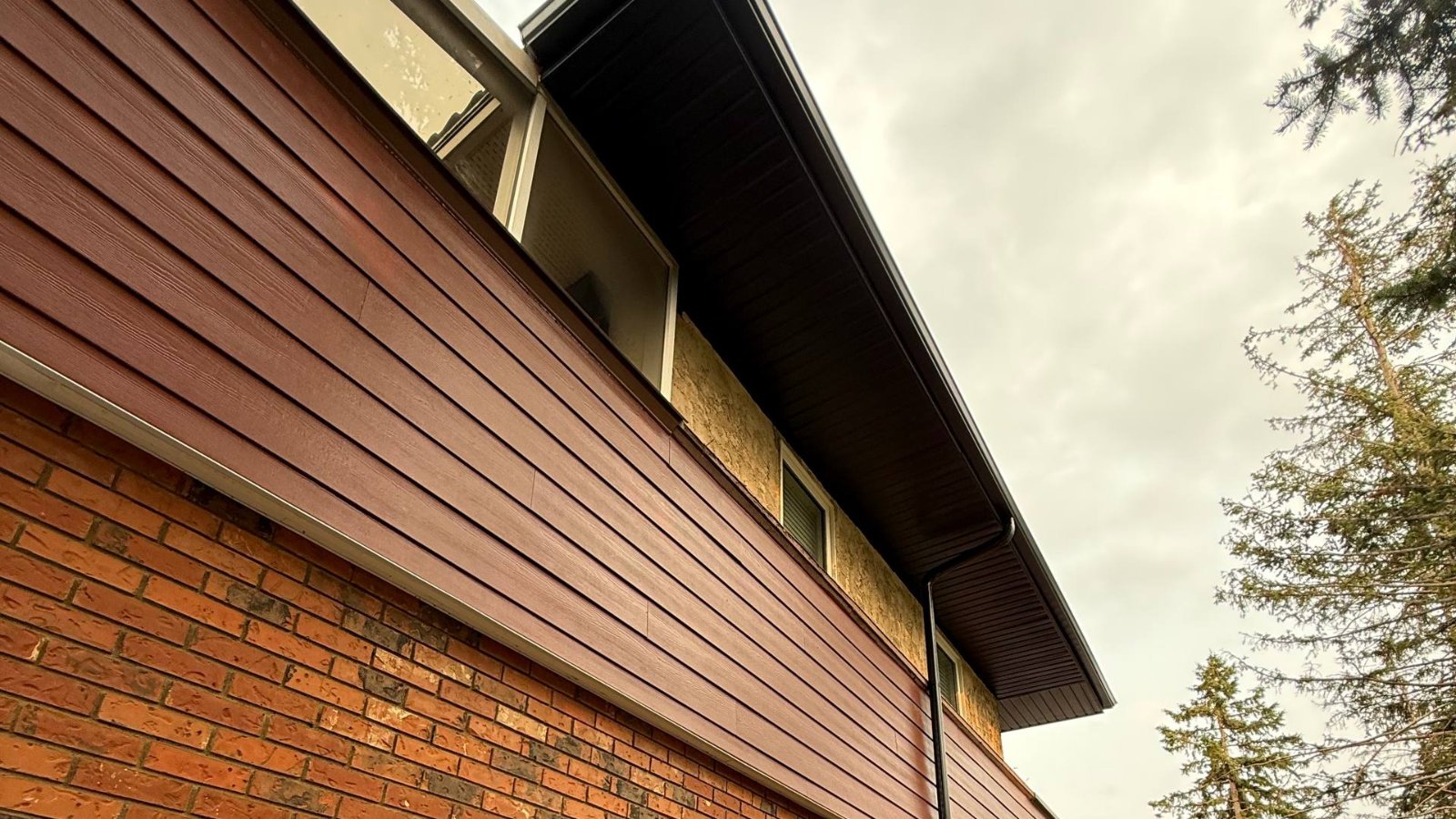
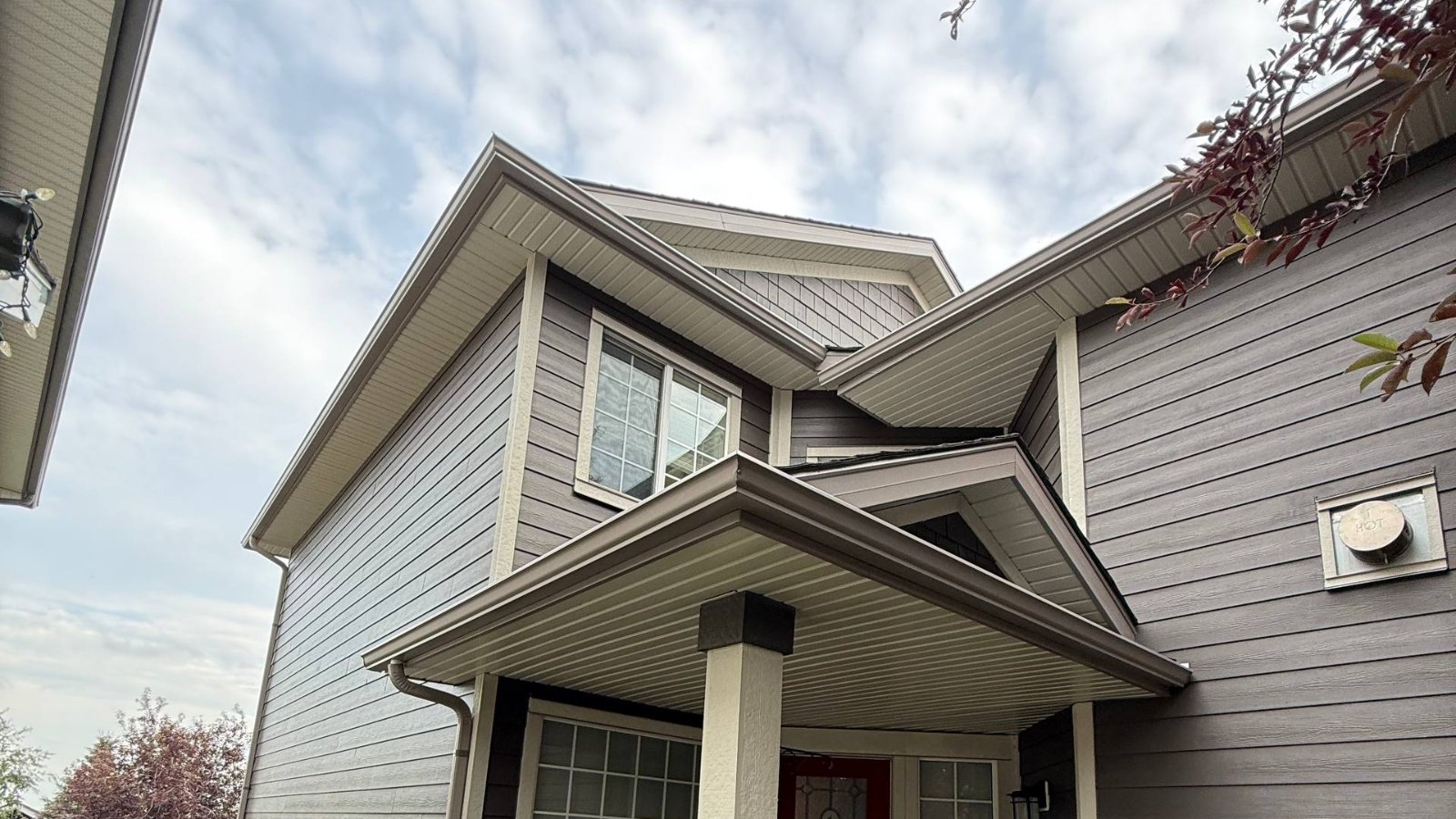
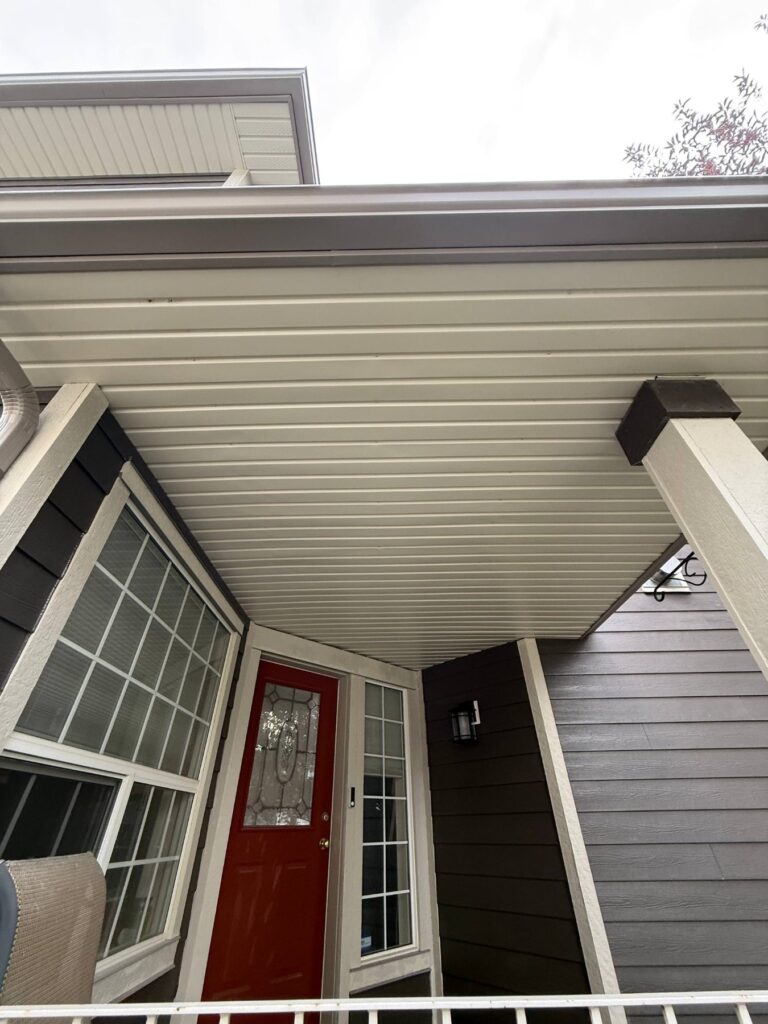
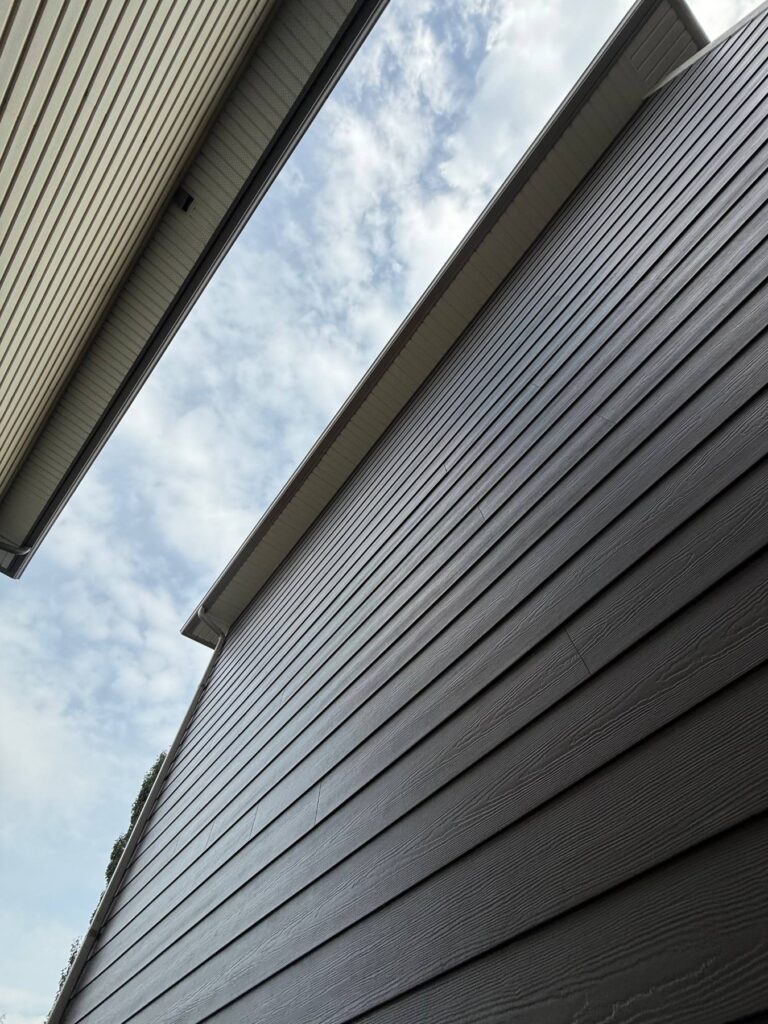
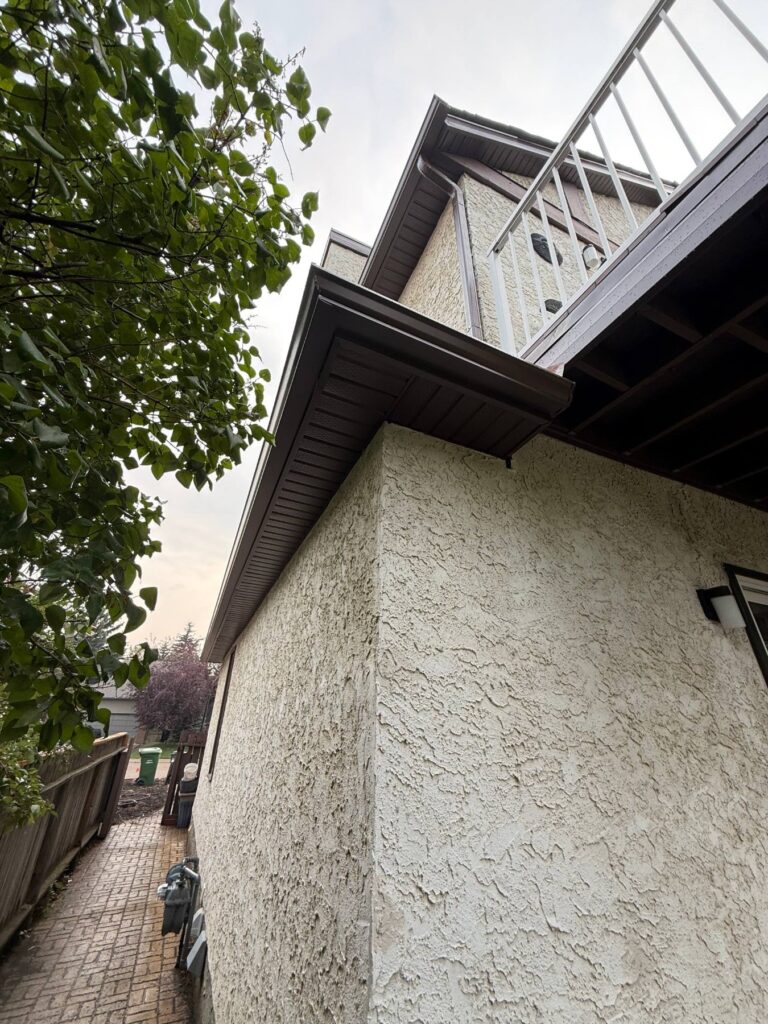
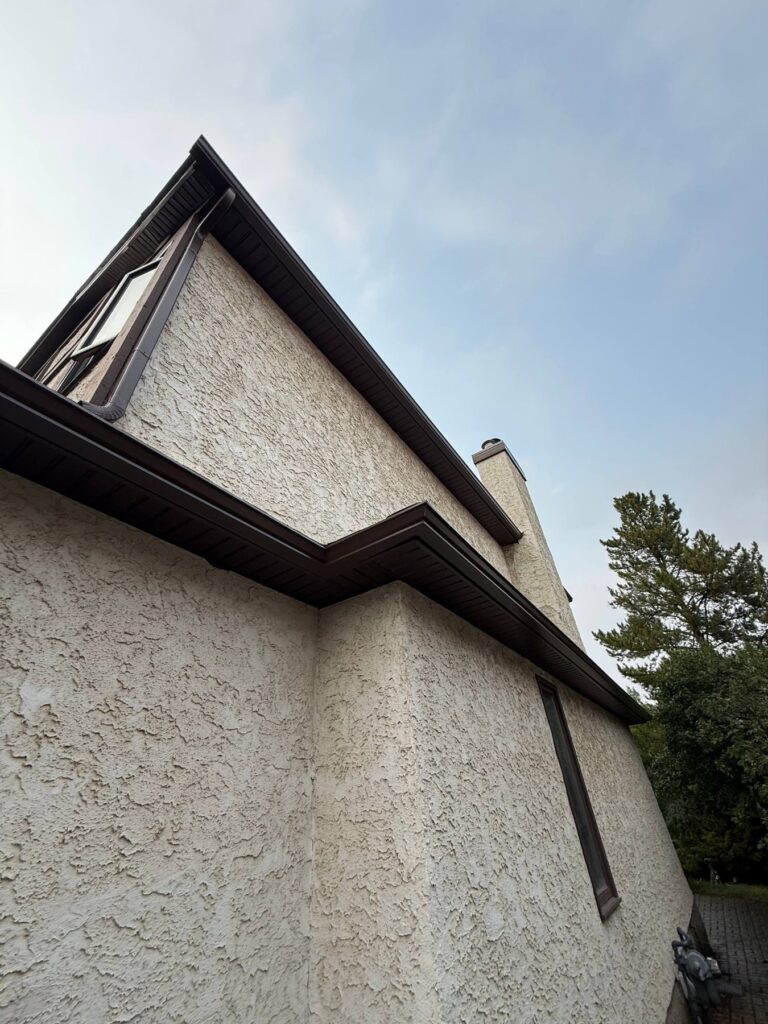
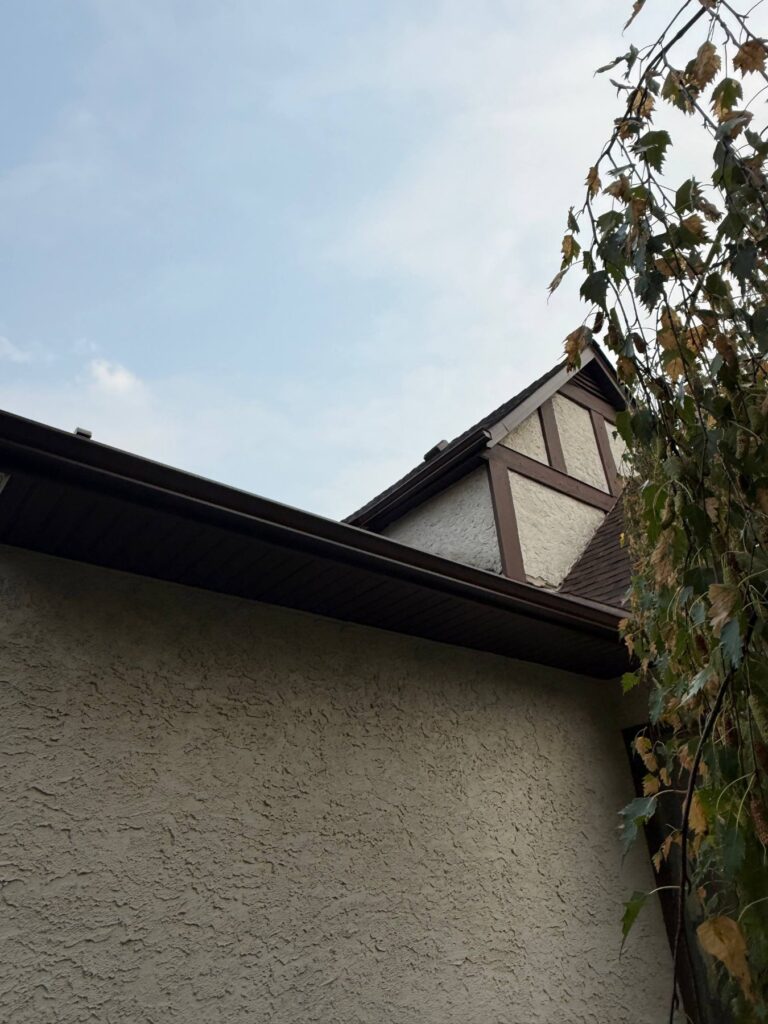
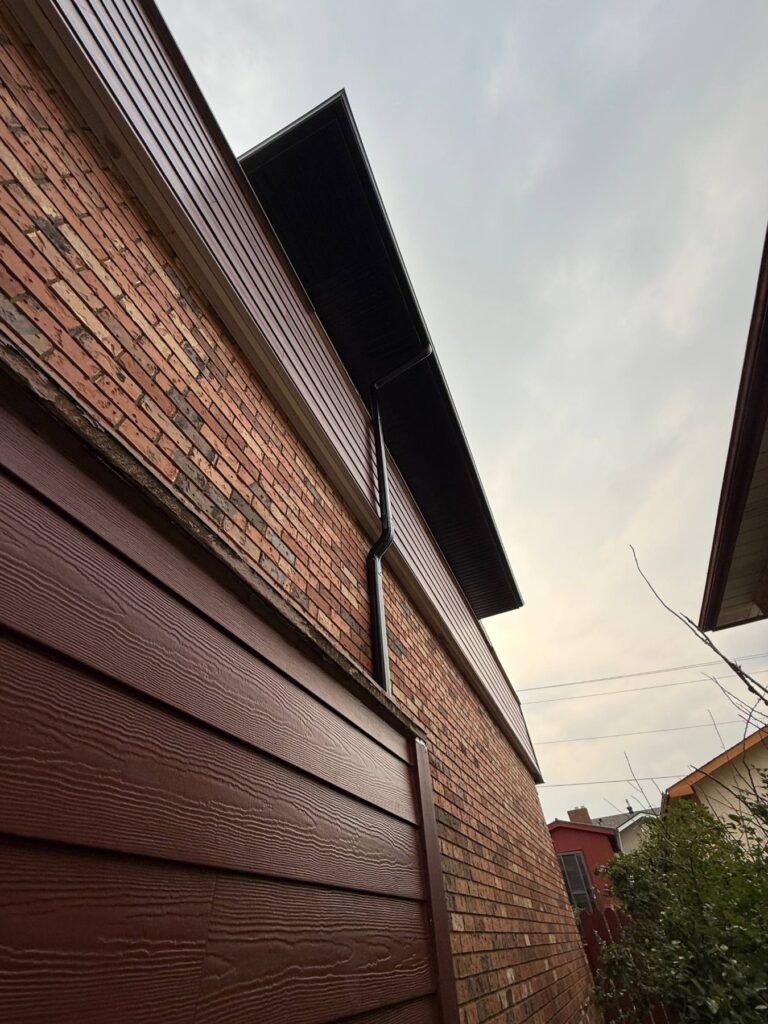
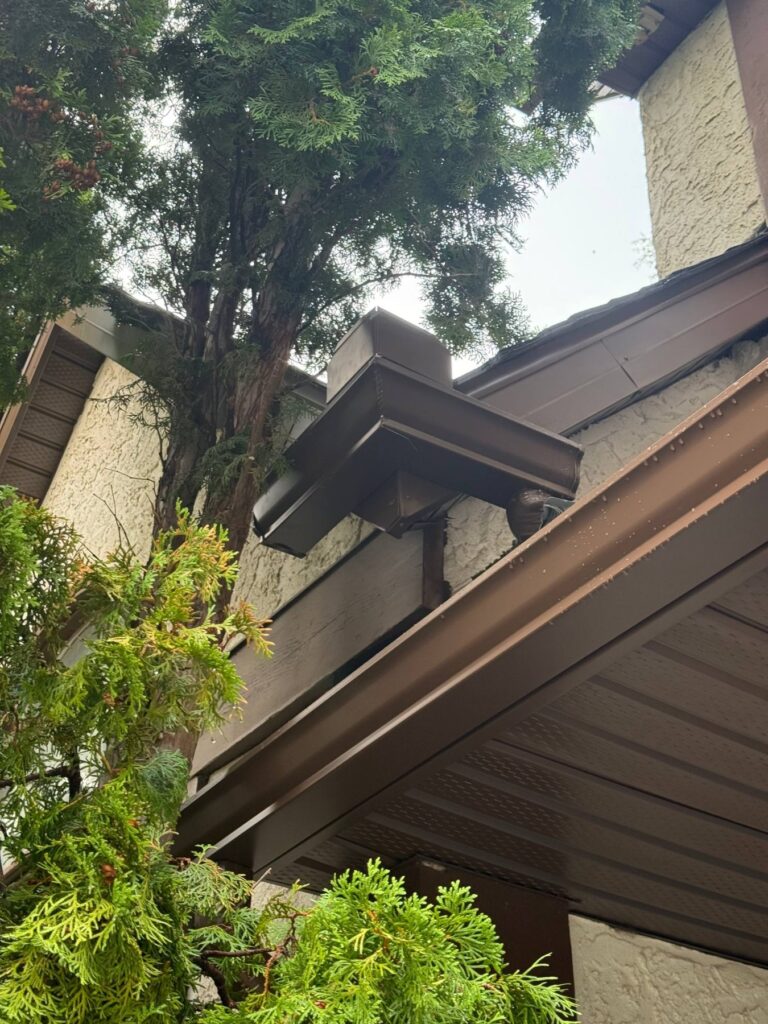
These are two pieces of one assembly, not two products. The fascia is the board running along the edge of the roof, closing off the ends of the rafters — and it is what your eavestrough hangs on. The soffit is the panel that closes in the underside of the overhang, between the wall and the fascia, and it is how outside air gets into your attic.
They fail before the walls and before the roof, and the reason is structural rather than bad luck. This assembly gets wet from two directions — rain and meltwater from above, and warm moist air from inside the attic — and it is the one part of the exterior nobody inspects, because you have to stand back and look up to see it at all. By the time it is visible from the driveway, the board behind has usually been going for two or three seasons.
Here is the part that matters most and gets explained least. An attic needs air moving through it, and that air has to come in low and leave high. It comes in through the soffit and leaves at the ridge. Block the intake and the whole system stops, no matter how good the exhaust is.
Warm, damp air with nowhere to go
Everything you do inside the house puts moisture into the air, and some of it reaches the attic. With airflow, it leaves. Without, it condenses on the underside of the roof deck — frost on the sheathing in January, and the deck slowly going soft.
Ice at the roof edge
A warm attic melts snow on the upper roof. That water runs down and refreezes where the roof is cold, at the eave. The ridge of ice that builds there is what tears eavestroughs off their hangers and pushes water back under the shingles.
Shingles ageing from underneath
A hot attic in July cooks the deck from below. Shingles are rated for weather on top, not for heat from beneath.
Soffit blocked from the inside
The most common fault we find is not missing vents — it is insulation stuffed into the eave where the intake should be. Perfect panels outside, no air moving. Nobody sees it without getting up there.
So a soffit that looks tidy is not the same as a soffit that works. Solid panel across a whole overhang gives you a clean line and no intake at all, which is worse than a rough job that breathes. When we quote, we look at what is above the panel as well as at the panel — and where the intake is blocked from inside, we say so, because putting new aluminum over a dead eave fixes the appearance and nothing else. The other end of that system is eavestroughs and downspouts, and it is the same water either way.
Our default for soffit is aluminum. Not because it is what we have on the truck, but because of what the other two options do here.
Against vinyl
Vinyl soffit gets brittle in a deep cold snap and it moves a lot between a February morning and a July afternoon. On an overhang, that movement shows up as panels that have crept out of the channel and a line that has gone wavy.
Against wood
A wooden soffit is a moisture problem waiting for a reason. It is the underside of the roof, it gets damp, it does not dry quickly, and once it is soft it feeds the same rot that takes the fascia.
Perforated and solid
Perforated panels carry the intake. Solid panels are used where there is no airflow to serve — the underside of a porch, a covered entry, a soffit against a wall. Most houses want a mix, and getting that mix right is the difference between venting an attic and decorating an overhang.
Fascia
Fascia: Wood, Capping and When Capping Is the Wrong Answer
The fascia is the board, and the board is the part that either holds or does not. Everything hangs off it: the eavestrough, the hangers, the soffit channel on the outer edge. Two ways to deal with it, and the difference between them is the most consequential decision on this page.
Capping means running aluminum trim over the existing wooden board. Where the board is sound and dry, this is a good job — it protects the wood from weather, it is not repainted on a cycle the way bare wood is, and it lasts. Where the board has already gone soft, it is the wrong answer, and here is the plain version of why: if the board has rotted, we replace it. We do not cover it. Covering wet wood in aluminum does not stop the rot, it seals it in with the moisture already there and takes away the only way anyone would notice. A year later the fascia looks perfect from the road and the eavestrough is pulling away from a board that is no longer there.
Capping is the right answer when
The board is sound, dry and straight along the run
You want to stop repainting a fascia that is otherwise fine
The eavestrough is being rehung anyway and the board checks out
Capping is the wrong answer when
The board is soft anywhere along the length, even in one bay
Rot has reached the rafter tails behind it
Nobody has taken the eavestrough off to look, and the quote assumes the board is fine
The reason is simply that the damage keeps spreading. Rot moves along the grain into the next length, and into the rafter tails behind it, and what would have been one board becomes a side of the house. The only way to know which case you have is to take the eavestrough off and look at the board — which is exactly what happens on the first morning of the job, and why we would rather quote after that look than promise a number before it.
Rafter tails
Rafter Tails — Your Call, Not Ours
Rafter tails are the ends of the roof structure that stick out past the wall — the thing the fascia is nailed to. On an older house they are often the reason a fascia job turns into a conversation, because once the board is off you can see them properly for the first time in decades.
There is no constraint from our side here. We can box them in, swap out the ones that have gone, replace the run of them, or clean up and paint what is there. Which of those happens is your call and your architect’s, not ours — it depends on what the house is supposed to look like and how much of the structure you want visible. Some houses are designed around exposed tails and covering them would flatten the whole elevation. Others look better closed in.
Box them in
The tails disappear behind soffit and fascia and the eave reads as one clean line. Common on newer builds and on anything being modernized.
Replace what has gone
Where rot has reached the tails, the affected ones come out and new material goes in. Usually a few, rarely all of them.
Leave them exposed and refinish
On a house designed with visible tails, they get cleaned up, repaired where needed and painted. The look is kept, the wood is protected.
Change the profile
Ends can be cut to a different shape while everything is open. It is the cheapest time in a house’s life to change the line of the eave, because the access is already paid for.
If You Are Seeing Any of This
Sagging panels, a stain running down the fascia board, birds or wasps getting in under the overhang, water sitting behind the eavestrough, paint lifting in one spot along the eave. Any of those is worth a look. If you want to work out how urgent it is before you call anyone, we wrote the full list out separately: seven signs your soffit and fascia need replacing.
What we find
Repair or Full Replacement — What We Actually Find
What we find after the eavestrough comes off is rarely what anyone expected from the ground, in both directions. Sometimes the board under an ugly cap is perfectly sound. Sometimes a fascia that looked fine has gone in one bay behind a downspout, where water has been running down the back of it for years.
Localized rot
One length, or one bay, usually at a corner, behind a downspout or under a valley. That gets cut out and replaced, and the rest of the run is left alone.
Rot that has reached the tails
When the ends of the rafters are soft, the board is a symptom. The tails get dealt with first, and the fascia goes back on something solid.
Rusted or undersized fasteners
Common on older systems and on anything where the eavestrough has been rehung more than once. New material with old fixings is a repair with a countdown on it.
A soffit that never had intake
The panels are fine and the eave is dead. This is a ventilation fix rather than a carpentry one, and it costs less than people expect.
An overhang out of line
A previous crew ran the channel off level, or the tails were never trimmed straight. It is visible from the street forever once you know, and it is fixable while everything is open.
Small work is real work here. A single bay of fascia, one corner, one run of soffit — those are jobs we come out for, and we would rather do the small one now than the large one in three years. If you are still deciding between patching and replacing, that call is worked through in how to decide between repair and replacement.
Sequence
Doing It With the Eavestroughs Off
One thing about sequence that saves people money, and it is the reason we ask about your eavestroughs even when you called about soffit.
The eavestrough hangs on the fascia. To replace fascia, the trough comes off — there is no way around it. That means the day we do fascia is the one day the trough is already down, the eave is open and the ladders are up. Doing eavestroughs in a separate visit later means paying a second time to take the same trough off the same wall.
We are not saying do both. We are saying that if the eavestroughs are also near the end, this is the cheap moment, and if they have years left they go straight back up and nothing is wasted. What we will not do is put a new trough onto a board we have not looked at. If you want to see what that side of the job involves, it is set out under seamless eavestrough installation.
The job
How the Job Runs, and What Changes the Price
One crew, ours, start to finish. No subcontracted trades on any part of this — the person who measured the eave is the person on the ladder.
1
On-site measure
We walk the perimeter, measure the run of the eave, count corners, gables and returns, look at the overhang from below and at the fascia from a ladder, and check whether air is actually getting into the attic.
2
Fixed written quote
Linear footage, corners and returns, material and profile, an allowance for board replacement with a stated rate beyond it, removal and disposal, and putting the eavestrough back.
3
Eavestrough and old material come off
And that is the first honest look anyone has had at the board in years.
4
The structure gets inspected
Board, rafter tails, the edge of the deck, the fixings. Anything we find is photographed and sent the day we find it, at the rate already in the quote — you decide, we do not decide for you.
5
Rotted wood is replaced
Not covered. New board, or new tails where the rot has reached them, fixed into solid material.
6
Soffit and fascia go on
Aluminum, with the perforated and solid panels where each belongs, channels set level along the run.
7
Eavestrough back up, and cleanup
Rehung with fall checked along the length, then offcuts and old material out and a walk around with you.
What moves the price: total length of eave, how many corners, gables and returns the house has, how high the work is and how the access looks, how much wood turns out to need replacing, and the condition of the rafter tails. We do not publish a rate per foot — the honest number comes from measuring your eave and looking at the board.
The Short Version
Soffit and fascia are one assembly, and they fail first because they get wet from both sides and nobody looks at them. Soffit is not decoration — it is the air intake for your attic, and a blocked one causes frost on the sheathing and ice at the roof edge. Our soffit is aluminum. Rotted fascia board gets replaced, not capped, because covering it seals the damage in and lets it spread. Rafter tails are your decision, and there is no option we will not do. Our own crew does the work, the measure is free and the written price is fixed.
0people on our own crew
0cities we serve
0cost of an on-site measure, in dollars
0year workmanship warranty
Our Work
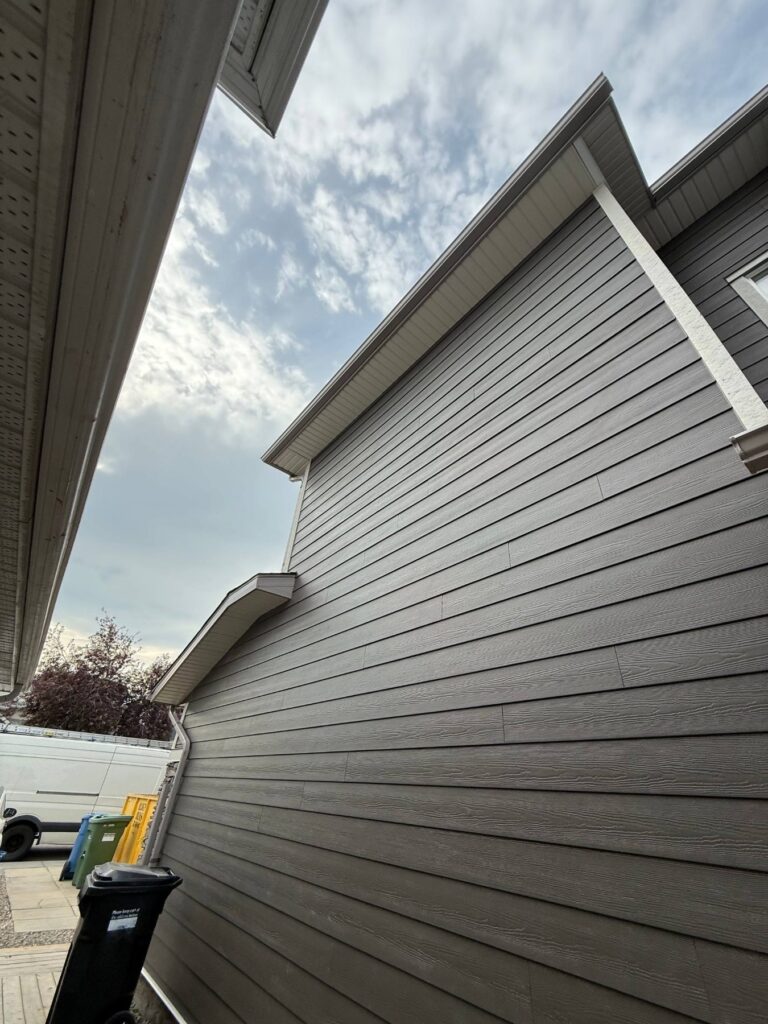
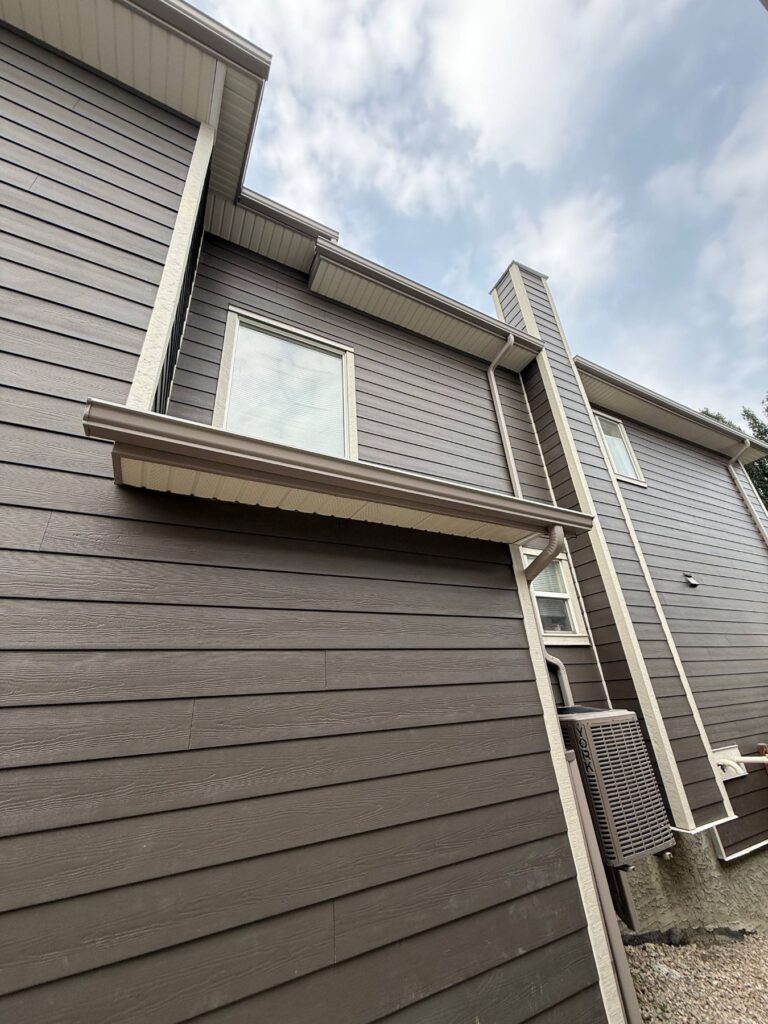
Recent Soffit & Fascia Projects
Common Questions About Soffit and Fascia
What material do you use for soffit?
Aluminum. It does not get brittle in a cold snap the way vinyl does, it does not move much between seasons, and unlike wood it will not feed rot on the underside of an overhang. We use perforated panels where the eave needs to breathe and solid panels where there is no airflow to serve, such as a porch ceiling.
Can you just cap my fascia instead of replacing the board?
Yes, if the board is sound and dry — capping a good board protects it and it will not need painting again. If the board has rotted, we replace it rather than covering it, because aluminum over wet wood seals the moisture in and the damage keeps spreading into the next length. Which case you have is decided by looking, once the eavestrough is off.
What do you do with the rafter tails?
Whatever suits the house: box them in, replace the ones that have gone, or clean up and repaint exposed tails. There is no option we will not do, and no extra difficulty in one over another — it is a design decision rather than a technical one, so it is yours to make. We will tell you what condition they are in once we can see them.
Do I need soffit vents if I already have a ridge vent?
Yes. Intake and exhaust only work as a pair — a ridge vent with no intake below it cannot draw air through the attic, and in some cases it starts pulling air from inside the house instead. If you have frost on the underside of your roof deck in winter, a blocked or missing intake is the first thing to check.
Do you have to take the eavestroughs off?
For fascia work, yes — the trough hangs on the board being replaced, so there is no way to do one without moving the other. That is inconvenient once and useful once: it is the only moment the board is visible and the trough is already down, which is why we ask whether your eavestroughs are also near the end before quoting either one on its own.
What happens if you find more rot than the quote allowed for?
You get a photograph and a number the same day, at the rate already written into the quote rather than one invented on the spot — and you decide whether to extend the scope. The allowance is in there precisely because a board cannot be assessed from the ground. What we will not do is keep going quietly and hand you a larger invoice.
Can you match the colour to my existing trim?
Yes. Soffit and fascia come in a range of factory colours, and we match to the trim and eavestroughs already on the house rather than defaulting to white. Bring it up at the measure and we will hold samples against the existing work, because colours read differently on a shaded overhang than they do in a brochure.
Do you do the work yourselves, or subcontract?
Ourselves. Every crew on your house works for us and only for us — no subcontracted trades on any part of this — which is why the person who measured the eave is the one on the ladder. We are licensed and WCB-covered, our workmanship carries a 10-year warranty, and a clearance letter is available on request.