Fibre cement is what most homeowners here choose when they intend to keep the house. It is non-combustible, it takes a hailstone far better than a vinyl panel, and it holds its colour under Alberta sun exposure rather than going chalky. You will hear it called three things — Hardie, Hardie board, and fibre cement siding, sometimes spelled fiber cement. They are the same material.
It is not the right answer on every house, and we would rather say so before the measure than after. It costs more than vinyl, and most of that gap is labour rather than material. It is heavy, it needs specific blades and dust control, and it generally takes two people on a wall where vinyl takes one. If the binding constraint this year is budget, or you are selling inside a couple of years, vinyl installed properly is a legitimate exterior and we install that too. If you are weighing the two, we wrote the honest comparison in Hardie board vs vinyl siding.
If the budget points the other way, that is a legitimate answer and we will say so on site. Our vinyl siding installation page sets out where vinyl holds up here and where it does not, so you can compare the two on the same house rather than on a brochure.
The question worth asking is not which material is better. It is how long you plan to own the house. Fibre cement costs more up front and buys a longer interval before you think about your walls again. On a house you are keeping, that trade usually works. On a house you are selling, it usually does not.
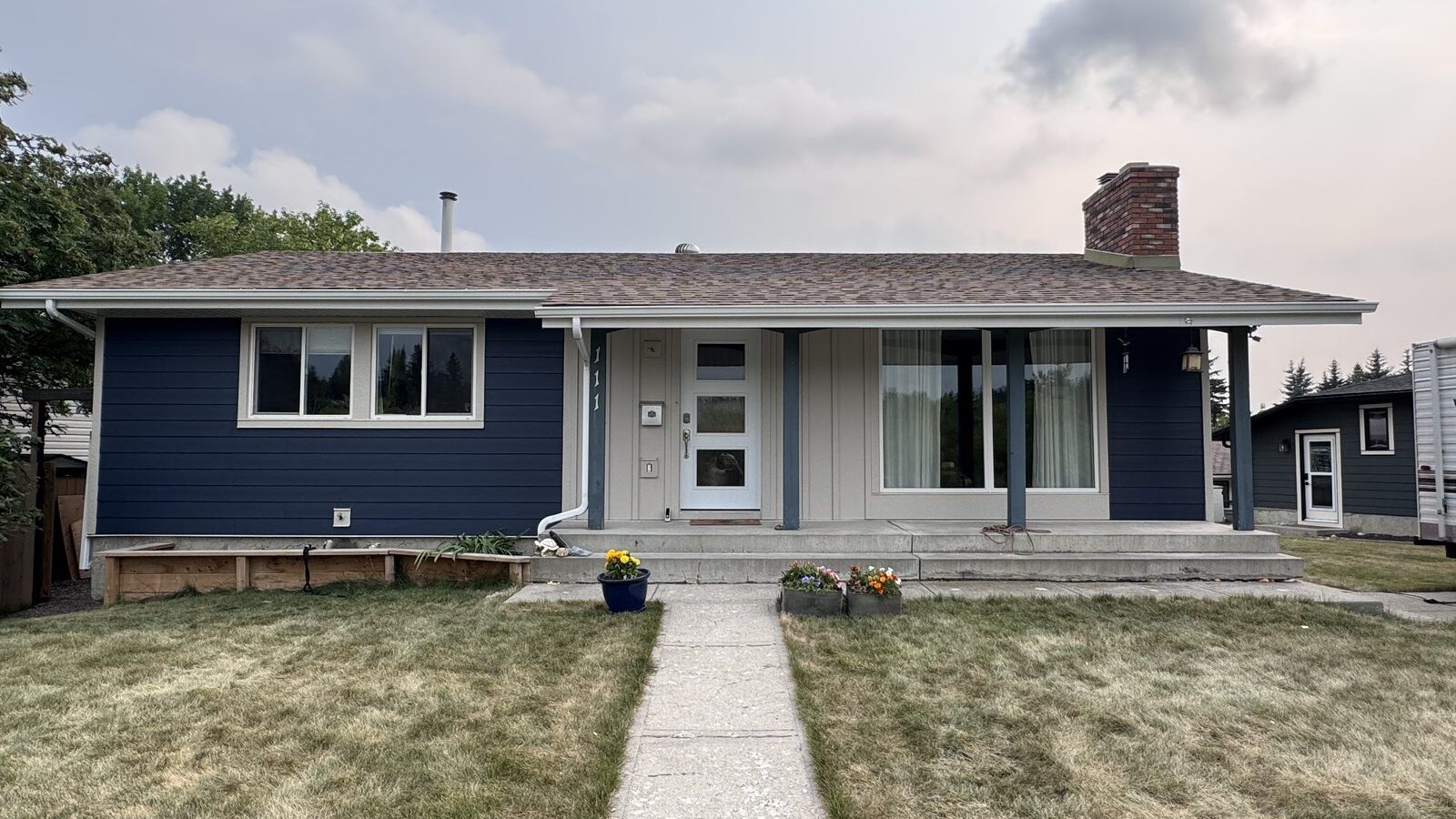
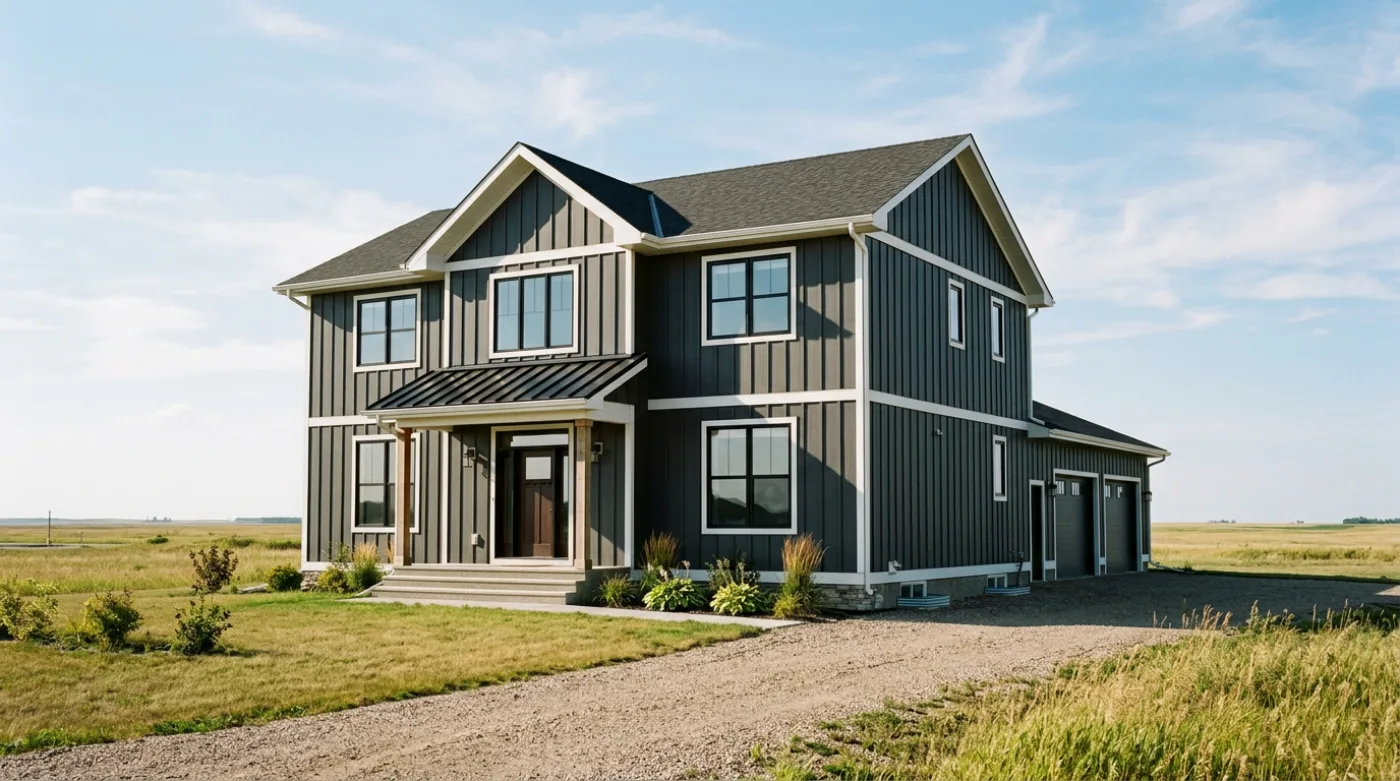
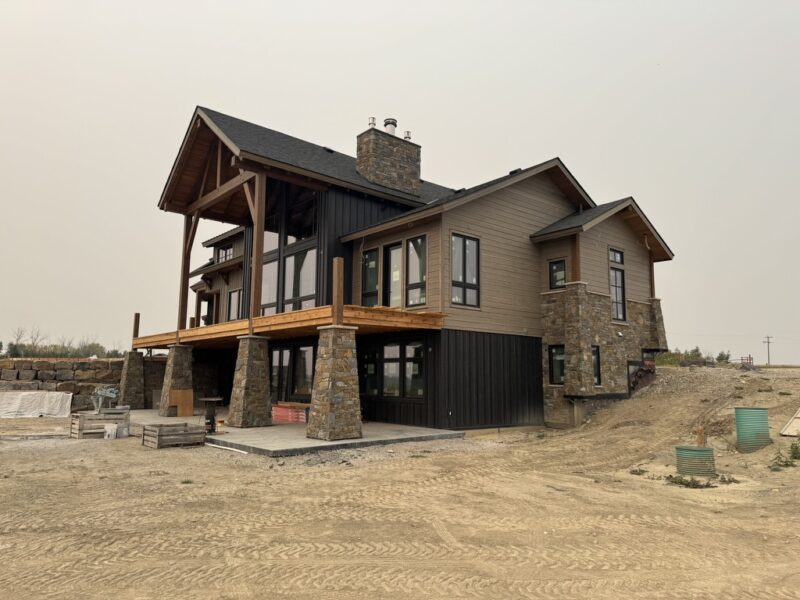
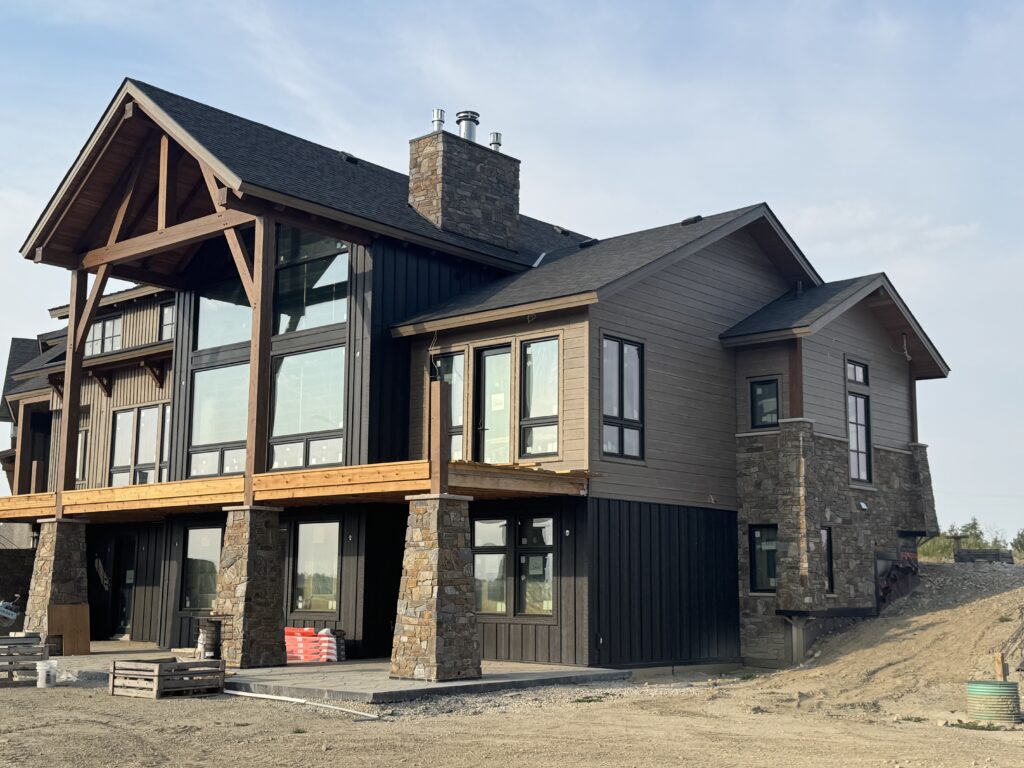
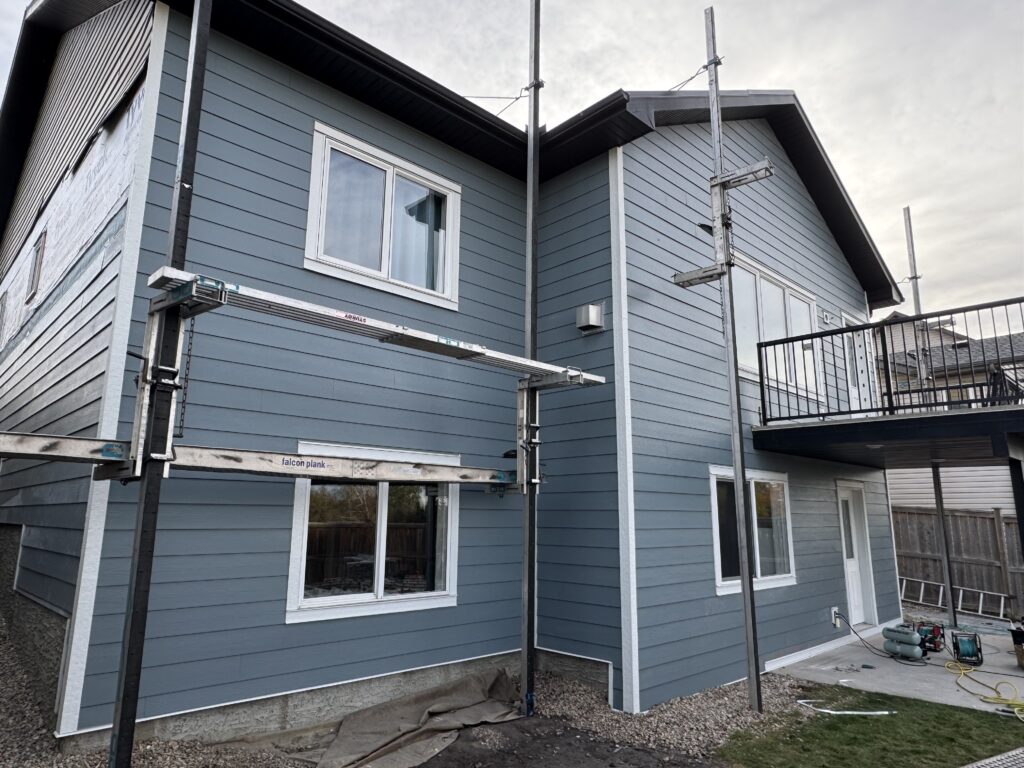
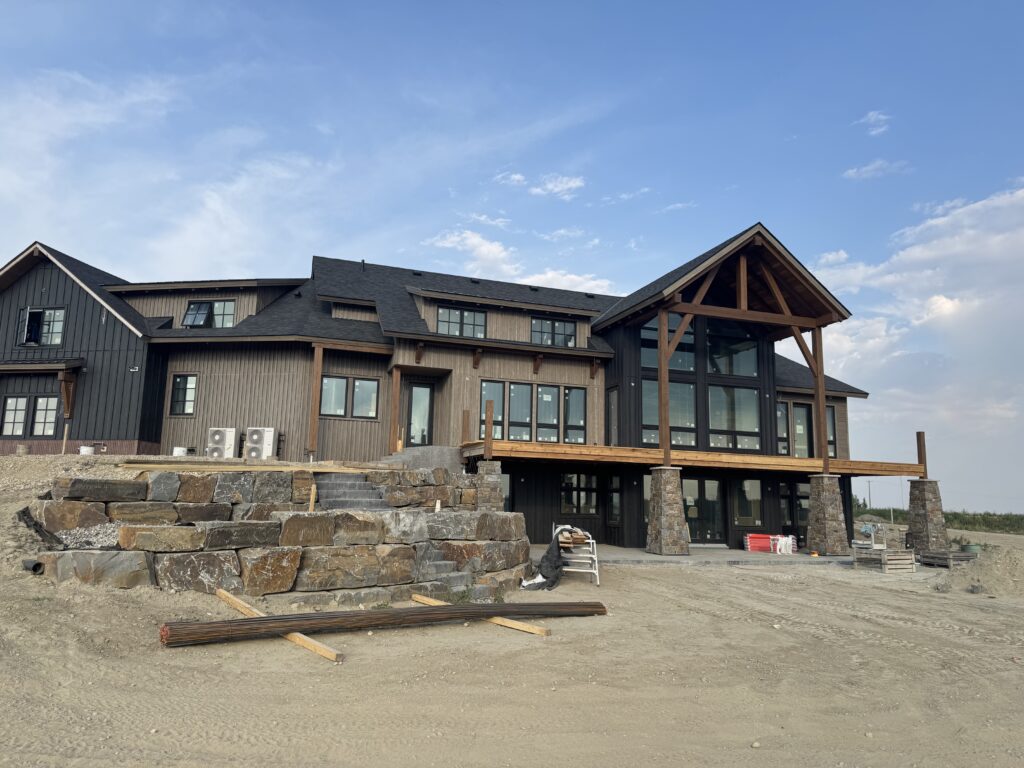
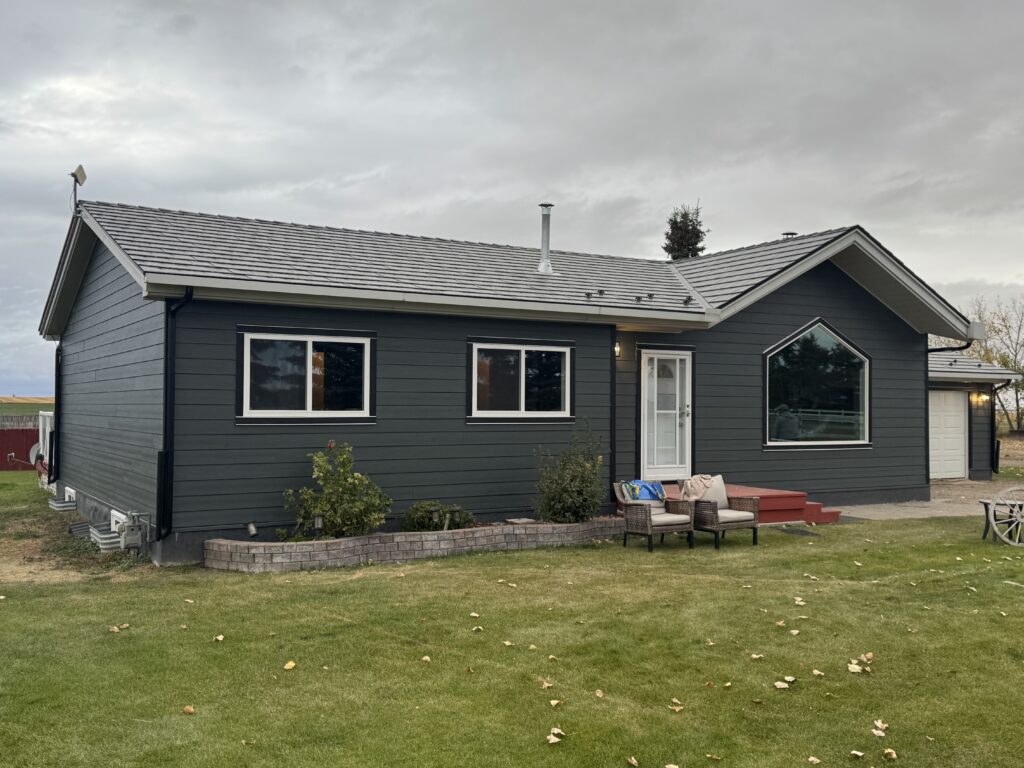
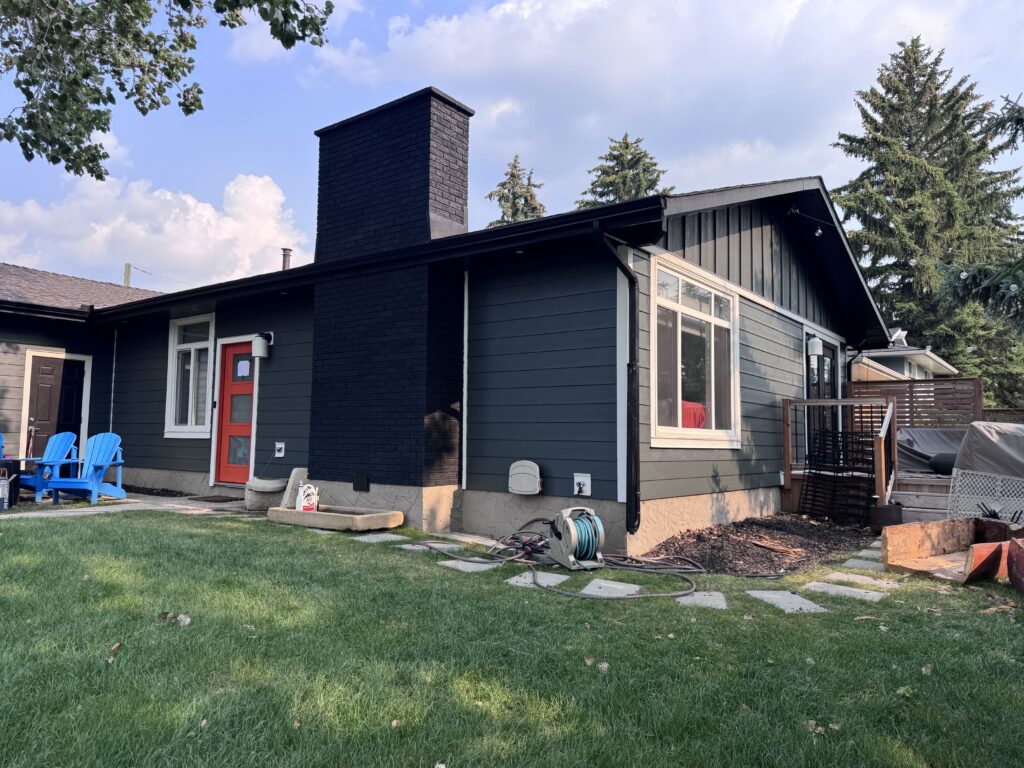
Our own work in Calgary. The field colour is the factory finish on the board; the trim and the board-and-batten were brush-painted by our crew on site, by hand.
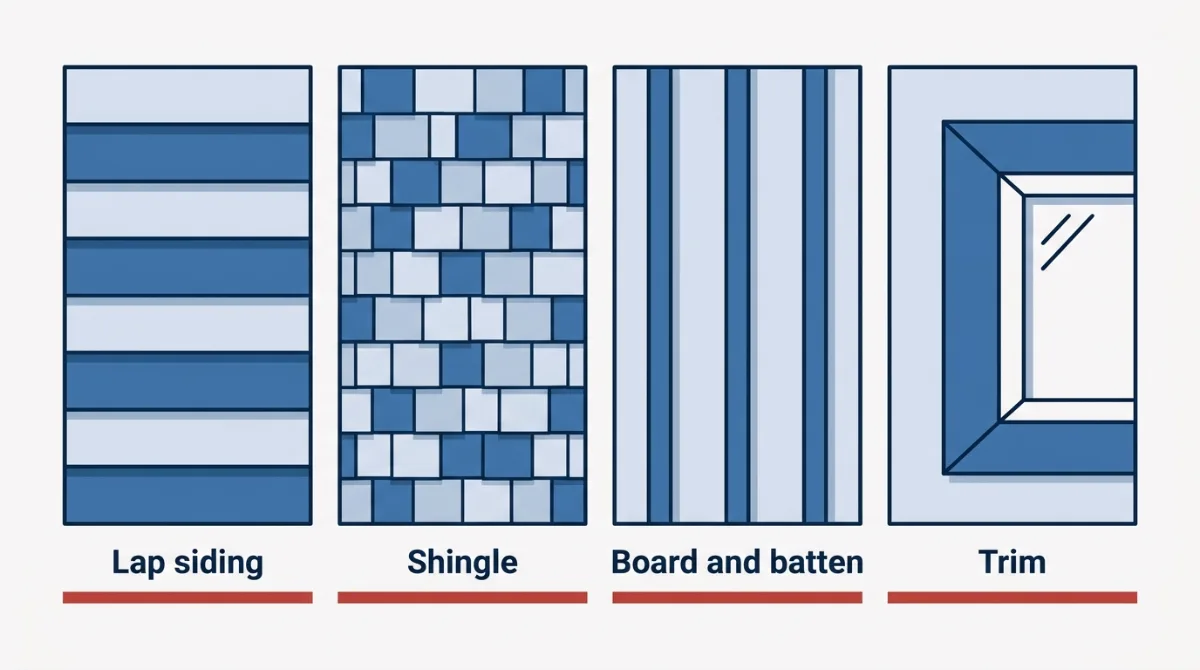
Hardie is not one product. The profile you choose changes the look of the house more than the colour does, and it changes the labour more than most homeowners expect.
Lap siding
Horizontal boards, the profile most people picture. The exposure — how much of each board shows — is yours to choose, and it matters: a narrower exposure means more rows, more fasteners and more hours on the same wall. Deeper shadow line than vinyl at any exposure.
Vertical panel
Large sheets running up the wall rather than across it. Reads as modern, and it suits tall elevations and gable ends where horizontal rows would look busy. Fewer joints on a big wall, and the joints it does have need flashing done properly.
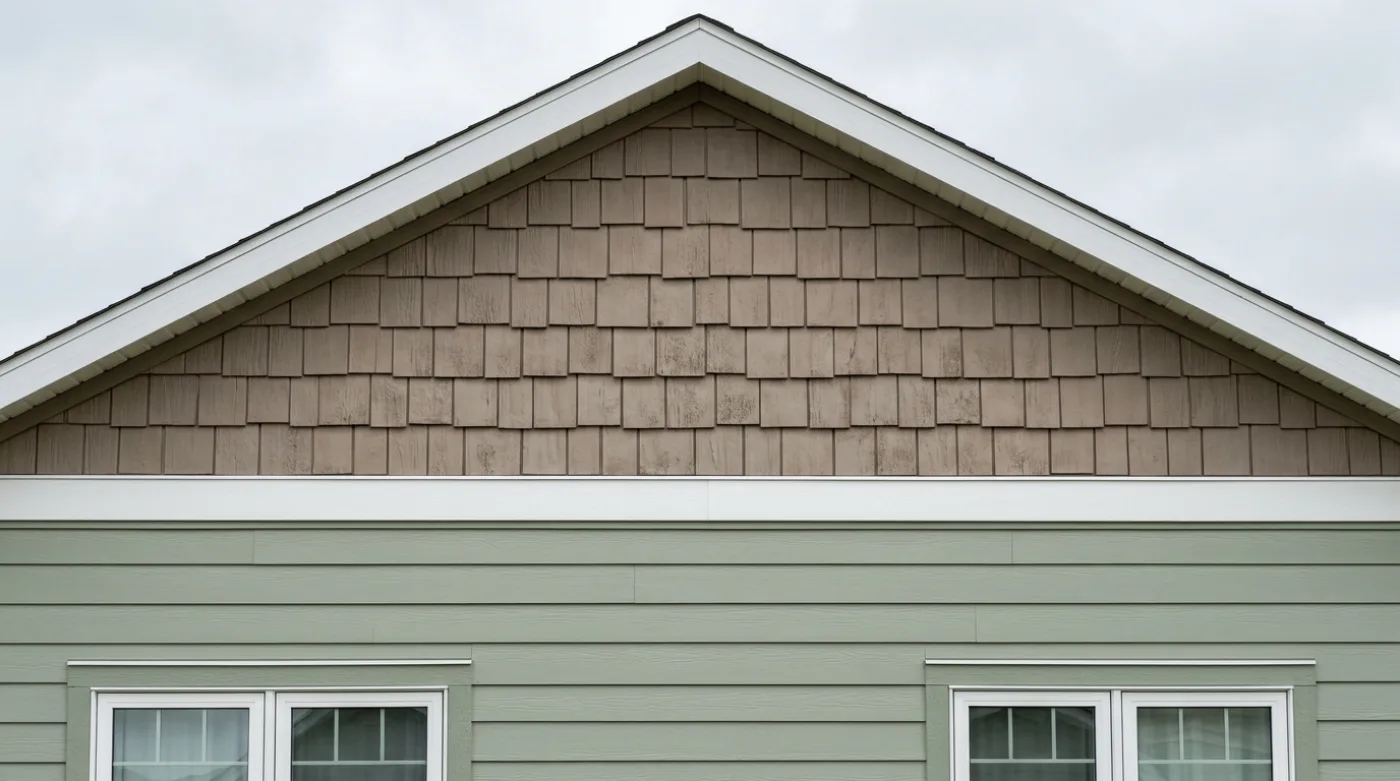
Shingle
Shingle-look panels for gables, dormers and feature walls. Rarely the whole house. Used well, it breaks up a large elevation and stops a big rectangle reading as a big rectangle.
Board-and-batten
Vertical panel with battens applied over the joints. A farmhouse look that has been popular here for several years now. The batten spacing is a design decision, not a default, and it is worth deciding before anything is ordered.
Trim, corners and openings
Window and door surrounds, outside corners, frieze and band board. This is where a job either looks finished or looks approximate. It is also the first place a cheaper quote quietly saves money, by putting a different material against your fibre cement.
The four profiles homeowners here choose between, and the trim that ties them together.
You do not have to use one profile everywhere. Lap on the main elevations with board-and-batten on the gables is a common and sensible combination — as long as it is planned before anything is ordered rather than decided halfway through.
Most homeowners have never had their walls off. Here is what the next couple of weeks look like.
1
On-site measure
We walk the exterior, measure the wall area, look at the condition of what is there now, and check access — how tight the lot is, how tall the walls are, whether there is a walkout at the back. Soffit, fascia and eavestroughs get looked at in the same visit, because those decisions are cheaper made together.
2
Fixed written quote
The scope spelled out line by line: profile and exposure, trim, tear-off, disposal, an allowance for sheathing repair with a stated rate beyond it, weather barrier, access and cleanup. What we quote is what you pay.
3
Tear-off
The old cladding comes off. Going over existing siding hides the sheathing and the weather barrier, which is exactly what needs looking at, so this is the step we do not skip.
4
Sheathing and weather barrier
With the wall open we check the sheathing. If we find rot, you get a photograph and the number before anything is covered up, at the rate already agreed in the quote. Then house wrap, seam tape and flashing at every penetration. This layer is what actually keeps water out of the wall — the siding is the part that takes the weather.
5
Installation
Boards, trim, corners and openings to the manufacturer’s fastener schedule and joint specification rather than to preference. Sealant where sealant belongs and not where it does not.
6
Cleanup and walk-through
Offcuts and packaging out, magnet sweep for fasteners across the yard and driveway, and a walk around the house with you before we call it done.
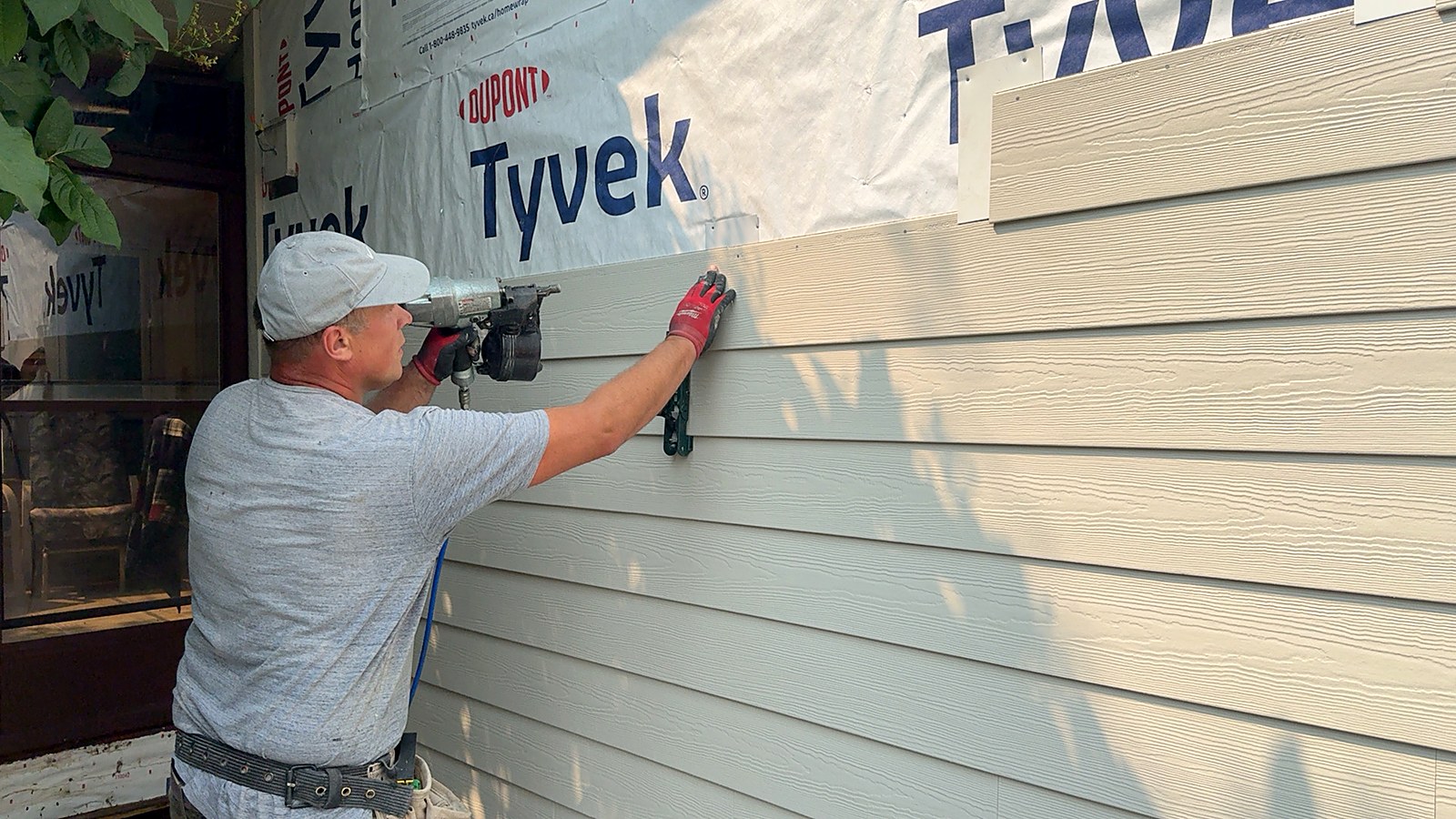
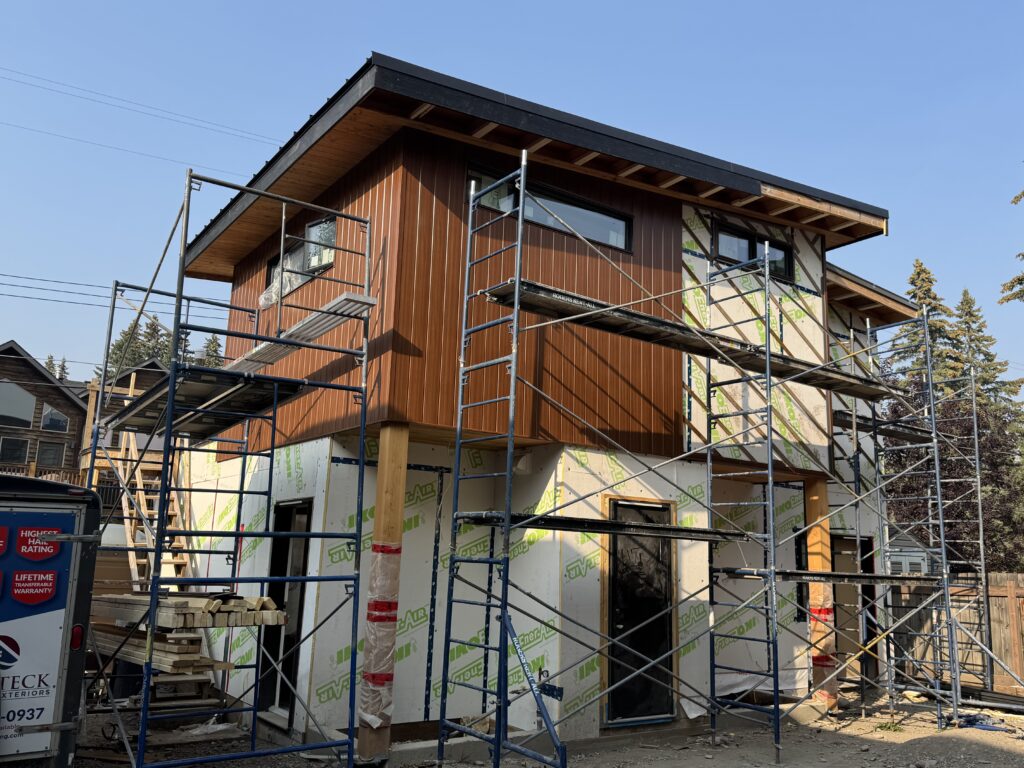
Board going on over a taped weather barrier. This layer is the part nobody sees once the job is done, and the part that decides how the wall ages.
The quote
What a Complete Quote Covers
This is the most common place homeowners get caught out, so we would rather be blunt about it. If a quote you are comparing ours against is missing a line below, it is not a cheaper job — it is the same job with the uncertain parts left out of the number.
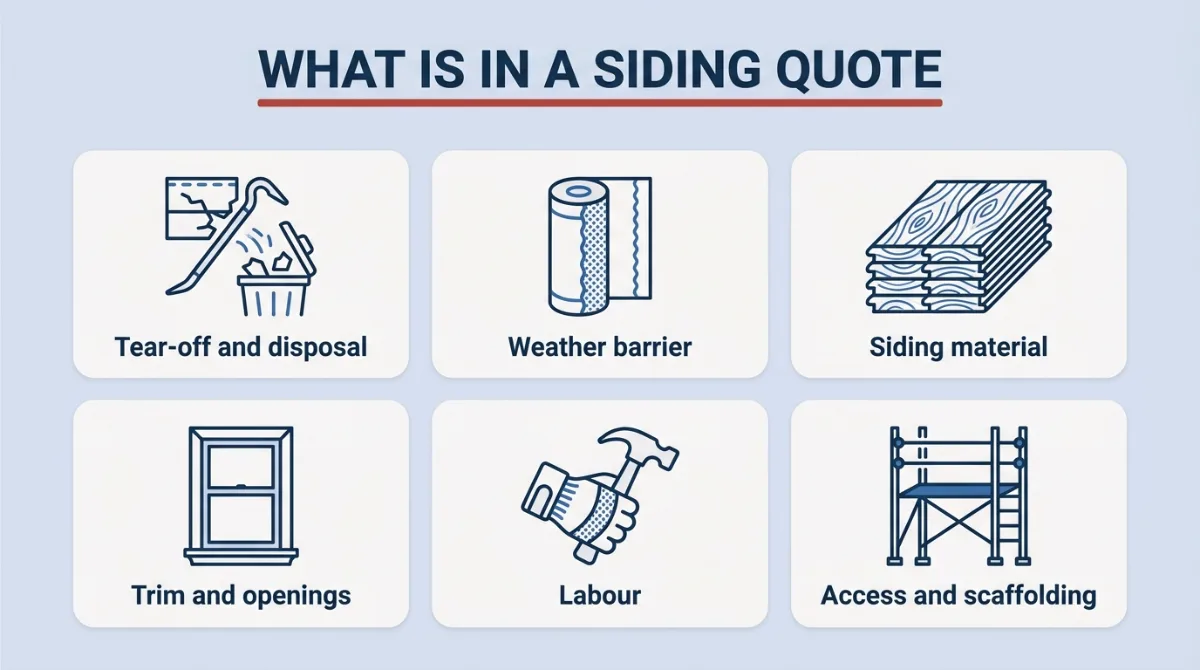
Included in a Roof Bros quote
Board, trim, corners, fasteners and sealant to the manufacturer’s specification
Tear-off of the existing cladding, plus bagging, hauling and disposal
A stated allowance for sheathing repair, with a per-sheet rate beyond it
House wrap, seam tape and flashing at every penetration
Access and staging appropriate to the height of the walls
Cleanup, including a magnet sweep for fasteners
Not included unless we agree it and write it in
Structural repairs beyond sheathing — framing, headers, rot in the wall assembly
Window or door replacement
Exterior insulation added while the walls are open, which is worth discussing since this is the cheapest moment in a house’s life to do it
Painting of primed board, if you choose primed rather than a factory finish
Soffit, fascia or eavestrough work, unless it is written into the scope
Permits, where your municipality requires one
What sits inside a complete siding quote, line by line, before anyone signs anything.
If you want the longer version of what sits inside a quote and what actually drives the price, we wrote it out separately.
Four things this climate does to a wall, and what fibre cement does about them.
Hail
Fibre cement can chip at the surface but rarely fails all the way through. Vinyl cracks or punctures on impact, and it does so more readily when it is cold. After a serious storm a vinyl elevation often needs whole sections replaced, while a fibre cement wall usually needs touch-up.
Chinooks and freeze-thaw
Fibre cement moves far less with temperature than vinyl does, so it is fastened solidly rather than hung loose. Vinyl has to be free to move, and vinyl nailed too tight buckles visibly after a few chinook seasons. What needs attention on fibre cement is the sealant at the joints, which is a maintenance item rather than a failure.
Cold
Vinyl stiffens as the temperature drops and becomes noticeably more brittle in a deep cold snap. Fibre cement does not change character the same way. It also should not be installed in conditions that compromise the sealant joints, which is why the working window here runs roughly May to October.
Sun and UV
Fibre cement is coated rather than coloured through the body of the material. That is an advantage over time: a faded wall can be repainted and look new again, and a replaced board is painted to match. A replacement vinyl panel rarely matches a wall that has been fading since it went up.
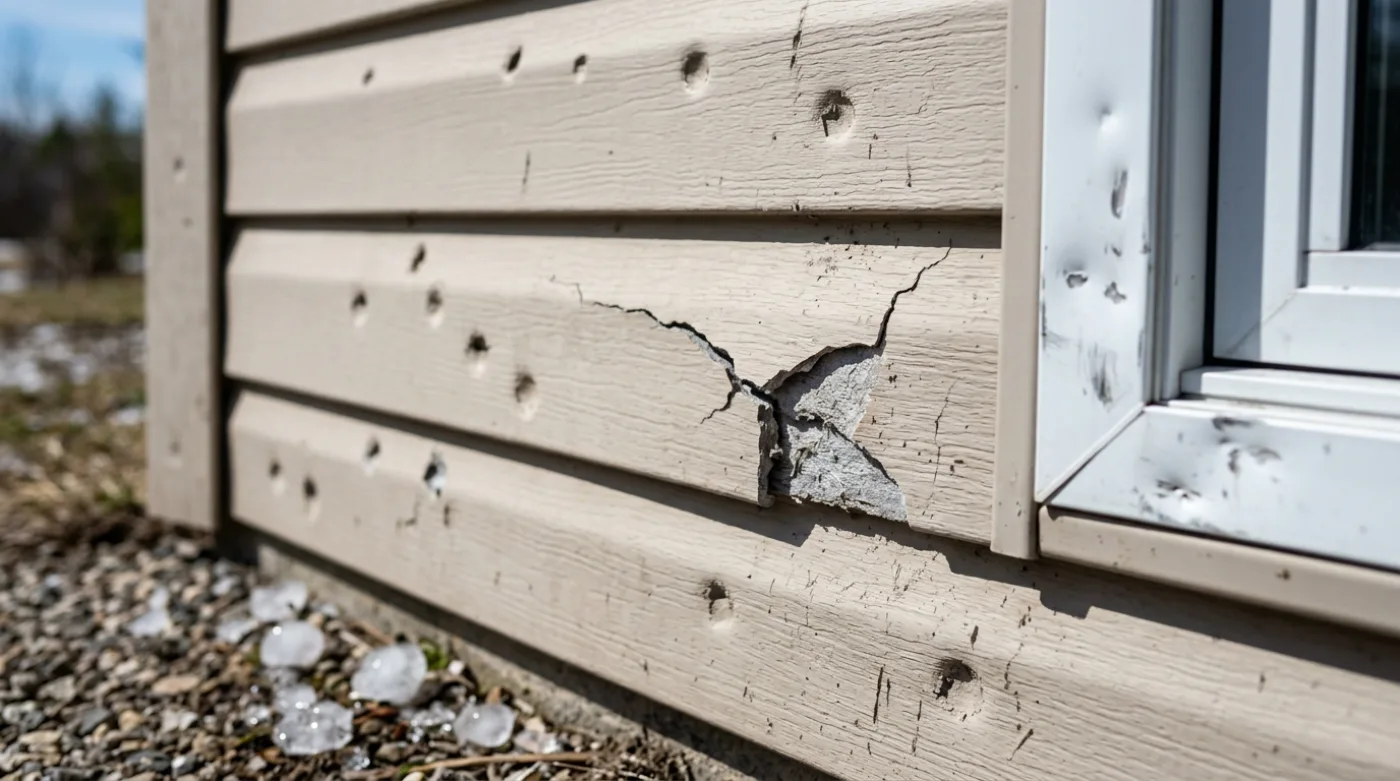
Hail on a siding wall. Fibre cement usually chips at the surface; thinner cladding is the one that cracks through.
The Short Version
0profiles to choose from
0year workmanship warranty
0cities served
0cost of an on-site measure, in dollars
Our Work
Recent Hardie Siding Projects
FAQ
Common Questions About Hardie Siding
How much does it cost to install Hardie Board siding in Calgary?
We do not publish a price per square foot, because the honest number comes from measuring your walls. What moves it: wall area, how many storeys, how many corners and openings, what the sheathing turns out to look like once the old cladding is off, the profile and exposure you choose, and access. The measure is free and the quote is fixed.
What is the downside of Hardie Board?
It costs more than vinyl, and most of that gap is labour rather than material. It is heavy, it needs specific blades and dust control, and it is unforgiving of a bad cut. The sealant joints want checking every few years, and the coating will eventually want refreshing. None of that is hidden — it is the trade you make for the durability.
How much does Hardie siding cost for a 2,000 sq ft house?
Floor area does not tell you wall area, so that figure on its own cannot be priced. A two-storey with a walkout has far more wall than a bungalow of the same floor plan, and access changes with height. We measure the actual walls, count the corners and openings, and give you a fixed written price rather than a range from a calculator.
How much is a 4x8 sheet of Hardie Board siding?
Material price per sheet is the smallest part of what a re-side costs, which is why quoting it is misleading. Labour, tear-off, disposal, weather barrier, trim, flashing and access make up most of the number. A quote built from sheet prices is a quote missing the work. Ask for the full scope line by line instead.
How long does a Hardie siding job take?
It depends on wall area, access and how much repair turns up once the old cladding is off — and on weather, because fibre cement should not be installed in conditions that compromise the sealant joints. You get a timeline with the quote rather than a guess on the phone, and if something on the wall changes it, you hear about it that day.
Can you put Hardie Board over existing siding?
It can be done in some situations, but it means nobody looks at the sheathing or the weather barrier underneath, and those are the parts of a re-side most worth seeing. Our default is to pull the old cladding and show you what is behind it. If your wall is a genuine candidate for going over, we will say so at the measure.
Do you work in Airdrie, Cochrane and Okotoks?
Yes. Airdrie is home, and we work across Calgary, Cochrane, Chestermere, Okotoks, Crossfield and High River. Every one of those gets the same thing: an on-site measure and a fixed written price rather than a rate over the phone. Distance does not change how we quote, and it does not change the scope you get in writing.
This page covers one material in depth. For the full picture — materials side by side, process, and what a complete quote includes — see our siding services in Calgary and Airdrie.
This page covers one material in depth. For the full picture — materials side by side, process, and what a complete quote includes — see our siding services in Calgary and Airdrie.
Free Estimate
Interested in Hardie Siding?
Send us a few details and we’ll prepare an honest, tailored quote.