Hardie Board vs Vinyl Siding: Which Is Right for Your Home?
Start here
Two Materials, One Honest Answer
Both materials sit on thousands of houses across Calgary and Airdrie, both work, and the honest answer is that neither one is universally better. What actually differs is how they age in this climate, what they do when hail arrives, and how much attention they ask for over the years you own the house.
Short answer. Vinyl costs less to buy and install. Fibre cement, the material most people mean when they say Hardie, costs more, takes impact better, holds its colour longer and does not go brittle in cold. For a long hold, fibre cement usually wins. For a tight budget, quality vinyl installed properly is a legitimate choice.
Alberta year
How Each One Handles an Alberta Year
| Cold | Vinyl stiffens as the temperature drops. In a deep cold snap it becomes noticeably more brittle, and an impact that would bounce off in July can crack it in January. Fibre cement does not change character in the cold the same way. |
|---|---|
| Chinooks and freeze-thaw | Vinyl expands and contracts a great deal with temperature, which is why it is hung rather than pinned tight — it has to be free to move. Vinyl nailed too hard buckles visibly after a few chinook seasons, and once it has buckled there is no fixing it short of pulling the panels. Fibre cement moves far less and is fastened solidly. |
| Hail | This is the sharpest difference between the two. Vinyl cracks or punctures on impact, and it does so more readily when it is cold. Fibre cement can chip at the surface but rarely fails all the way through. After a serious storm a vinyl elevation often needs whole sections replaced, while a fibre cement wall usually needs touch-up. |
| Sun | Both fade. The difference is what you can do about it. Vinyl is coloured through the body of the material, so a panel replaced five years later rarely matches the wall around it. Fibre cement is coated, and a faded wall can be repainted and look new again. |
| Fire | Fibre cement is non-combustible. Vinyl is not. On a narrow lot where the neighbouring house sits close, or anywhere a fire pit lives near a wall, that is worth thinking about rather than skipping past. |
| Wind-driven rain | Neither material is the whole answer here. What keeps water out of a wall is the weather barrier, the flashing and the detailing behind the cladding. That is true of both, and it is the reason a cheap installation of the better material can perform worse than a careful installation of the cheaper one. |
Up close
What They Look Like Up Close, and How They Age
Vinyl has improved a great deal. Modern profiles look far better than the vinyl most people picture from the nineties, with deeper textures and a wider colour range. But it is a thinner material with visible seams, and at close range it reads as what it is.
Fibre cement holds a deeper shadow line, comes in wider exposures and several textures, and accepts trim details that vinyl cannot carry. It also comes in more than one form — lap boards, shingle panels, board and batten — which is what lets a house look designed rather than simply clad.
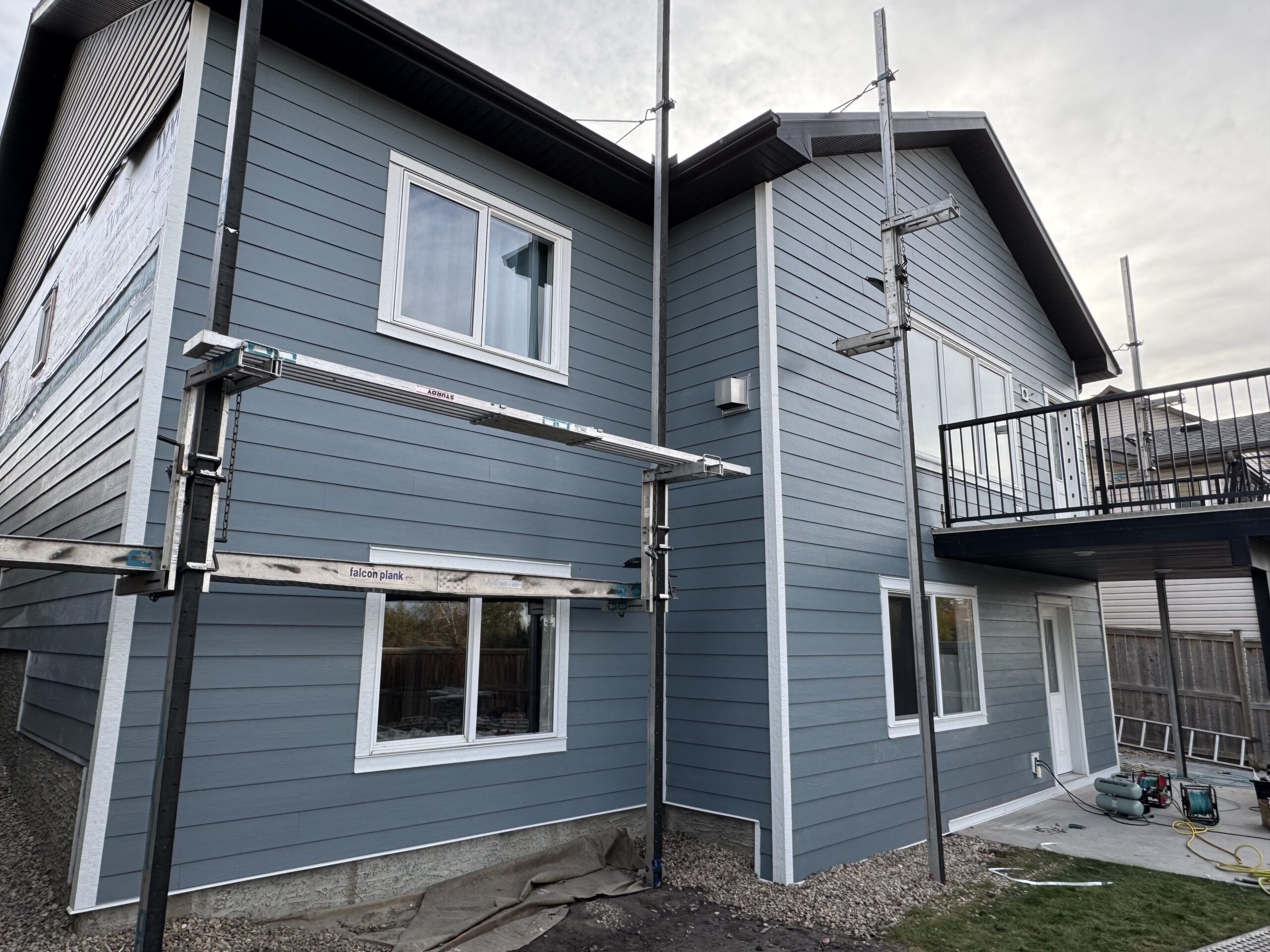
Ten years on, the two age differently rather than one ageing badly. Vinyl tends to go slightly chalky and slightly lighter, evenly, across a whole elevation. Fibre cement holds its line and its shadow, and when the colour finally tires you repaint it rather than replace it. Which of those futures you prefer is a real question, not a marketing one.
Installation
Installation Is Where the Difference Actually Lives
Homeowners compare the two materials. Contractors compare the two installations, because that is where jobs go wrong.
| Vinyl | Vinyl has to hang. Nailed tight, it cannot move, and the wall you paid for warps in its first warm winter. It also relies on trim and J-channel to close the ends, and sloppy trim work is where water finds a way in. |
|---|---|
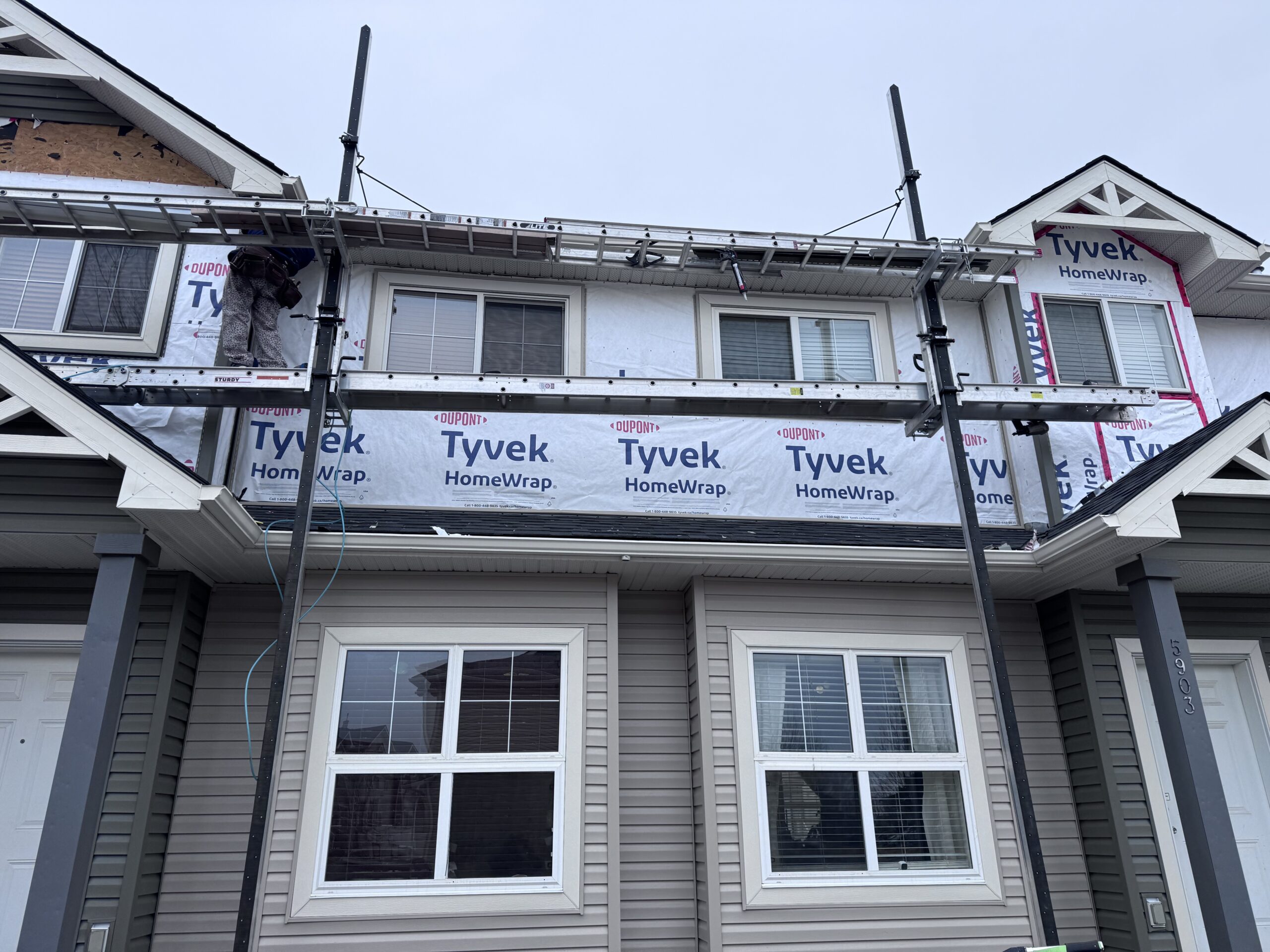
| Fibre cement | Fibre cement is heavy, and it does not forgive a bad cut. It needs specific blades, dust control and usually two people on a wall where vinyl needs one. Fastener spacing and joint treatment are specified by the manufacturer rather than left to preference, and the difference between a wall that holds and a wall that opens at the seams is whether somebody followed them. |
| Both | Both systems live or die on what is behind them. If the old cladding comes off and nobody looks hard at the sheathing and the weather barrier, the material on the outside is close to irrelevant. |
Owning it
Maintenance and Repairs Over Time
| Vinyl | Vinyl asks for very little. Wash it, and that is mostly the list. Its weakness is repair: a cracked panel means finding a match for a colour that has been fading on your wall since it went up, and older profiles get discontinued. |
|---|---|
| Fibre cement | Fibre cement asks for a little more. Sealant joints want checking, and the coating will eventually want refreshing. Its advantage is that almost everything is repairable — a damaged board is swapped and painted to match, and the wall looks whole again. |
There is a pattern in that. Vinyl is cheaper to own until something hits it. Fibre cement costs more to own and is far more forgiving when something does.
What About the Money
Fibre cement costs more up front, and most of that gap is labour rather than material. If you want the full breakdown of what sits inside a quote and what moves it, we wrote it out separately in what James Hardie siding costs in Calgary. This page is about which material fits your house, not about what the invoice looks like.
Your house
Which One Should You Pick?
| Choose fibre cement | if you are staying in the house long term, if you have taken hail damage before, if you want a specific architectural look, if fire separation matters on your lot, or if you would simply rather spend once and stop thinking about the walls. |
|---|---|
| Choose vinyl | if budget is the binding constraint this year, if you are preparing to sell and need the exterior presentable, or if the house is a rental where a lower up-front cost and easy panel replacement suit how you run it. |
Neither of those lists is a judgement. They are different answers to different situations, and we install both.
A Middle Path Most People Miss
You do not have to pick one material for the whole house. Fibre cement on the front and on the weather-facing elevations, vinyl on the sides that nobody sees and nothing hits, is a common and sensible split. Done deliberately, with consistent trim and a colour relationship that was decided rather than accidental, it reads as intentional. Done carelessly, it reads as a repair. The difference is planning it before anything is ordered.
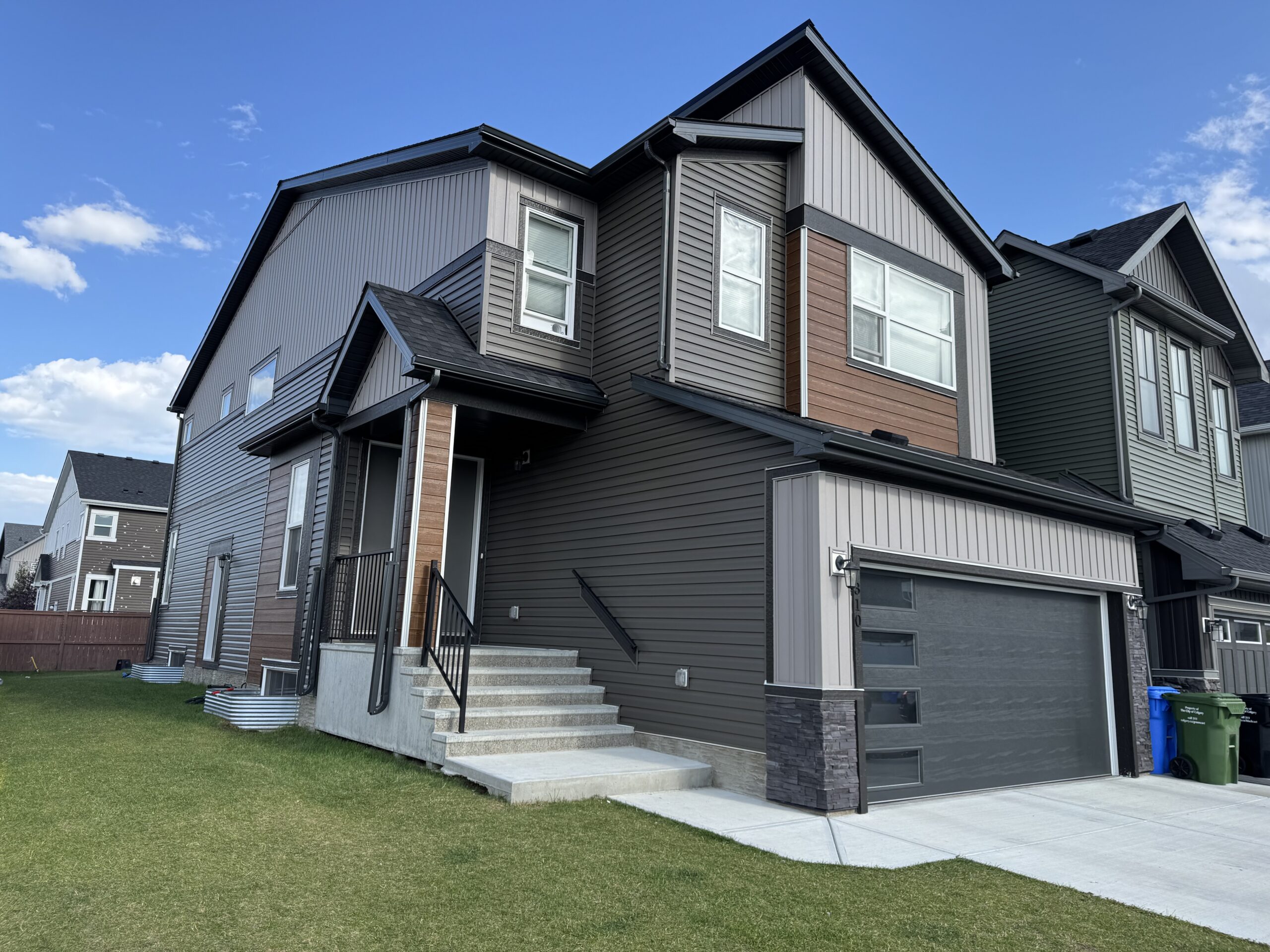
The same logic applies to the parts of the exterior that are not walls. If the soffit and fascia are tired, or the eavestroughs are near the end, doing them in the same visit is cheaper than doing them separately, because the access and the setup are already paid for.
Before you sign
What to Ask Before You Sign, Whichever You Choose
The material matters less than who installs it, so these questions are worth asking either way.
What happens when the old cladding comes off and the sheathing is bad?
You want an allowance and a per-sheet rate written into the quote, not a conversation held later when you have no leverage and the wall is open.
Who is actually doing the work?
On exteriors this changes more often than homeowners expect between the estimate and the first morning. Ask, and ask whether the same crew finishes the job.
Is the trim the same material as the wall?
Vinyl or wood trim against fibre cement weathers at a different rate, and the joint between them is exactly where water gets in. If the quote is cheaper than the others, this is one of the first places to look.
What is the fastener and joint specification, and who checked it?
Both systems have one. On vinyl it is about letting the panel move; on fibre cement it is about spacing and joint treatment. A contractor who cannot answer that question is telling you something.
Is there WCB coverage, and can you see the clearance letter?
If somebody is hurt on your property and the contractor is not covered, that exposure can land on you. It takes one email to produce the letter.
FAQ
Frequently Asked Questions
Is Hardie siding better than vinyl in Calgary?
It performs better against hail, fire and cold, and it holds colour longer. Whether that makes it better for you depends on how long you are staying and what your budget is this year. Quality vinyl installed properly is a legitimate exterior, not a compromise.
Does vinyl siding crack in Alberta cold?
It can. Vinyl becomes more brittle as the temperature drops, so an impact during a deep cold snap is more likely to crack it than the same impact in summer. It is one of the main reasons homeowners who have been through a bad hail year start asking about fibre cement.
Can I put Hardie on the front of the house and vinyl on the sides?
Yes, and people do — fibre cement on the elevations that face the street and the weather, vinyl on the rest. Done deliberately, with consistent trim and a colour relationship decided in advance, it looks intentional. Decided halfway through the job, it looks patched.
Which one lasts longer?
Fibre cement is the more durable material, and it is repairable in a way vinyl generally is not. We are not going to attach a number of years to either one — service life depends on installation, exposure and the specific product, and the manufacturer’s own warranty document is the place to look for a figure.
Which one adds more at resale?
Fibre cement generally presents better in listing photos and at a walk-through. We are not going to attach a percentage to that — the return figures circulating online were measured in other markets and do not transfer to Calgary.
Do I need to replace the soffit and fascia at the same time as the siding?
Not always, but it is the cheapest moment to do it. The access and the setup are already paid for, and the roof edge is easiest to inspect honestly while the walls are open. If it is borderline, doing it now costs a fraction of doing it as its own job later.
Can new siding go over the old siding?
It can in some situations, but it means nobody looks at the sheathing or the weather barrier underneath. On a re-side that is the part most worth seeing, and it is where the problems that shorten a wall’s life actually live. We would rather pull the old cladding and show you what is behind it.
Next step
Not Sure Which One Your House Wants?
You can look at James Hardie siding installation in Calgary and Airdrie and at vinyl siding installation, or see completed siding projects before you decide anything.
From the blog
More guides for Calgary homeowners
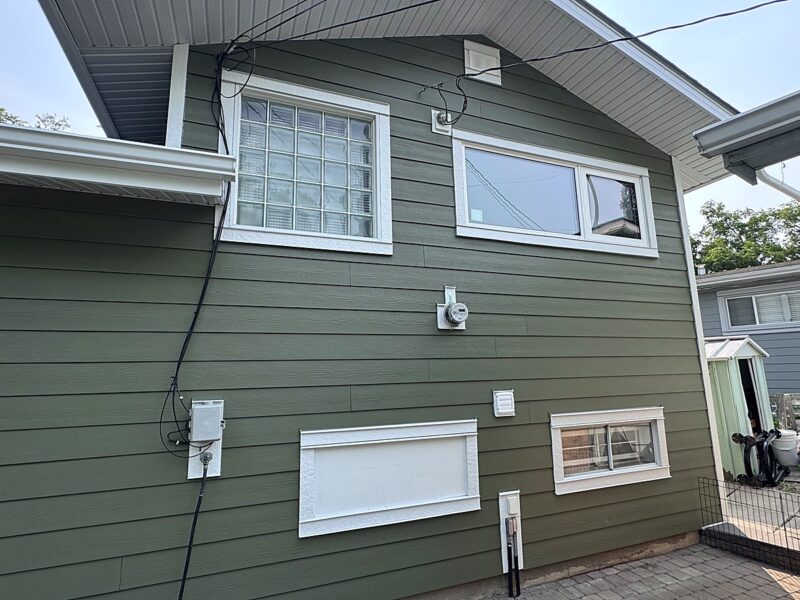
7 Signs Your Siding Needs Replacing (Alberta Homes)
Siding rarely fails all at once. Seven signals that the wall behind your cladding is taking water, and the plain difference between…
Read article
What Vinyl Siding Costs in Calgary and Airdrie
Vinyl siding is priced by the square foot of wall, installed. Here is every line that belongs in a quote, what moves…
Read article
Is Metal Roofing Really Hail-Resistant? What Alberta Homeowners Should Know
Metal roofs resist hail better than shingles, but they can dent. What Alberta hail actually does to metal and what UL 2218…
Read article