Soft sheathing at the penetrations
Vents, stacks and skylights are where water gets in first, and the damage stays local for years before it spreads. A soft patch gets cut out and replaced, not screwed through.
Doing this work at the same time as the walls? Our siding services in Calgary and Airdrie page compares James Hardie, vinyl and metal side by side, and explains what a complete exterior quote covers — the access and setup are paid for once when the jobs run together.
This page is about how the roof actually goes on: which profiles we install, how the seam locks, what gauge changes in practice, and what comes off the house before anything new goes down. If you are still deciding whether metal is the right call at all, the two guides at the foot of the page cover that ground properly.
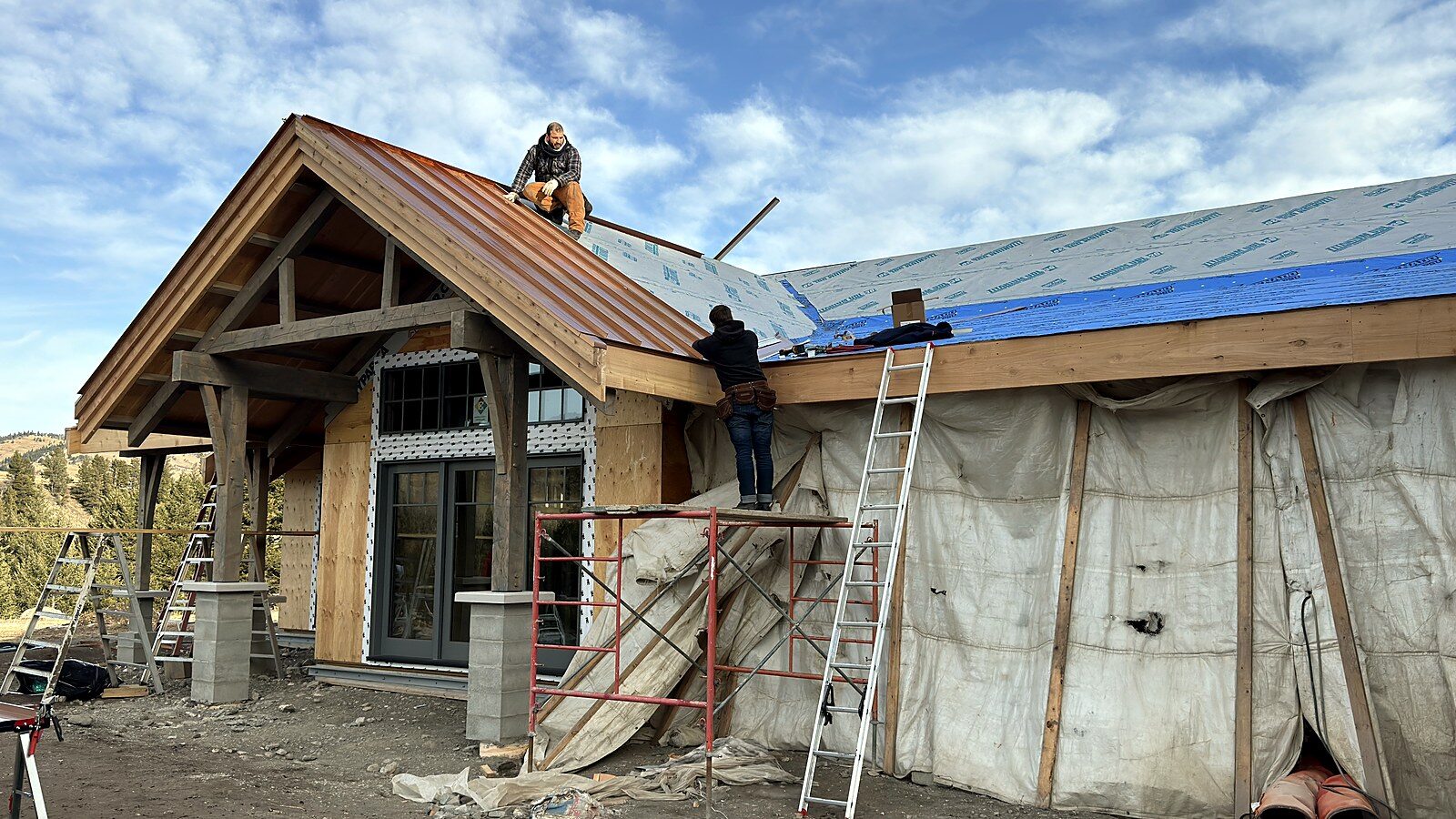
Metal can be laid straight over an existing shingle roof. It is faster, there is nothing to haul away, and it costs the homeowner less on the day. We do not do it.
The reason is the deck. Once panels are down, the sheathing is buried under two coverings and nobody looks at it again for the life of the roof, and the deck is what every fastener on that roof holds into. If a sheet has gone soft around a vent or along a valley, the screw that lands there is holding into wet board. None of that shows from the outside on the day. All of it shows later.
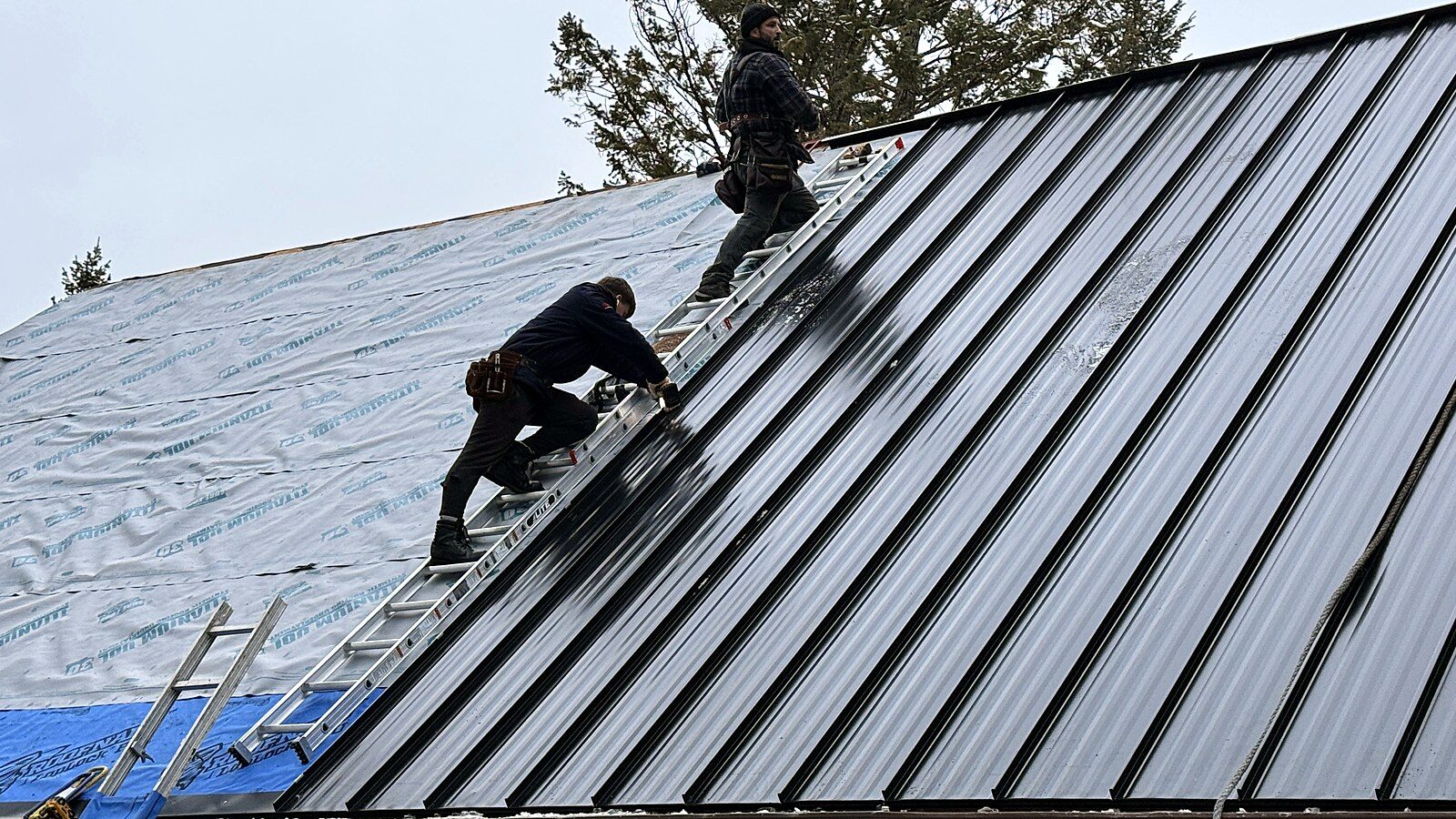
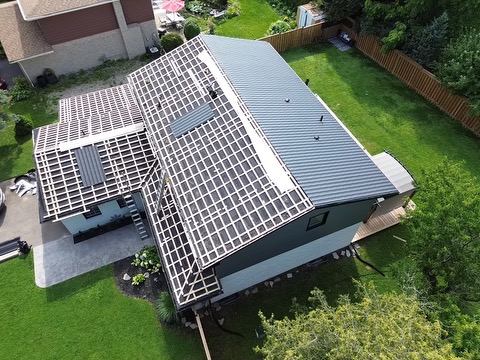
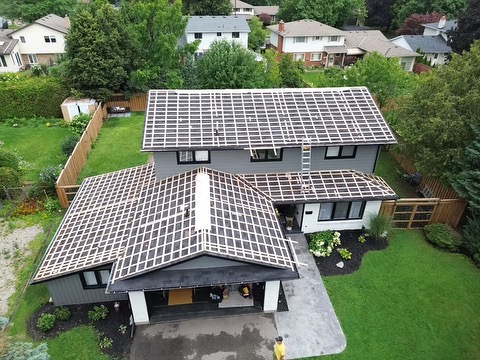
The old roof comes off. Every job, down to the deck. It is the only way anyone knows what the panels are being fastened to.
None of this is a reason to expect bad news. Most decks are sound and the inspection adds an hour to the job. It is a reason to look, and looking is not possible through a roof you decided to leave in place.
Not sure which option suits your house?
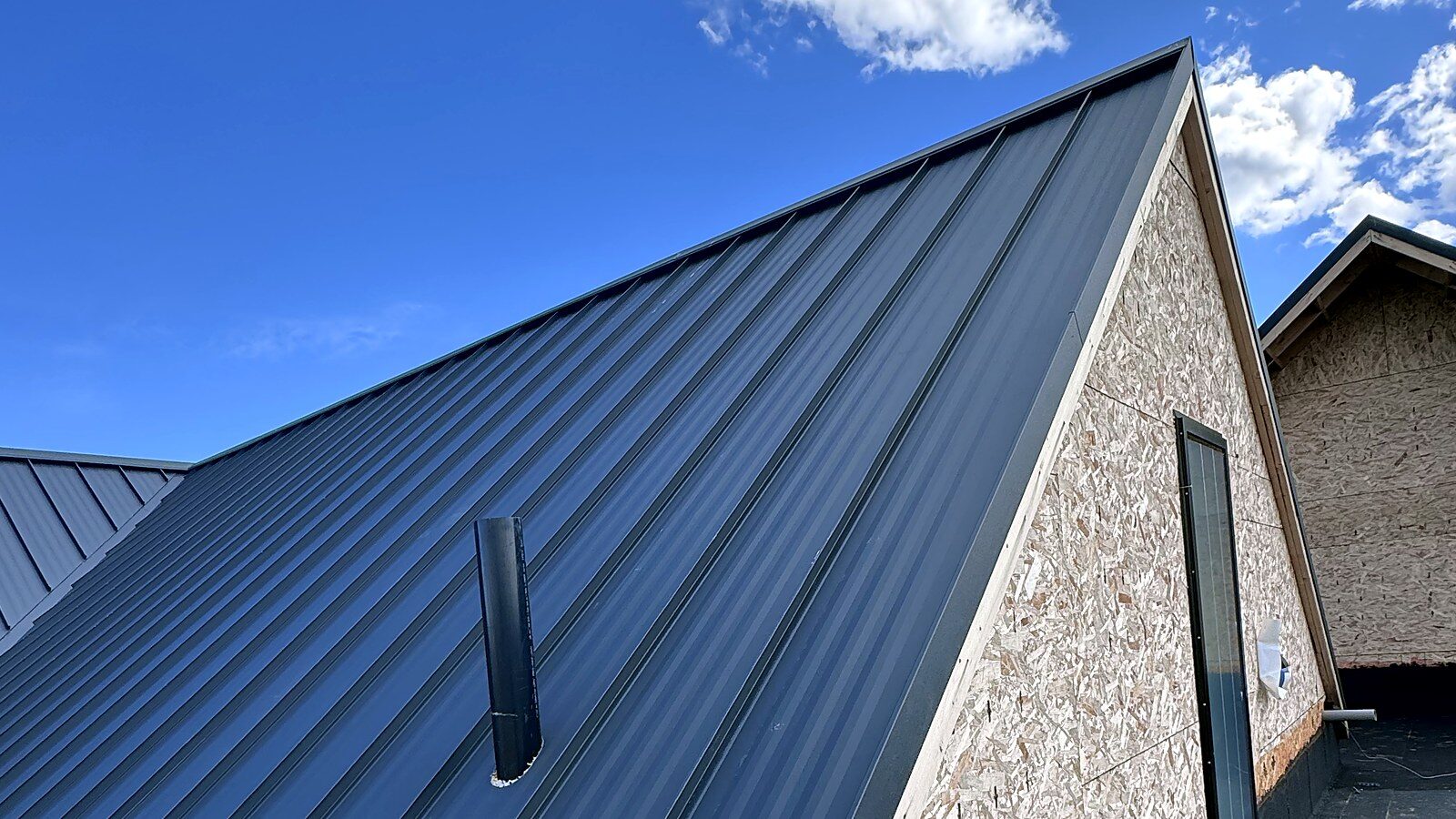
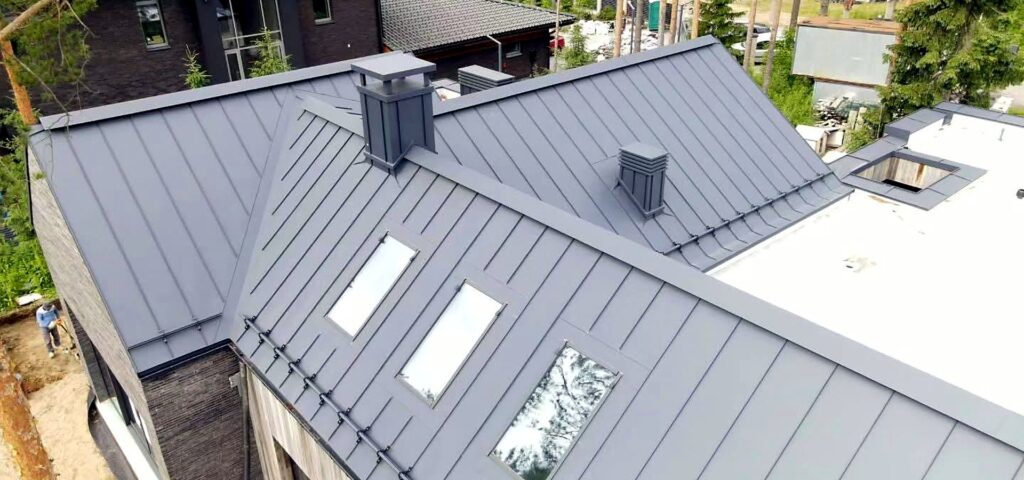
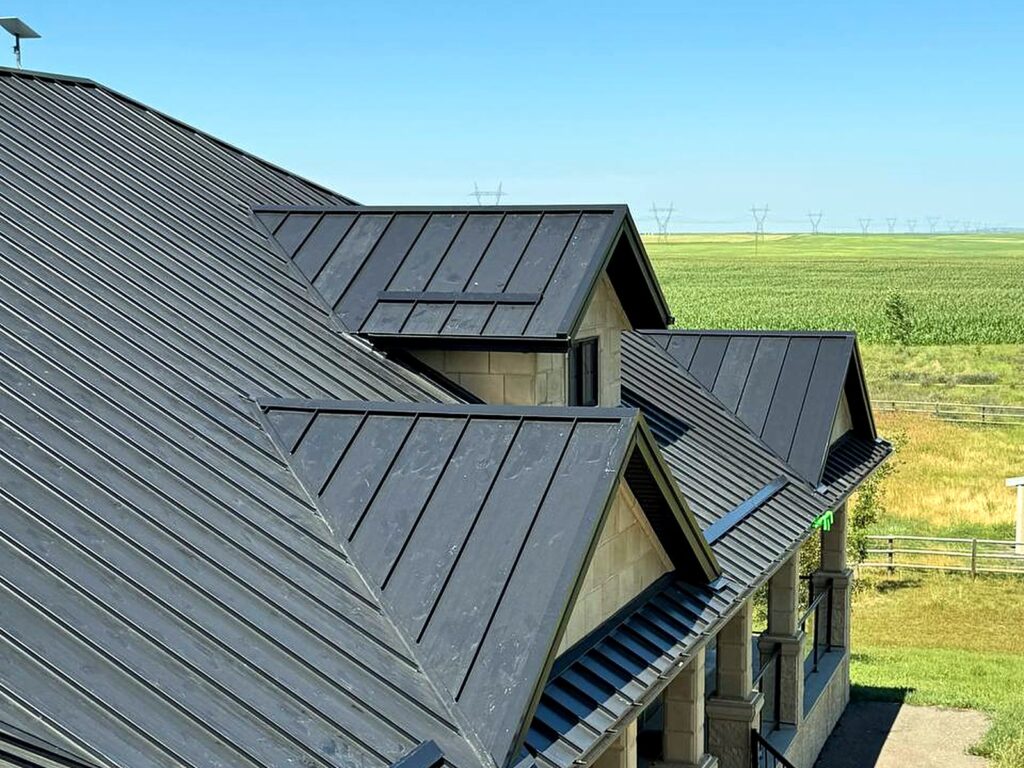
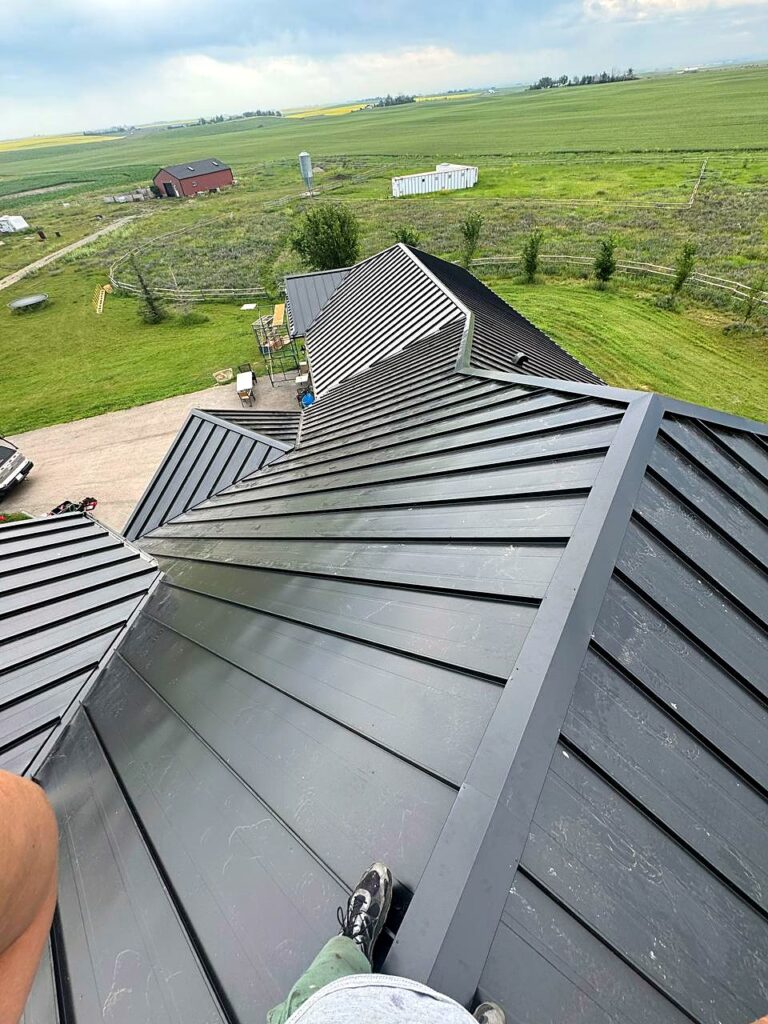
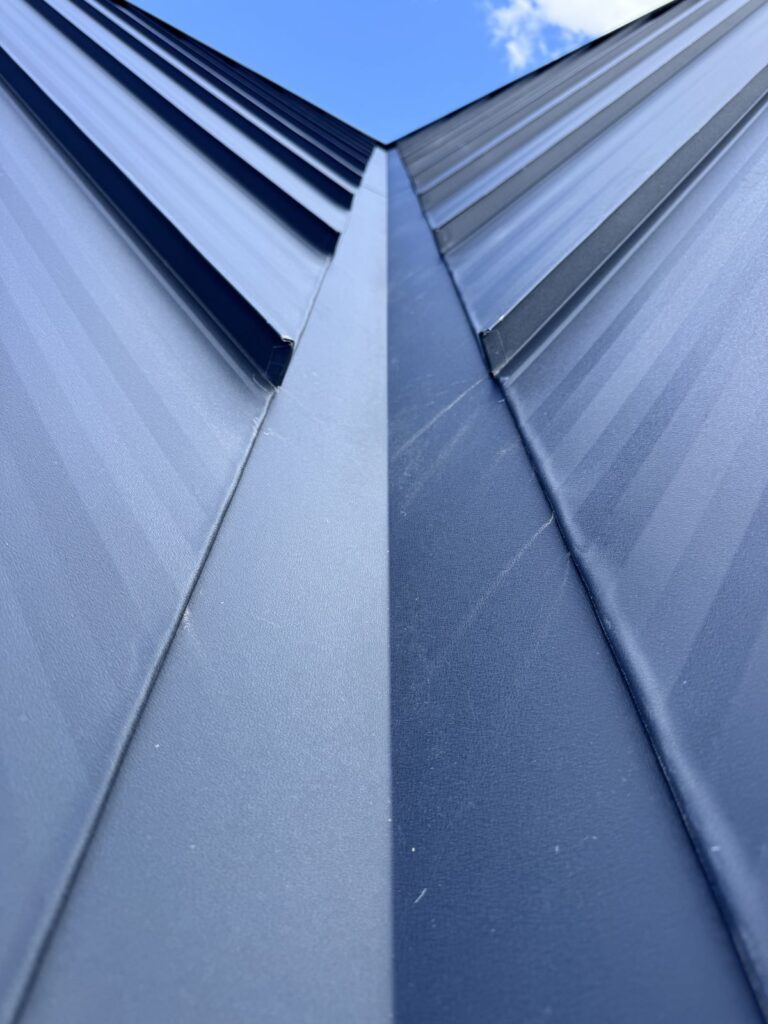
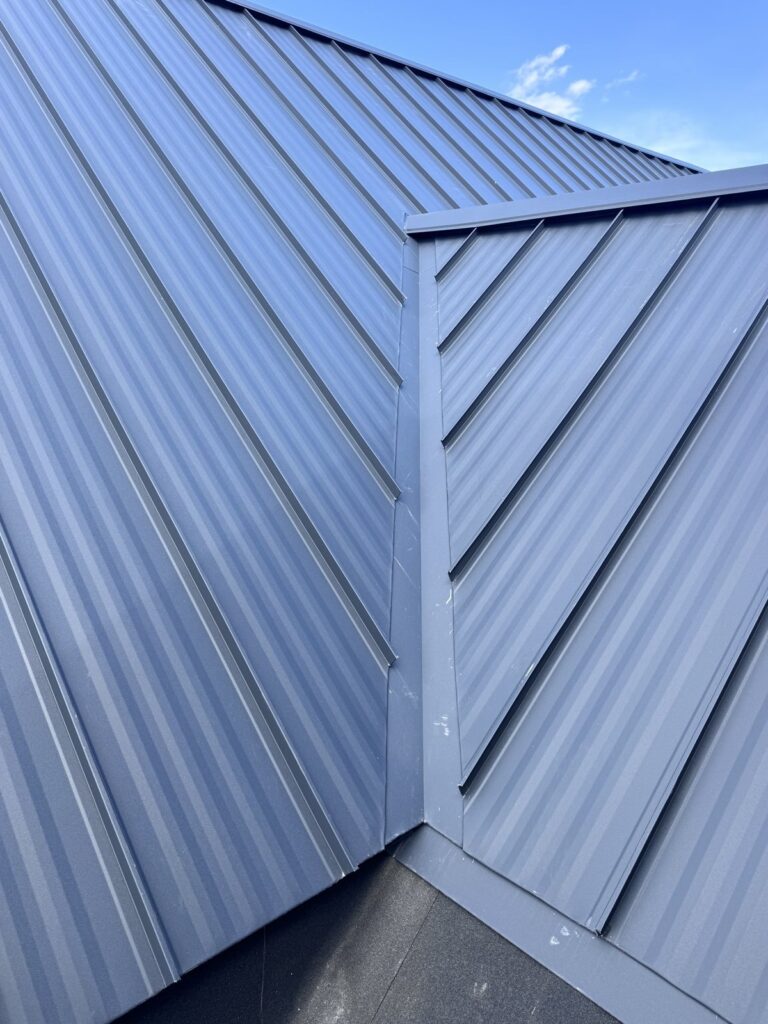
Standing seam is the profile people mean when they say a metal roof looks expensive, and what they are reacting to is the absence of screws. On an exposed-fastener panel the screws pass through the face of the metal into the deck, each one sealed with a rubber washer. On standing seam the panel clips to the deck and the next panel covers the clip, so the fastening sits under the seam where weather never reaches it. That is most of the price difference between the two, and most of the reason the profile keeps going.
We install both lock types. Which one belongs on your roof is a question about slope, run length and budget, not about which is newer.
The two panel edges are formed so they click together under hand pressure along the length of the seam. Quicker to lay, no seaming machine needed on site, and it suits most residential slopes.
A machine runs the length of the panel and folds the seam closed, once or twice depending on the profile. It is the tighter of the two, and the one to reach for on long runs and low slopes where water sits on a seam instead of running past it.
Neither lock is screwed through the panel face. The clip holds the panel to the deck and lets it slide as it heats and cools. Steel expands whether or not the fastening allows it, and a panel pinned at both ends buckles or tears at the fixing.
Narrower panels mean more seams, a stiffer field and a busier look. Wider ones mean fewer lines and more unsupported metal between them. It gets decided against the roof and the house in front of us, not by a default.
Ready to price your project?
We install three profiles, and they are not competing for the same building. Most of the decision is made by what the roof is on.
Corrugated sheet is the cheapest metal roof anyone will quote you, and it is cheap for a reason: it belongs on an outbuilding. We will fit it there without argument, and we will say the same thing if you ask about it for the house.
If you are weighing metal against a new shingle roof rather than choosing between metal profiles, our asphalt shingle roofing page covers that side of it.
We install 24 gauge and 26 gauge steel, and the choice is yours to make at the measure. Gauge runs backwards from what you would expect: the lower number is the thicker metal. Both are ordinary roofing steel, both are installed to the same standard, and what changes is how the finished roof behaves.
The thinner of the two and the more common one. Lighter to handle, less expensive, and entirely adequate on a straightforward roof over a well-supported deck.
Thicker and stiffer across the width of the panel. It holds its shape better underfoot and bridges any unevenness left in the deck more forgivingly.
Oil-canning is the faint waviness you can see in a flat panel from a low angle in the right light. Thicker metal and narrower panels both reduce it. It is cosmetic rather than a fault, but people notice it on a large plain roof face.
Thickness is not a hail rating and it is not a warranty. The panel warranty comes from the manufacturer and covers the steel and the coating on their terms, not ours.
We will tell you which of the two we would put on your roof and why we think so. Either one goes on the same way.
The panels are the part you see and the smallest part of the argument. A metal roof keeps water out through the layers beneath it and the detailing around everything that interrupts it.
The deck, repaired before anything else
Soft or delaminated sheathing is cut out and replaced. This is the one part of the job nobody can price accurately before the old roof is off, which is why the estimate says in advance what happens if we find it.
Underlayment across the whole roof
The membrane is what keeps water out while the panels are going on, and the backup for the rest of the roof’s life. It is not the steel that makes a roof watertight on day one.
Ice and water membrane at the eaves and valleys
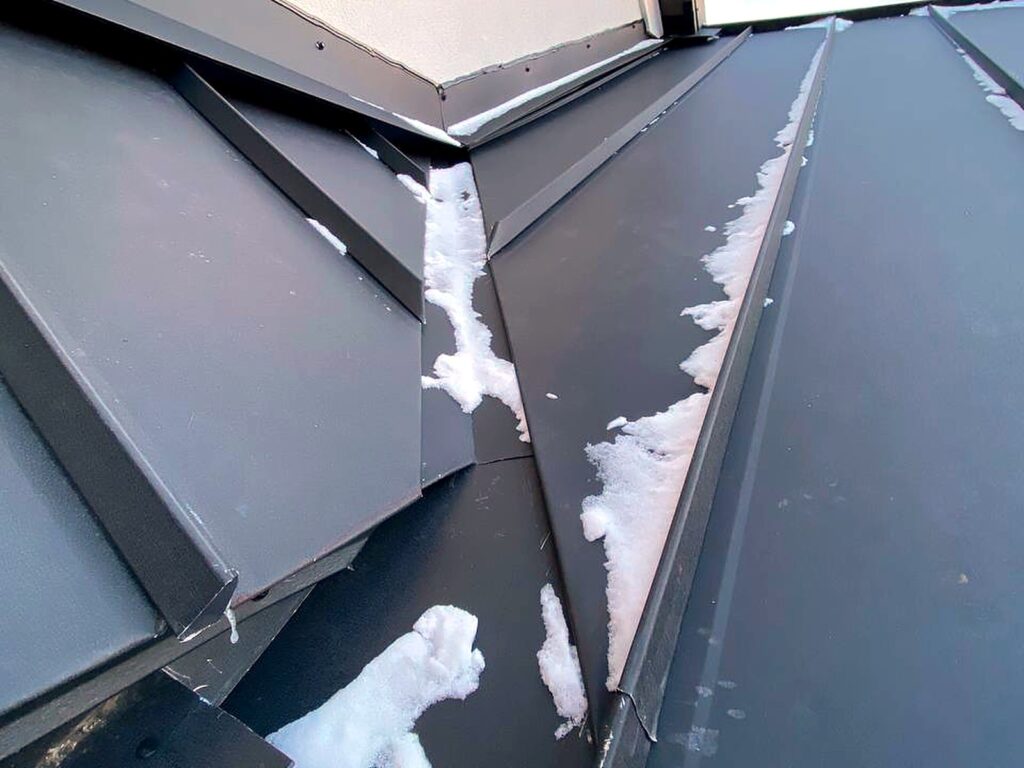
Self-adhering membrane where meltwater backs up behind ice and where two planes drain into one. In this climate the eave is not an optional place to detail.
Flashing at every interruption
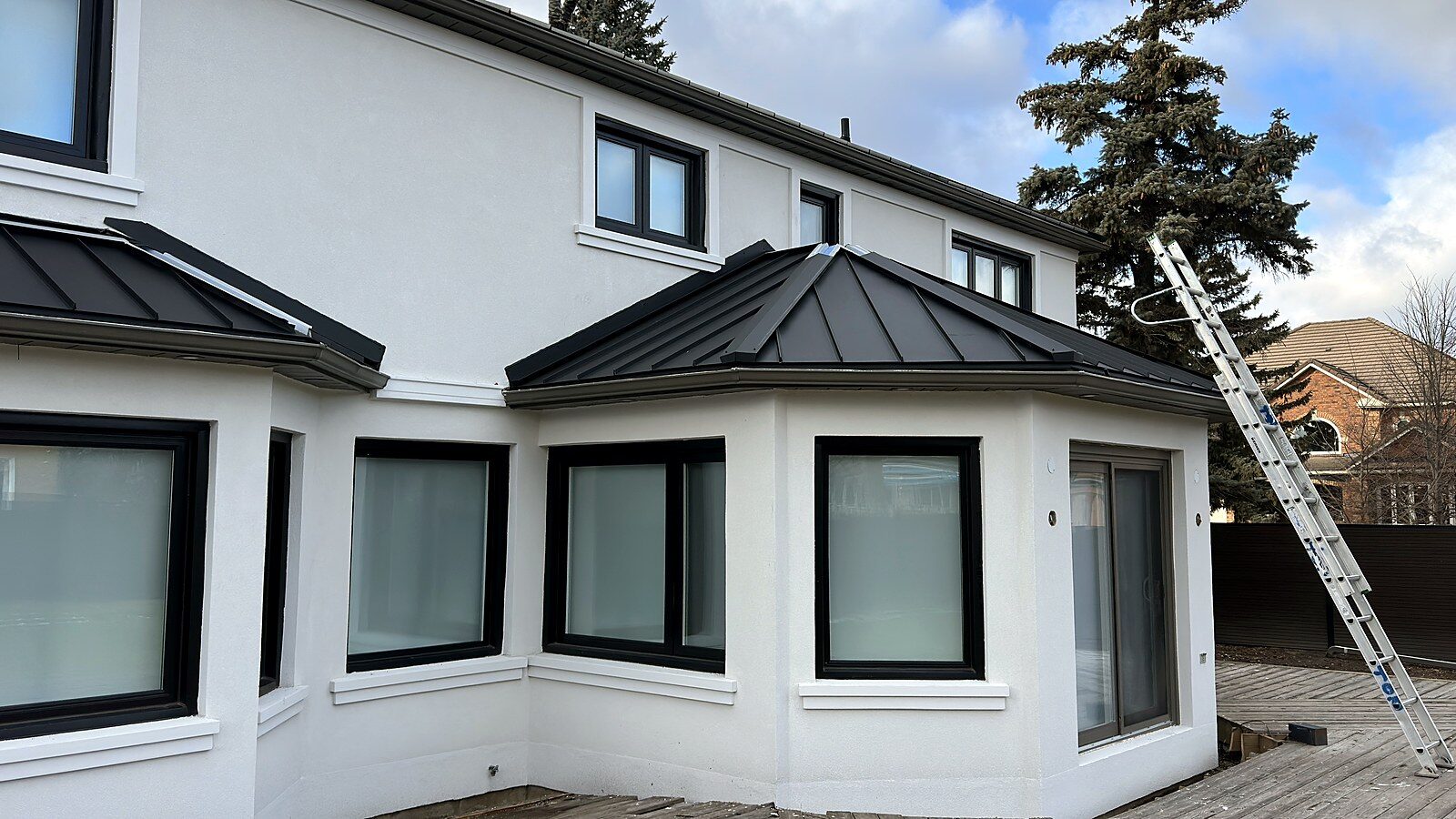
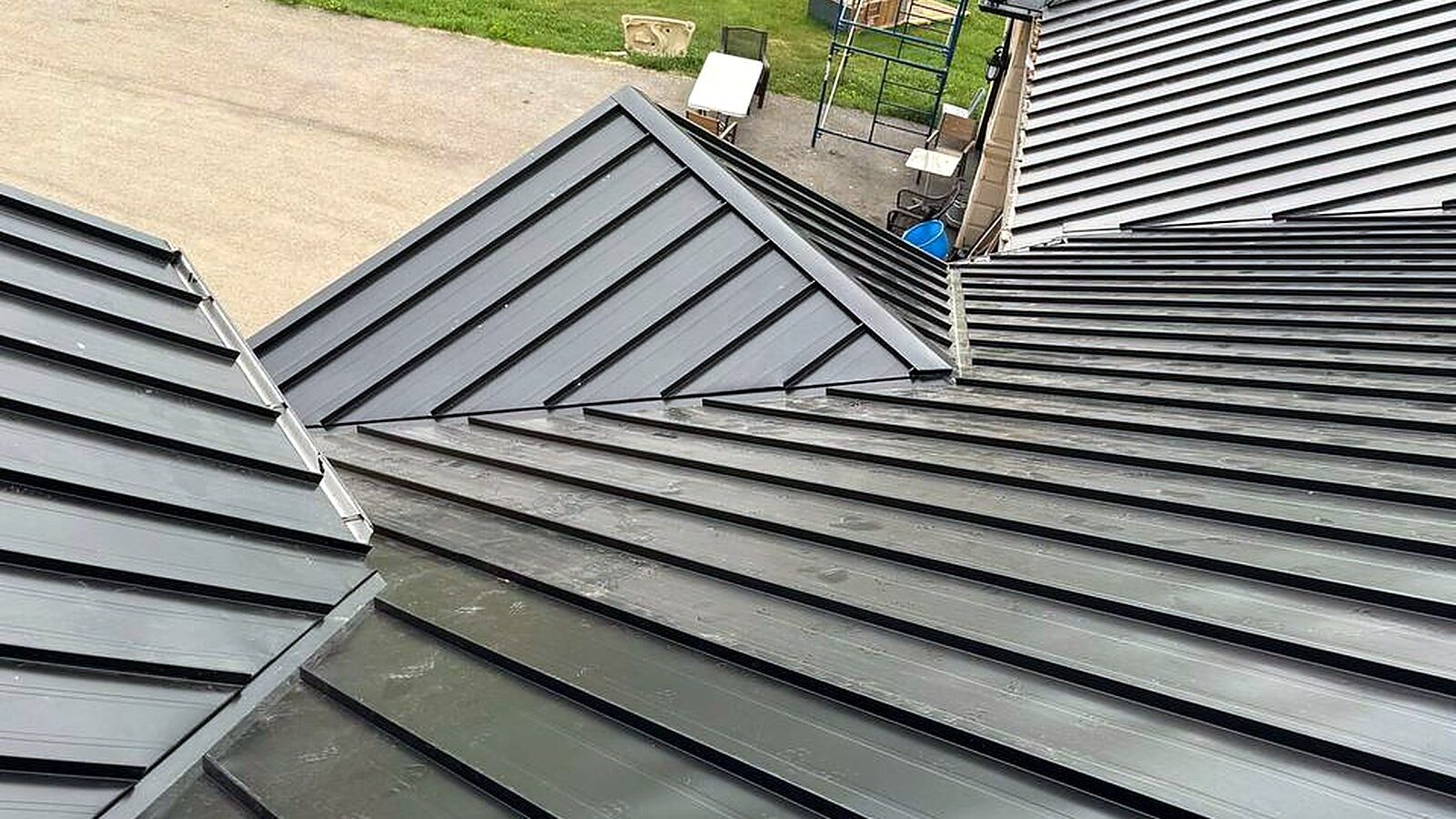
Chimneys, stacks, vents, skylights, wall junctions and valleys. Panels are the easy part of a metal roof. The flashings are where the work sits and where failures start.
Ventilation that matches its intake
Exhaust at the ridge is half of a system. Air has to get in at the eave, which means the soffit, and a roof vented at the top with a blocked intake moves very little air at all.
Three things in this climate act on a metal roof harder than they act on a shingle one, and all three are handled at the detailing stage rather than by the choice of covering.
A smooth steel roof does not shed snow gradually the way an asphalt one does. It holds the load and then releases it, sometimes most of it at once. Where that lands is the part worth planning: entrances, walkways, driveways, gas meters, and anything sitting below a valley that funnels two slopes into one. We walk those zones with you at the measure.
Ice builds along the edge when warm air from the attic melts snow higher up the slope and the meltwater refreezes past the heated part of the roof. The covering is not the cause and no covering solves it. What fixes it is air moving in at the eave, which puts the soffit inside a roofing conversation rather than beside it.
Steel expands and contracts with temperature, and a chinook can move a dark roof surface a long way in a single afternoon. Floating clips and correctly spaced fastenings absorb that. It is the reason the fastening detail carries more weight here than it would in a milder place.
On hail: metal handles it better than asphalt does, and it can still dent. Where the line falls between a dent you can see and damage that matters is a longer subject than this page should take on — what hail actually does to a metal roof goes through it, including what the published ratings do and do not promise.
The ventilation half of that middle point is the same intake the rest of the exterior depends on. If the boards are soft or the vents are painted shut, attic ventilation through the soffit is the page that deals with it.
Nothing here is unusual, but knowing the order helps you tell whether a quote you are holding covers the same work.
The measure
We come out, get on the roof where it is safe to, look at the deck from inside where there is access, and talk through profile, gauge and colour with you rather than at you.
A fixed written estimate
The figure is written down before anything starts, and it states what happens if the deck needs work, because that is the one item nobody can price from the ground. What we quote is what you pay.
A schedule you have in writing
Once the scope is agreed we put the timing in writing. We do not promise a date on a website. We commit to one after we have seen the roof.
Strip to the deck
The whole old covering comes off and goes in the bin. None of it goes back on the roof.
Deck inspection and repair
Walked, checked, and anything soft replaced before the first membrane goes down. You are told what we found and shown it if you want to see it.
Membrane, flashings, panels, trims
Underlayment over the deck, ice and water where it belongs, flashings at every penetration, then the panels, then the ridge, hip, gable and eave detailing.
Cleanup, and a magnet over the ground
Metal roofing produces screws and offcuts. The magnet goes over the lawn, the beds and the driveway before anyone leaves.
The crew on your roof is our crew. We do not subcontract the installation, which is why the person who quoted the job is the person answering for it afterwards. Licensed, WCB-covered and insured, with a 10-Year Workmanship Warranty on what we install.
We do not put prices on the website. A metal roof is not a per-square-foot product, any number here would be wrong for most houses, and a figure that turns out to be wrong is worse than no figure. What we can do is set out exactly what moves it, so nothing in the estimate lands as a surprise.
In the estimate
Priced separately or not included
What drives the figure is roof area and pitch, the number of valleys, penetrations and dormers, how the roof is reached and how material gets up there, the profile and gauge you choose, and the condition of what is underneath. A steep, cut-up roof with six penetrations is a different job from a plain gable of the same area, and the difference is labour rather than metal.
For how metal sits against a new shingle roof over the length of time you expect to own the house, we set that out separately in how metal compares with shingles on cost.
Standing seam, AG panel and exposed-fastener panel — all three, chosen against the building rather than sold as a tier. Snap-lock or mechanically seamed, decided by slope and run length. 24 or 26 gauge, your call at the measure once you know what each one changes. The old roof always comes off, down to the deck, before anything new goes on. Our own crew, a fixed written estimate, and a schedule in writing once the scope is set. Licensed, WCB-covered and insured, with a 10-Year Workmanship Warranty.
Want a fixed written quote for your house?
Two longer pieces cover the ground this page deliberately leaves alone.
Why Calgary homeowners are choosing metal roofing — what changed in the market, how metal handles the weather here, what it costs against shingles, and who it does not suit.
Is metal roofing really hail-resistant? — how panels behave under impact, the difference between a cosmetic dent and functional damage, and what the published impact ratings actually claim.
Doing this work at the same time as the walls? Our siding services in Calgary and Airdrie page compares James Hardie, vinyl and metal side by side, and explains what a complete exterior quote covers — the access and setup are paid for once when the jobs run together.
Send us a few details and we’ll prepare an honest, tailored quote.