Horizontal lap
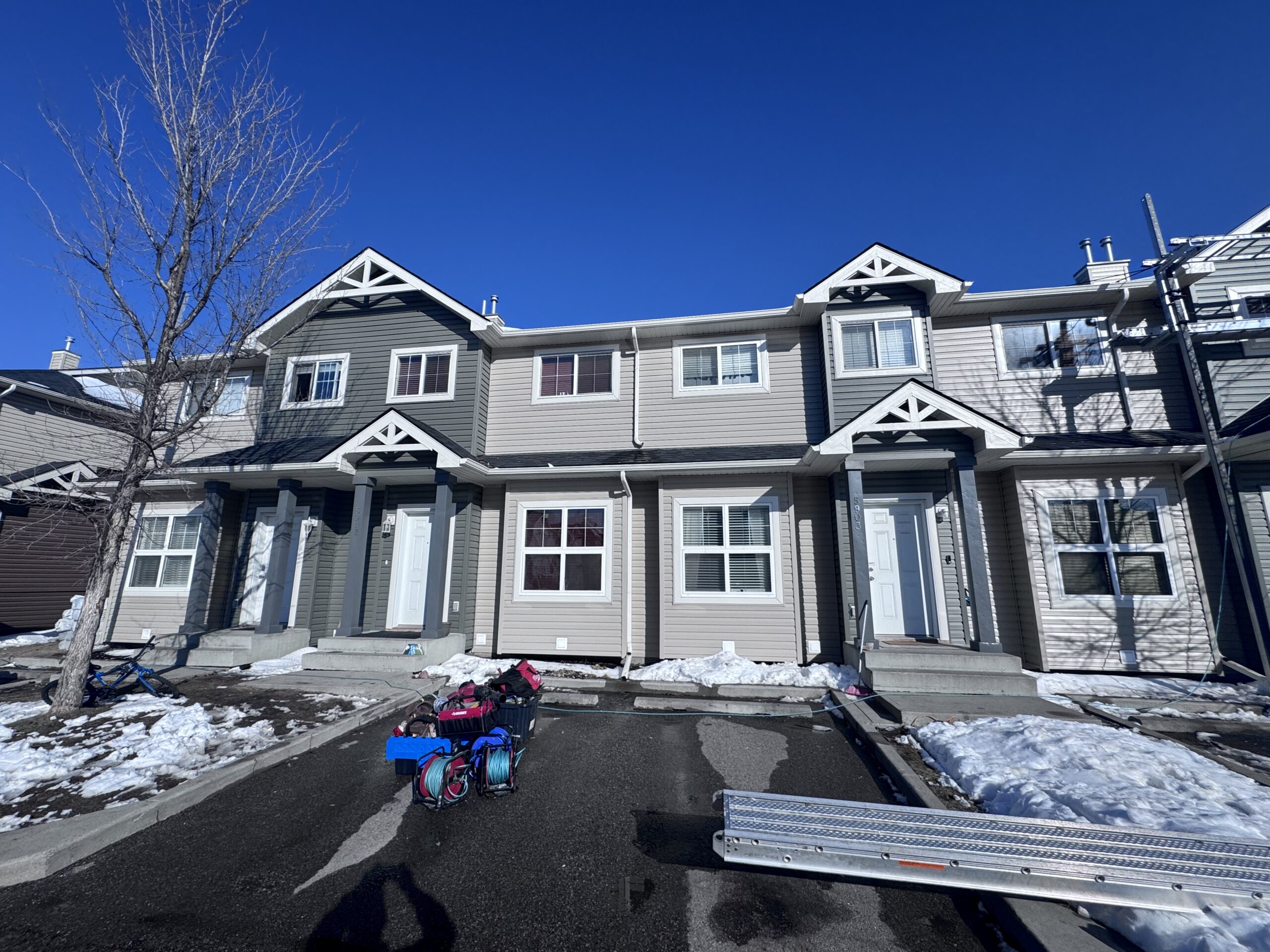
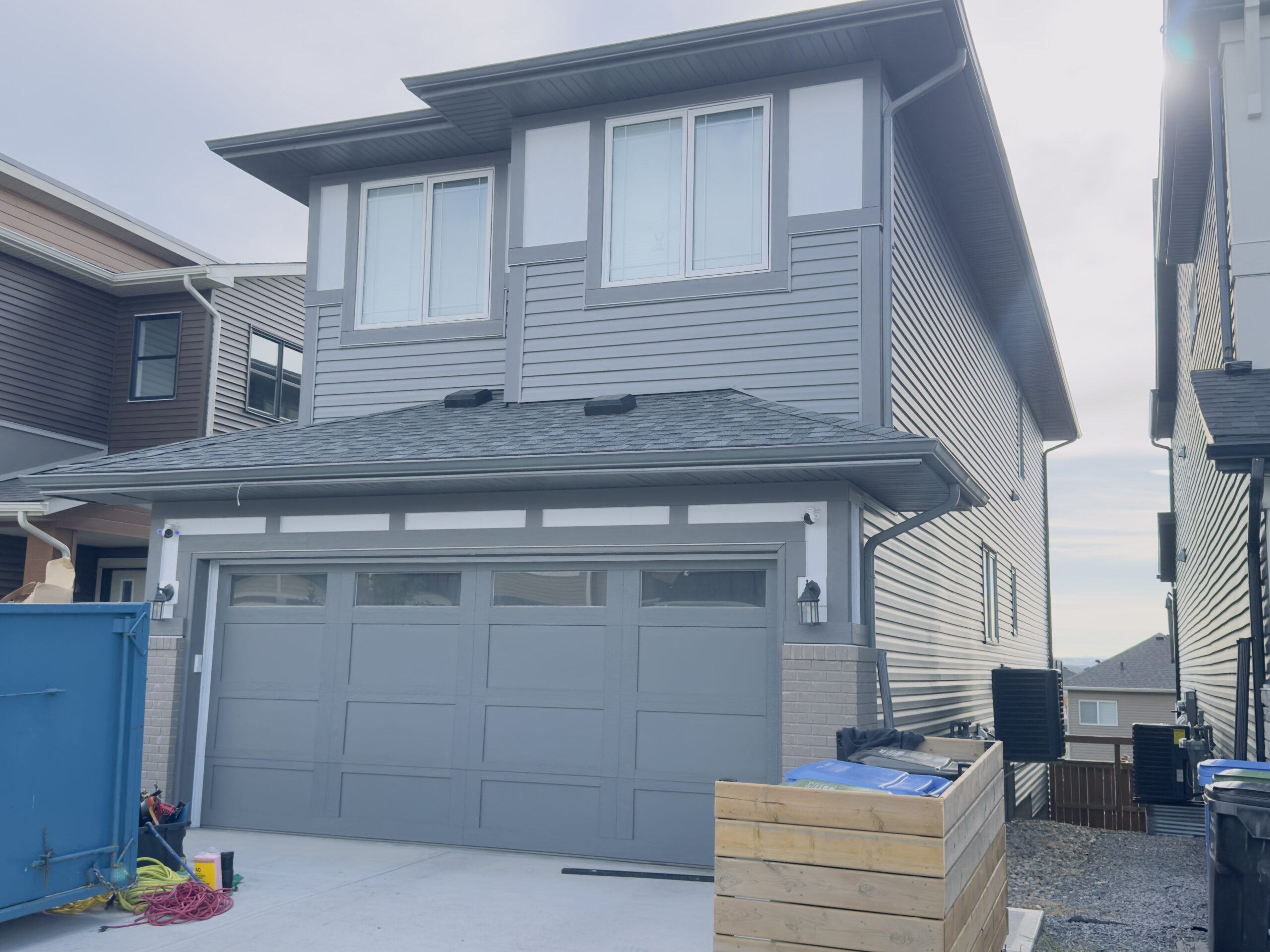
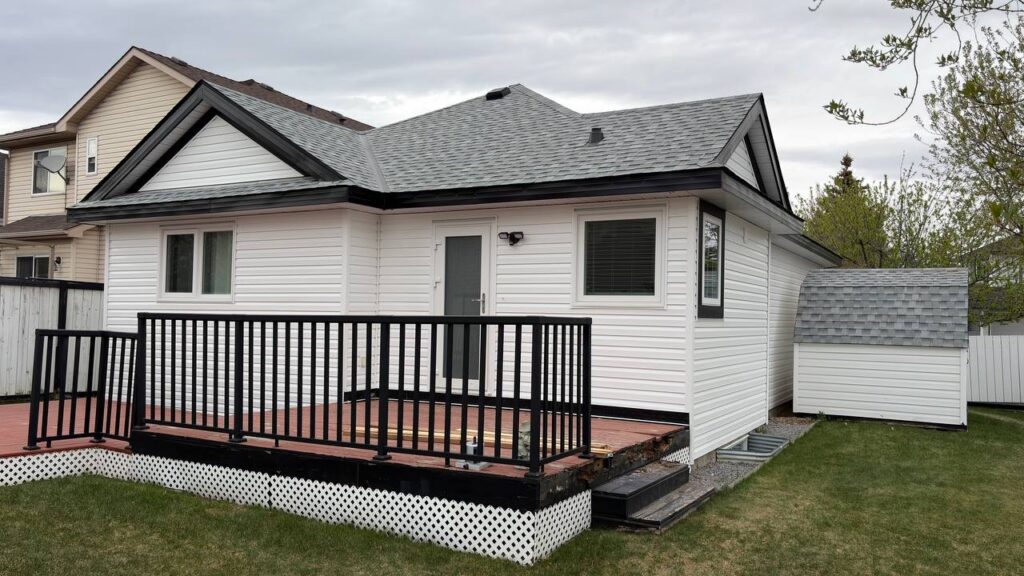
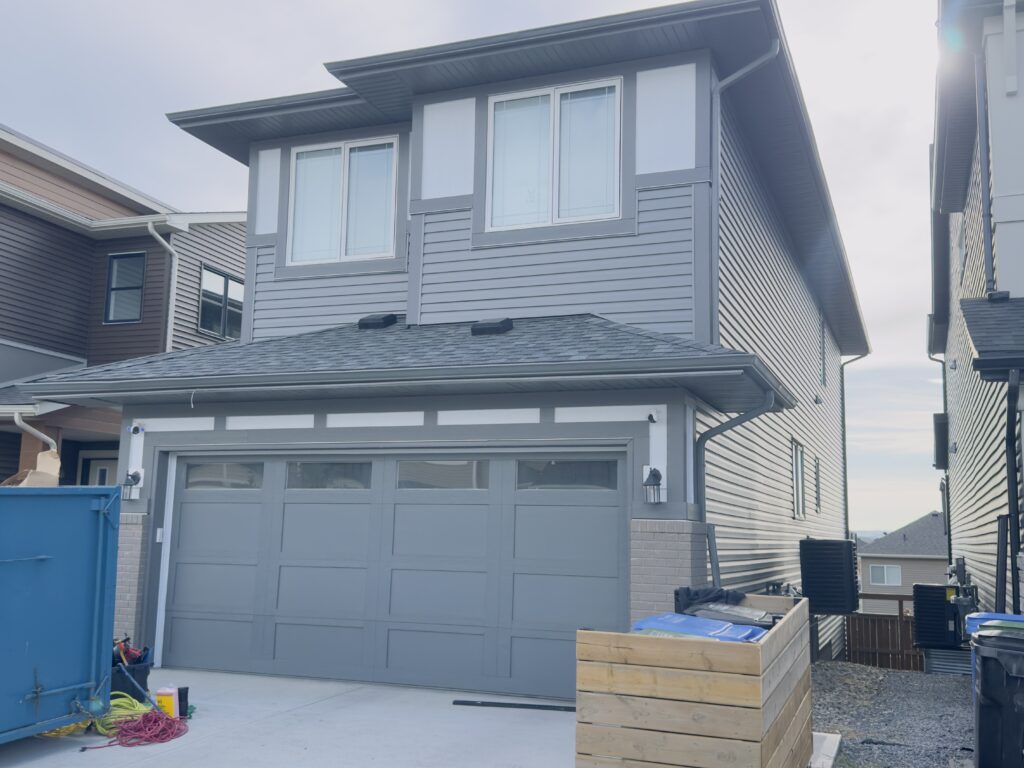
The default, and what most people picture. Panels run across the wall with a shadow line at each course. The exposure — how much of each course shows — changes both the look and how many rows go on the same wall.
Smart value with a beautiful, low-maintenance finish — dozens of colours to choose from.
Start here
Vinyl is the most-installed exterior in Alberta, and most of the time that is a sensible decision rather than a cheap one. It goes on faster than fibre cement, it costs less in labour because one person can handle a panel that would take two, and on a large wall area that difference is the whole conversation. If you are re-siding to sell, running a rental, or covering a lot of square footage on a budget that has to also cover a roof, vinyl is usually the right call and we will tell you so.
It is also the wrong call on some houses, and we would rather say that at the measure than after. Vinyl is a thin polymer panel: it cracks on impact rather than chipping, it is combustible, and it moves a lot with temperature. If you plan to keep the house for a long time, if hail has already cost you an exterior once, or if the look you want depends on a deep shadow line and a heavier board, fibre cement is the better answer even though it costs more.
Vinyl usually makes sense when
Vinyl is the wrong answer when
Not sure which option suits your house?
Side by side
People ask us to settle this, and there is no settling it in the abstract: the answer changes with how long you are staying. Here is the same six-point comparison we would give you standing on your driveway.
| Vinyl | Fibre cement | |
|---|---|---|
| Cost of the job | Lower, and most of the gap is labour rather than material | Higher, and most of the gap is labour rather than material |
| Hail | Cracks or punctures on impact, more readily when cold. A bad storm often means replacing whole sections | Can chip at the surface but rarely fails through. Usually a touch-up rather than a section |
| Deep cold | Stiffens and becomes brittle to impact. This is the real Alberta constraint | Does not change character the same way |
| Colour | Coloured through the panel, so a scratch does not show white. Fades with sun, and a new panel will not match an old wall | Coated rather than coloured through. Fades too, but a faded wall can be repainted and a replacement board painted to match |
| Fire | Combustible | Non-combustible |
| Repairs | A damaged panel can be swapped out on its own, which is a genuine advantage | A damaged board is replaced and painted in |
Neither column is the winner. If you want the long version we wrote it out separately, including where each one loses: how fibre cement and vinyl actually compare. And if the comparison pushes you the other way, James Hardie fibre cement siding is the page you want.
Ready to price your project?
The profiles
The brand is your choice as much as ours. We install Kaycan, Gentek, Mitten and Royal vinyl siding, and which one goes on the house is settled at the measure rather than by what we happen to stock.
Vinyl is not one product, and the profile changes the look of a house more than the colour does. These are the categories you will be choosing between, described as categories rather than as a price list.
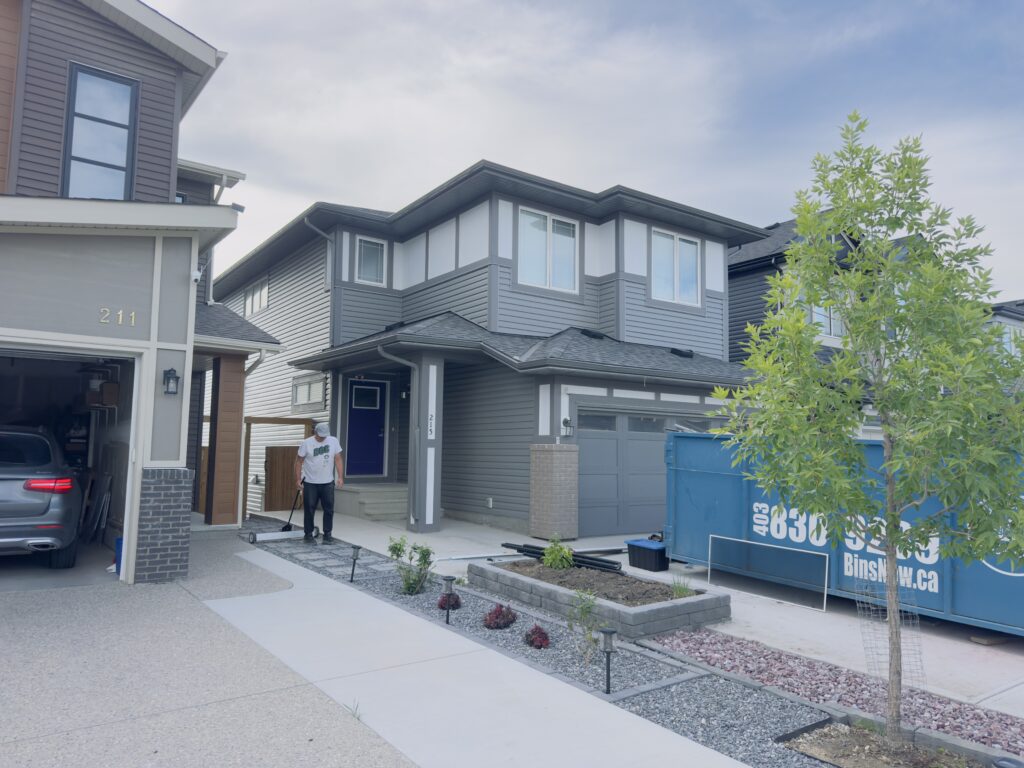
The default, and what most people picture. Panels run across the wall with a shadow line at each course. The exposure — how much of each course shows — changes both the look and how many rows go on the same wall.
A lap profile with a bevelled top edge, so the shadow is sharper and the wall reads with more texture from the street. Common on older houses here and often chosen to match a neighbourhood.
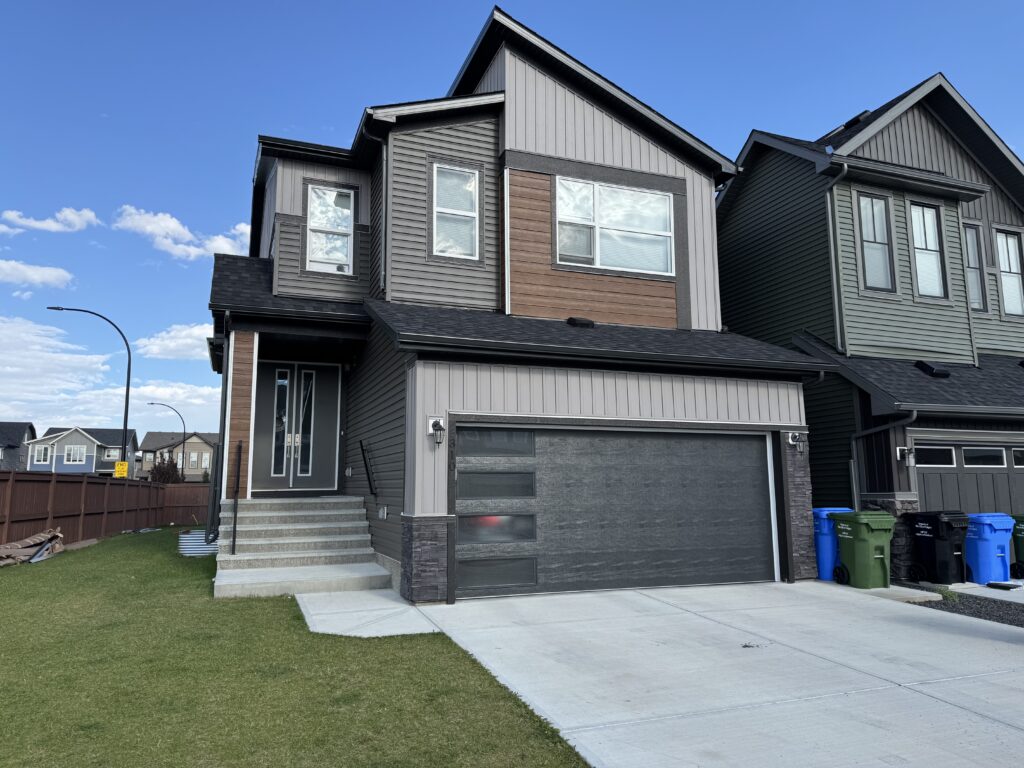
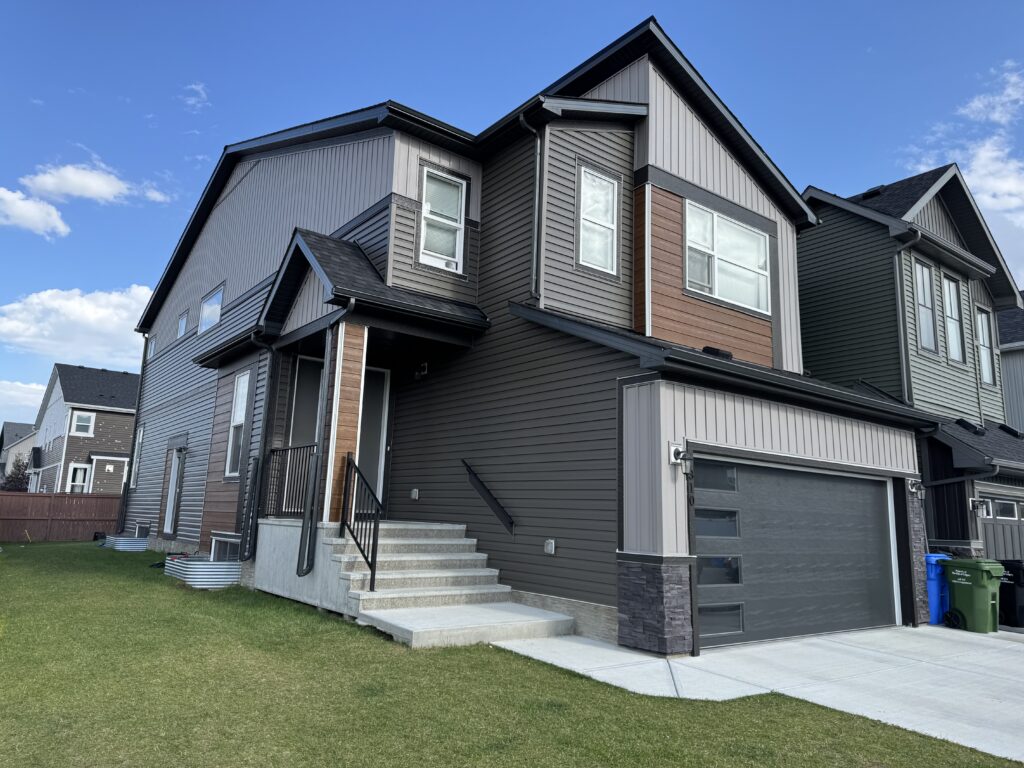
Vertical panels with raised battens. Reads modern or farmhouse depending on the rest of the house, and it suits tall gable ends where horizontal courses look busy. Batten spacing is a design decision, not a default.
Textured panels used as an accent on a gable, a dormer or a front feature, rarely on a whole house. Used well it breaks up a large elevation; used everywhere it looks restless.
Thicker panels hold their shape better against wind and handling, and are less likely to show waves down a long run. Hollow-back panels sit on the wall with air behind them; insulated panels have a contoured foam backing that supports the face and stiffens it. Which one suits your wall is a conversation at the measure.
Behind the panel
Almost every vinyl job that goes wrong went wrong behind the panel, not on it. The wall you can see is the last layer of four, and the other three are where the difference between a good installer and a cheap one actually lives.
House wrap goes on the sheathing
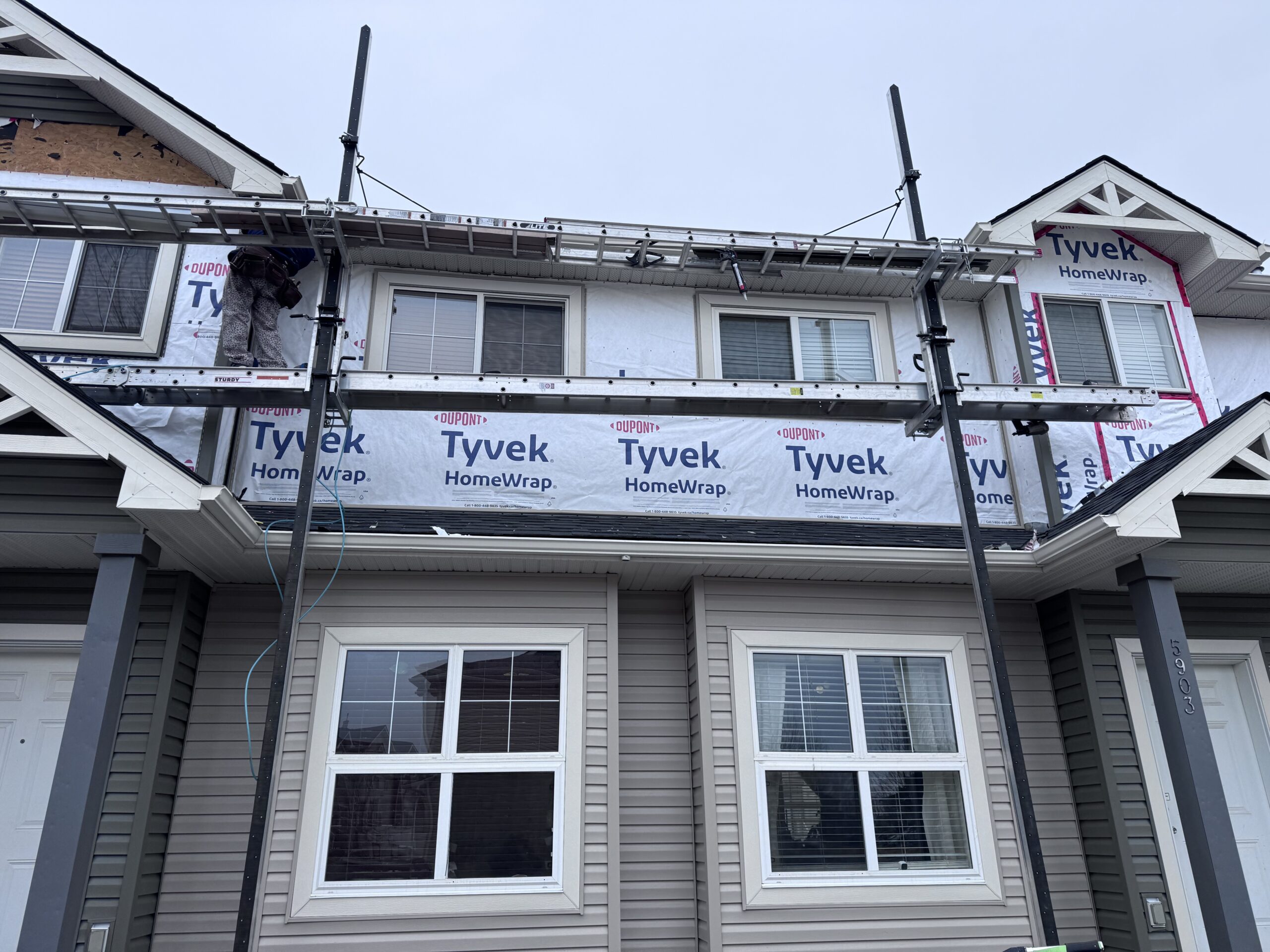
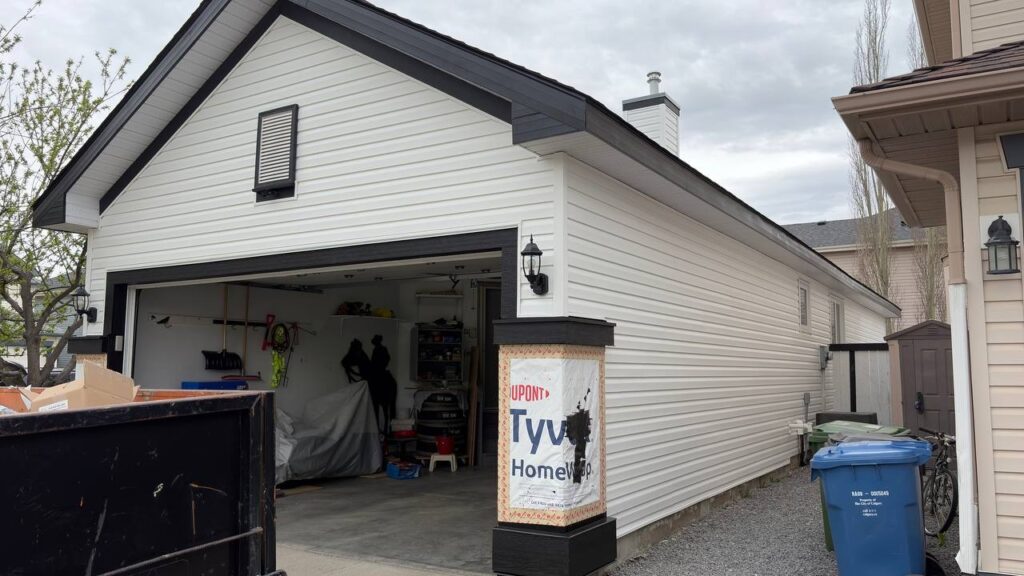
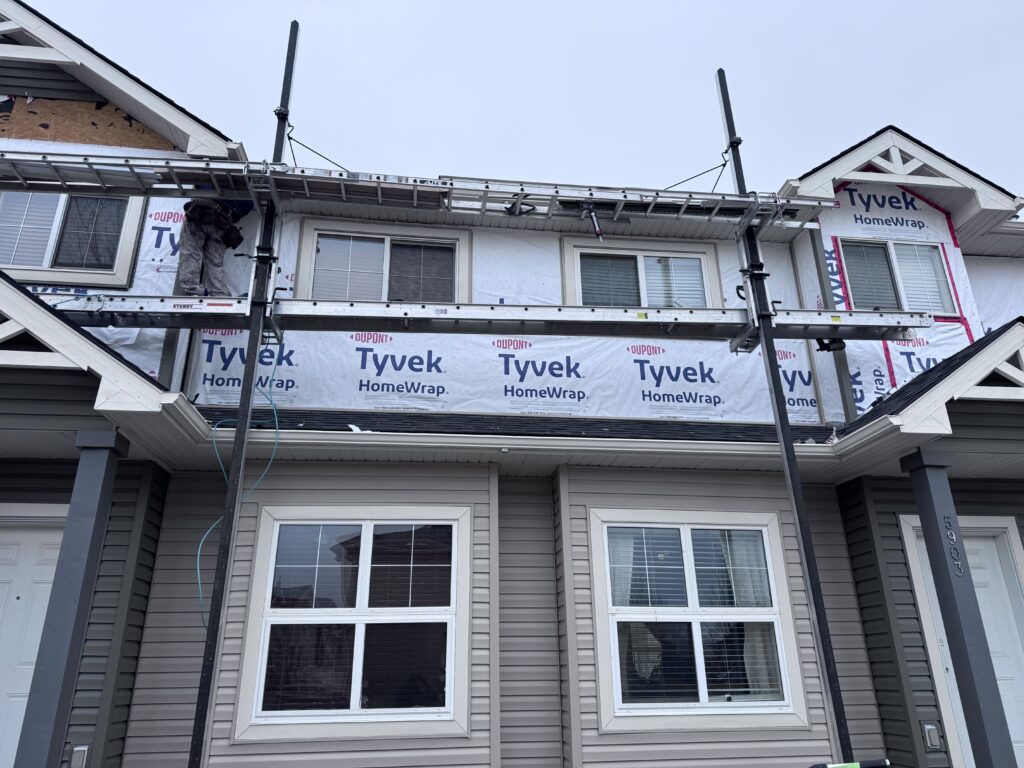
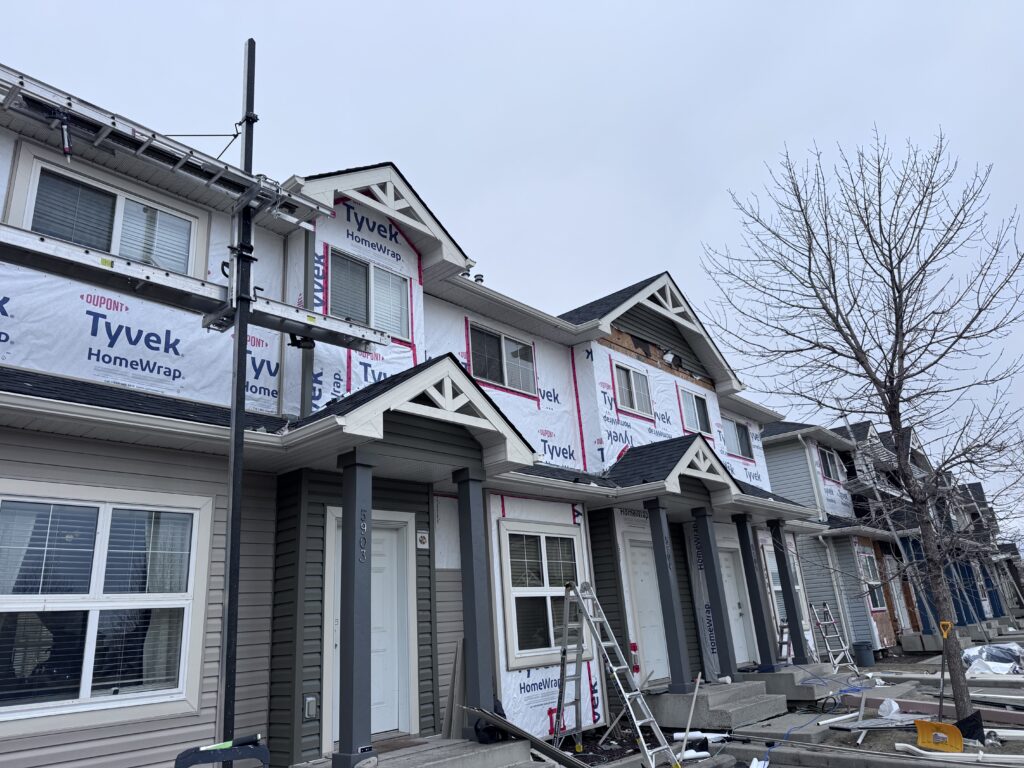
With the old exterior off, the sheathing gets looked at and the weather barrier goes on properly — overlapped in the right direction so water runs over a joint rather than into it, and taped at the seams. This layer is what keeps water out of the wall. The siding is the part that takes the weather.
Flashing at every penetration
Windows, doors, hose bibs, dryer vents, electrical, the line where the wall meets the roof. Each one gets flashed and integrated into the wrap in the correct order. Sealant is not a substitute for flashing, and where we find sealant doing a flashing job, we redo it.
Fasteners to the manufacturer's schedule
Nailed in the centre of the slot, at the spacing the manufacturer publishes, and — this is the part that matters — not driven tight. A vinyl panel is meant to hang, not to be pinned.
Room left for the panel to move
Vinyl expands and contracts a lot with temperature, and an Alberta wall sees a big swing in a single chinook day. Panels are cut short of the receiver channels on purpose, so they have somewhere to go. A wall that was nailed tight in July shows a wave in January, and that wave never comes out.
Alberta factor
This is the part most vinyl pages skip, so we will not. PVC gets harder and more brittle as the temperature drops. In a deep cold snap a panel that would have shrugged off a stone in August can crack from the same hit, and that is a property of the material rather than a fault in the installation. It is the main reason we tell people with a hail history to look at fibre cement.
The chinook swing works on the wall from the other direction. A day that starts below freezing and ends above it moves every panel on the house, and it does that repeatedly through the winter. Installed with room to move, the wall absorbs that and you never notice. Installed tight, it buckles, and the buckle is permanent. Summer heat does the same thing in the other direction: a dark colour on a south wall runs hotter and moves further than a pale one on the north, which is worth knowing before you choose the colour rather than after.
What vinyl asks of you in this climate is not maintenance — it is a correct installation. There is very little you can do to a vinyl wall from the outside to make it last longer, and almost everything that decides how it ages was settled in the week it went on.
The job
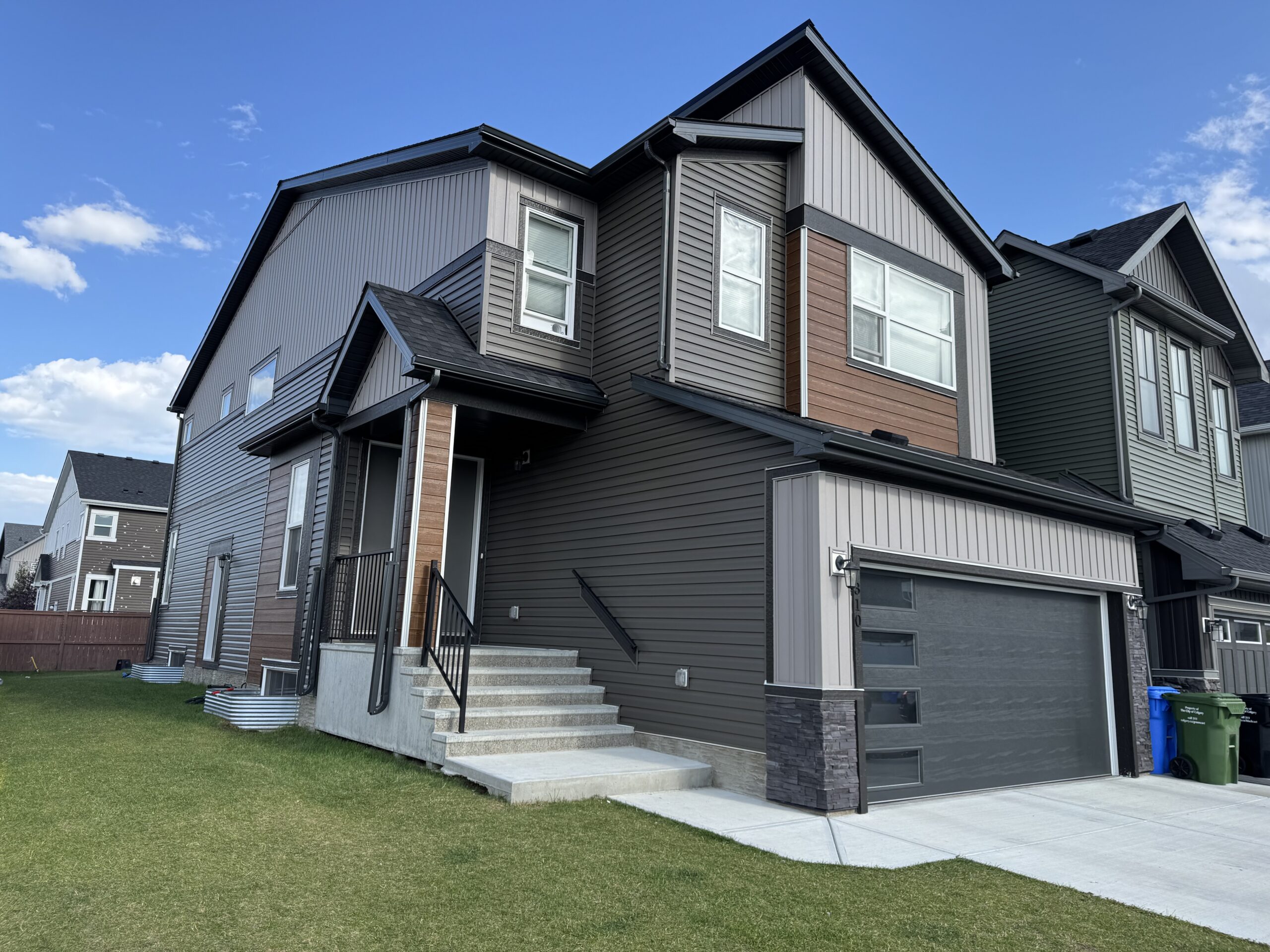
One crew is on your house from the first day to the last. We do not subcontract any part of this — every person on the job works for us and only for us — so there is nobody to send you to when you have a question at the end of day three.
On-site measure
We walk the exterior, measure the actual wall area, count the corners and the openings, and check access — how tall the elevations are, how tight the lot is, whether there is a walkout at the back. Soffit, fascia and eavestroughs get looked at on the same visit, because those decisions cost less made together.
Fixed written quote
The scope line by line: profile and exposure, trim, tear-off, disposal, an allowance for sheathing repair, weather barrier, access and cleanup. The number does not move afterwards unless you change what you asked for.
The old exterior comes off
Not covered over. Going over old cladding is faster on the day and it means nobody sees the sheathing or the weather barrier underneath, which is the part most worth seeing while the wall is open.
You see what was behind it
Anything we find gets photographed and sent the day we find it — soft sheathing, a flashing detail somebody skipped, old water tracking. At the rate already written into the quote, not a number invented on the spot.
Wrap, flashing, then panel
The four layers from the section above, in that order, to the manufacturer's published instructions rather than to habit.
Cleanup and walk-through
Offcuts and packaging out the same day, a magnet sweep across the yard and driveway, and a walk around the house with you before anybody calls it done.
Living through it
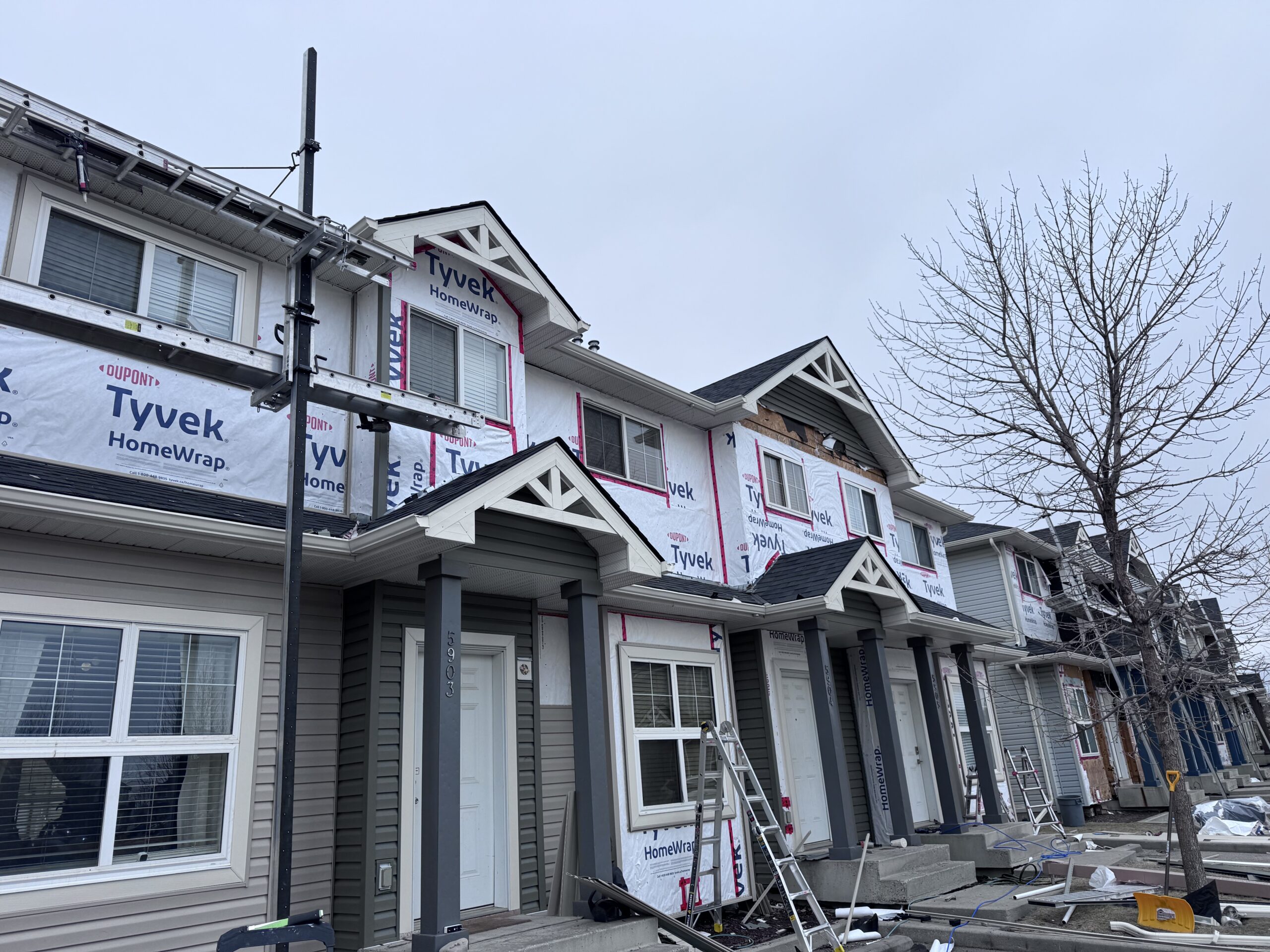
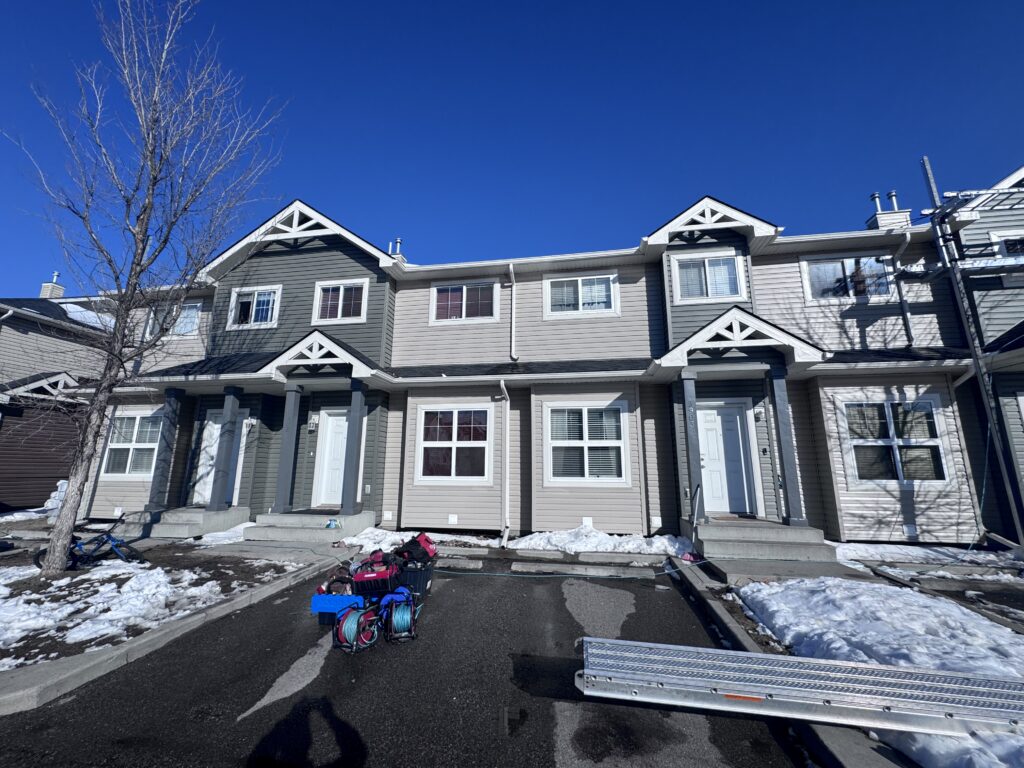
Most of our vinyl work is not a new build — it is taking an old exterior off a house somebody is living in. That changes the job in ways worth knowing before you book it.
The house is open in sections rather than all at once, and the wrap goes back on the same day a section comes off, so the building is never left exposed overnight. Windows stay usable, though the ones on the wall being worked get dusty and we would rather you keep them shut on those days. You will hear us: tear-off is the loud part and it is early in the job, not spread through it. Access matters more than people expect — a tight side yard, a deck against the wall or a fence line close to the house all slow the work down, and we would rather price that honestly at the measure than discover it on day two.
The other thing about an occupied re-side is that the wall tells the truth once it is open. Soft sheathing, rot at a window head, a chimney chase that was never flashed properly — these turn up on older houses and they turn up after the quote, not before. You get a photo and the number the same day, at the rate already agreed. The soffits and eavestroughs come off with the old siding on most of these jobs, which is why soffit and fascia is worth deciding on at the same measure rather than a year later.
The quote
We do not publish a price per square foot for vinyl, because the honest number comes from measuring your walls. What actually moves it is below. If a quote you are comparing ours against is missing one of these lines, it is not a cheaper job — it is the same job with the uncertain parts left out of the number.
A two-storey with a walkout has far more wall than a bungalow with the same floor plan. Floor area cannot be priced.
Every outside corner, window and door is trim, cuts and time. Two houses of the same wall area price differently if one has twice the windows.
The single largest unknown. The quote carries an allowance for sheathing repair with a stated rate beyond it, so a bad wall changes the number in a way you can see coming.
A narrower exposure means more courses on the same wall. A thicker panel costs more and handles differently.
Window and door surrounds, corners, frieze. This is where a cheaper quote quietly saves money, usually by putting a different material against your siding.
Two storeys, a tight lot or a walkout at the back all change the staging, and staging is labour.
Included as standard: tear-off and disposal of the old exterior, house wrap and seam tape, flashing at every penetration, trim and corners, fasteners to specification, access and staging, and a magnet sweep at the end. Not included unless it is written in: structural repair beyond sheathing, window or door replacement, added exterior insulation, soffit, fascia or eavestrough work, and permits where your municipality requires one. Painting is not a line at all — vinyl is not painted. If you want the longer version of what actually drives the price of a siding job, we wrote it out separately.
Repairs
Full re-sides are most of what we do, but they are not all of it. If a storm took three panels off the north wall, that is a job we will come out for, and we will come out for one corner. Small work is real work.
What we repair
What a repair will not fix
That last line is the one worth understanding before you call. A replacement panel comes out of a current run and your wall has been in the sun for several years, so the new one will read brighter — that is not a supply problem, it is what happens to pigment outdoors. What works in practice is robbing panels from a hidden elevation, the back wall or behind a deck, using those for the visible repair, and putting the new ones where nobody looks.
Warranties
Two separate warranties end up on your house, and they cover different things. Ours covers the work: a 10-year workmanship warranty on the installation itself. The manufacturer's covers the material, and it is issued by them, not by us — we hand you their document rather than paraphrasing it.
Which material warranty you get depends on whose panel goes on your house, and that is your decision. Across the four Canadian documents we have read the shape is similar: a lifetime limited warranty to the original homeowner for as long as they own the property, and a single transfer to the next owner. Where they part company is what happens at that transfer — one keeps the full term, another prorates it down to a fixed end date. Those differences are worth reading. You get the document that belongs to your material, not our summary of it; Kaycan's Canadian warranty document is one example of what one looks like.
Two things matter more in Alberta than the length of any of them. The first is hail. Every document we have read supplies replacement material for hail-damaged panels and stops there — the labour and freight to put them up are the homeowner's — and two of the four send you to your own insurance first, with one of those withdrawing the material entirely if the insurer pays. Hail on a vinyl wall is an insurance question here, not a warranty question, and anyone who tells you a warranty takes care of it has not read one.
The second is that the manufacturer's warranty is conditional on the siding being installed to the manufacturer's published instructions. Every warranty document we have read says a version of this. It is the least exciting sentence in the whole file and the most important one: the fastener schedule and the expansion gap from the section above are not our preference, they are the condition on which your material warranty continues to exist.
Vinyl is the sensible exterior for a large wall area on a working budget, and a poor one if you are staying a long time in a hail belt. The profile changes the look more than the colour does. Almost everything that decides how the wall ages happens behind the panel, in the week it goes on. Deep cold makes the material brittle and chinooks make it move, so it has to be hung with room rather than nailed tight. We take the old exterior off rather than covering it, we show you what is behind it the day we see it, and one crew of our own people is on the house from start to finish. The measure is free and the written price is fixed. Our work carries a 10-year warranty, and the panel carries the manufacturer's own.
FAQ
Want a fixed written quote for your house?
Two things worth reading before you commit. Hardie vs vinyl siding: an honest comparison, including where vinyl is the better answer and where it is not. And if you are still deciding on the material itself, all the siding materials we install.
This page covers one material in depth. For the full picture — materials side by side, process, and what a complete quote includes — see our siding services in Calgary and Airdrie.
Send us a few details and we’ll prepare an honest, tailored quote.