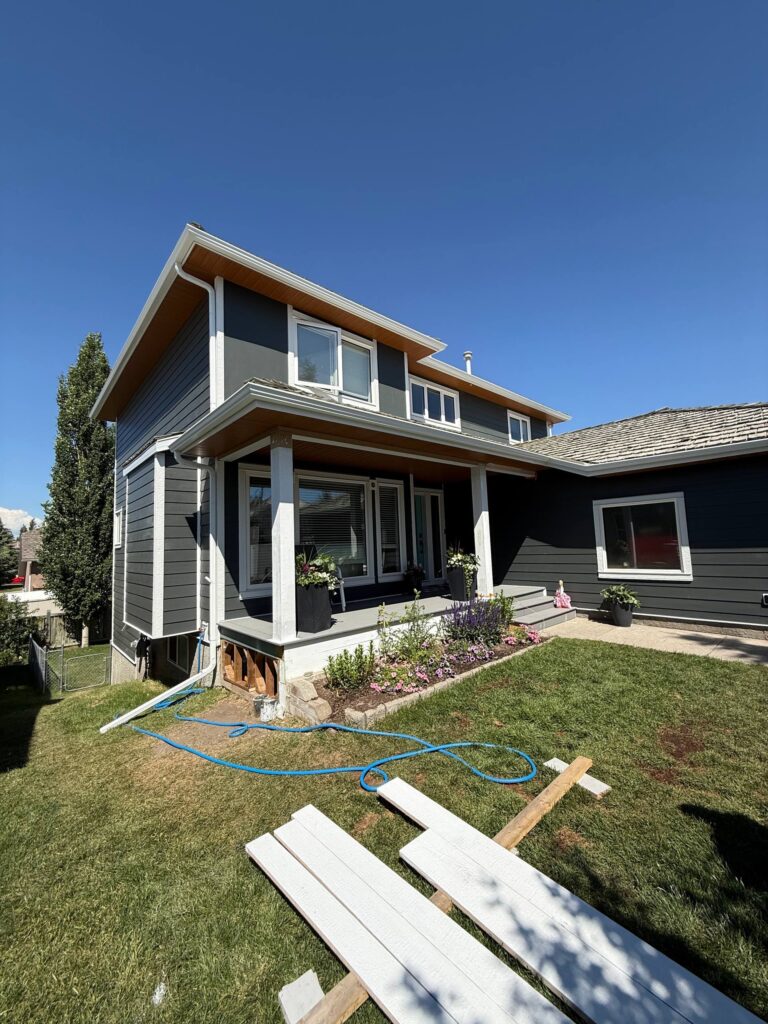
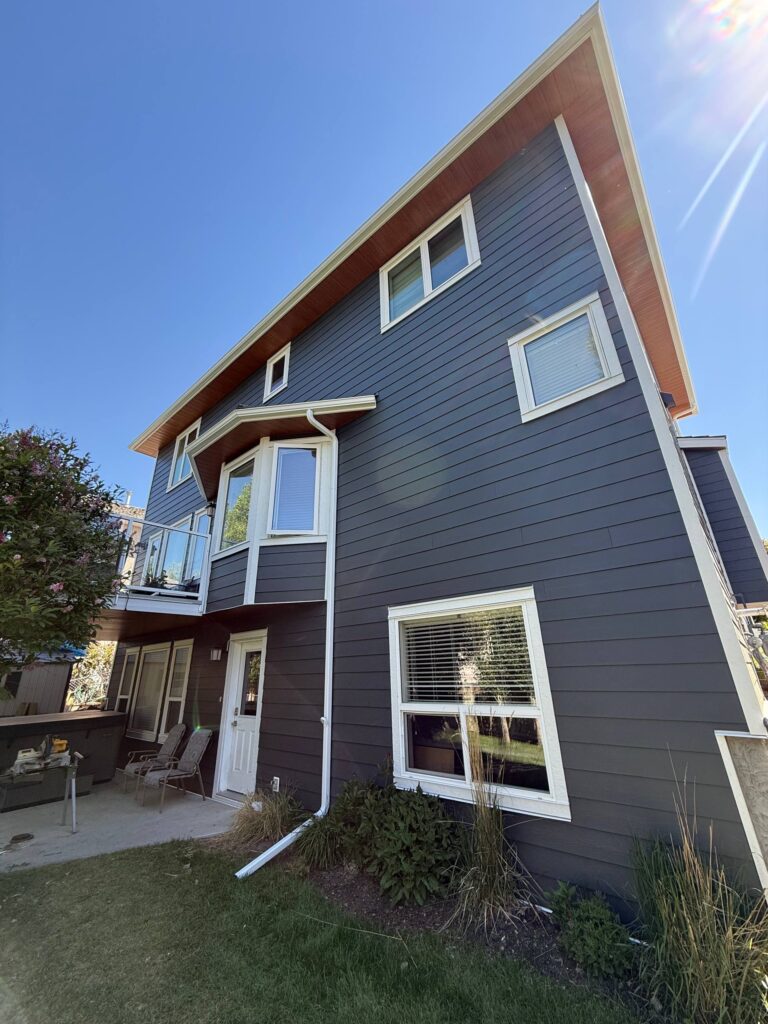
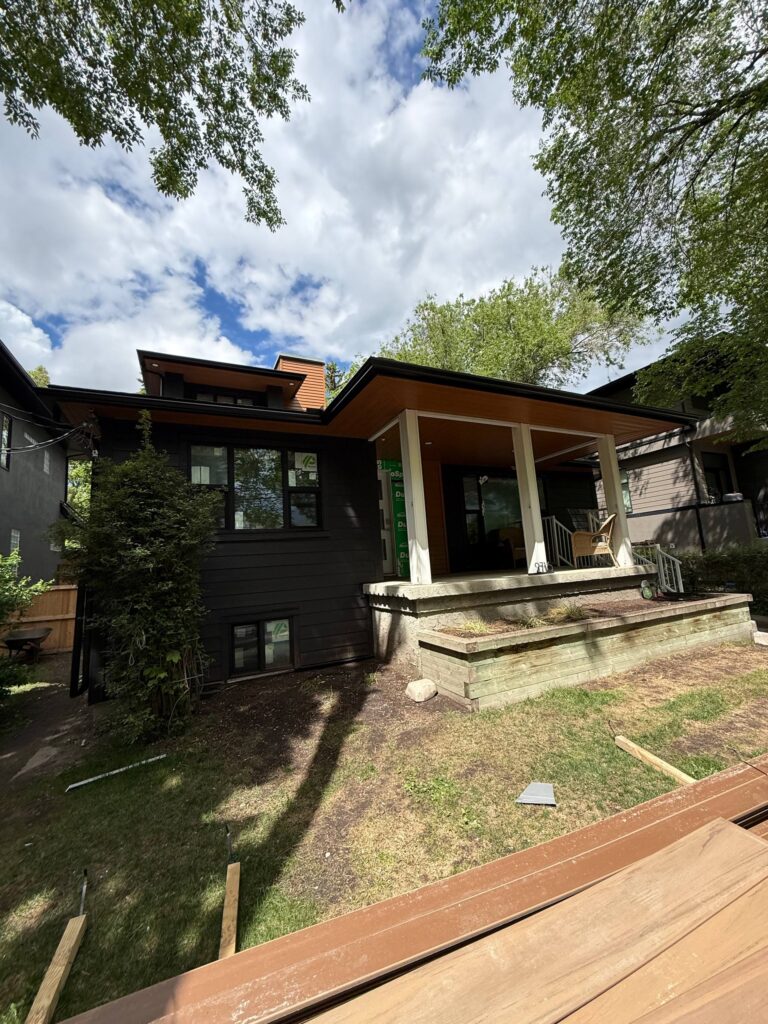
Doing this work at the same time as the walls? Our siding services in Calgary and Airdrie page compares James Hardie, vinyl and metal side by side, and explains what a complete exterior quote covers — the access and setup are paid for once when the jobs run together.
Not sure whether you are looking at a repair or a replacement? We wrote out the five signs worth checking before winter. And if the fascia behind the trough has gone soft, that is a soffit and fascia job with an eavestrough job attached — worth knowing before you book either one.
Gutter guards
The Six Types of Gutter Guard, and What Each One Actually Does
Brush, foam, solid covers, mesh screens, micro-mesh and reverse-curve — how the six gutter guard types differ, and what Alberta winters do to each of them.
What Eavestroughs Actually Do for an Alberta House
This page is about eavestroughs (gutters) — the same thing under two names, and we use both here because Alberta homeowners do. If you are looking at the exterior as a whole rather than one part of it, start with our siding services in Calgary and Airdrie.
An eavestrough — a gutter, if that is the word you grew up with — is not there to keep the walls tidy. It is there to take everything that lands on the roof and put it somewhere that is not against the house. A steep roof in a Calgary downpour moves a surprising volume in a few minutes, and all of it arrives at the edge at once.
Water against the foundation
Roof water landing at the base of the wall saturates the soil there. Alberta clay swells when it takes on water and shrinks when it dries, and it does both repeatedly. That movement is what shows up years later as a crack, and it is rarely traced back to the trough.
Wet fascia and soffit
Water coming over the front edge runs down the board the trough hangs on. Painted wood that never dries rots from behind, and by the time the paint lifts the board has been going for two seasons.
Ice on the walk below
In winter the overflow does not soak in, it freezes. A path or a set of steps under an unmanaged eave becomes a liability every thaw.
Siding and window heads
Sheeting water off the end of a run finds the top of a window or the joint between two elevations. That is a wall problem that started as a trough problem.
None of that is dramatic on the day it starts. That is the difficulty with eavestroughs: they fail quietly, and the bill arrives in a different trade.
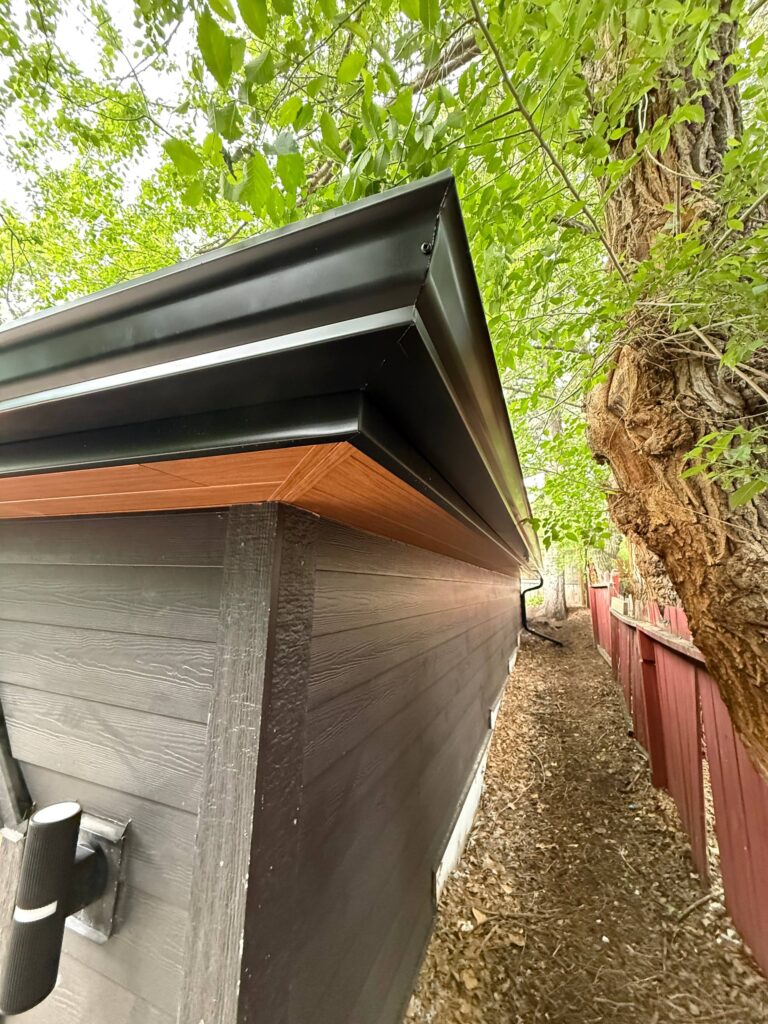
Sectional troughs come in lengths and are joined on the wall. Every joint is a seam, every seam is sealed, and sealant is the part that ages. A seamless trough is formed as one continuous piece for the whole run, so the only joints on it are at the corners and the outlets.
We form ours on site. The machine comes to the house, the run is measured, and the trough is rolled to that exact length in the driveway — which is the only way a continuous piece of the right size can exist, because you cannot deliver one on a truck. That is what the word seamless is describing: not a finish, a manufacturing method.
What matters after that is how it is hung. Hangers at the right spacing, fixed into solid material, with fall toward the outlets — enough to move water, not so much that the run looks crooked from the street. A perfect trough hung wrong overflows exactly like a bad one.
Size is a calculation, not a preference, and it is the thing most often got wrong on a quote. Three inputs decide it.
The roof area feeding the run
Not the footprint of the house — the area of the slopes that drain to that one length of trough. A long run collecting two slopes needs more capacity than a short one collecting half of one.
How steep the roof is
A steep slope delivers the same volume faster. Steeper roofs push water toward the outer edge of the trough and past it, which is why pitch changes both the size and where the hangers go.
Rainfall intensity, not annual rainfall
What matters here is the worst twenty minutes of a summer storm, not how much falls in a year. Sizing for the average is how a trough ends up overflowing twice each July.
Number and placement of downspouts
Capacity is the trough and the outlets together. Adding an outlet often does more than widening the trough, and it is usually the cheaper fix.
We do not pick a size off a price list. We measure the areas, look at the pitch and count the outlets, and the number that comes out of that goes in the written quote with the reasoning attached.
Downspouts
Downspouts and Where the Water Goes
Downspouts get treated as an afterthought on most gutter quotes, and they are half the system. A correctly sized trough with the water dumped at the base of the wall has moved the problem two feet, not solved it.
Where a downspout should end up
Discharged well clear of the foundation, onto a splash block or an extension
Aimed away from the walk and the driveway, so winter overflow does not ice a path
Enough outlets that no single run has to carry a whole roof
Placed at corners and low points where the fall actually takes the water
Where we see them go wrong
Ending in a straight drop at the base of the wall
Discharging onto a lower roof rather than into its own trough
Running into a buried line nobody has checked in years
Positioned so the outlet is the lowest thing on a run that freezes first
One Alberta-specific detail: a downspout that fills and freezes cannot clear itself, and the ice works upward into the trough. Where a run is exposed and shaded, that decides which end the outlet goes on.
Alberta ice
Alberta Ice: Damming, Freeze-Thaw and Spring Melt
This is the part that matters most here, and it is where most gutter pages stop at a single sentence. Ice does four different things to a trough over one Alberta winter, and only some of them are ours to solve.
Ice at the roof edge
Heat escaping into the attic melts snow on the warm part of the roof; the water refreezes where the roof is cold, at the eave. The trough is where it collects. This is an insulation and ventilation problem, and it is solved at the soffit and in the attic — not by anything we hang on the fascia.
A frozen outlet
The trough thaws in a chinook before the downspout does. Water arrives with nowhere to go, backs up, and freezes again overnight. Placement and slope reduce it. Nothing removes it entirely.
Weight
Wet debris is heavy and ice is heavier. This is what pulls hangers and opens seams, and it is why hanger spacing and what they are fixed into is not a detail.
The spring melt
Everything that accumulated all winter moves in about three days. A system that coped in October gets tested properly in March, and that is when the runs that were marginal come down.
What we control is the fall, the hangers, the outlet placement and what the trough is fixed to. What we do not control is how warm your attic is. If ice keeps forming in the same spot every year, the honest answer is usually ventilation rather than a new trough — and if that is what we find, we will say so. Before winter, the five signs worth checking before winter are worth twenty minutes with a pair of eyes from the ground.
Guards
Guards: What They Do, and What They Do Not
Gutter guards are part of eavestrough work for us rather than a product we sell on its own. We fit whichever type suits the house, because the right one depends on what is actually landing on your roof.
What a guard gives you
Fewer clear-outs, and a longer interval between them
Less packed debris holding water through a freeze
Real value where the roofline is high or steep and access is the cost
What a guard will not do
They do not make the system maintenance-free — they change how often, not whether
They do not stop ice forming at a cold roof edge
They do not fix a trough hung with the wrong fall, they hide it
We do both, and we will come out for small work. A pulled hanger, a run that has lost its fall, a seam that opened over winter, an outlet that tore off under snow — those are jobs, not inconveniences, and a single corner is worth a visit.
Worth repairing
Hangers, fall on a section, an opened seam or corner, a damaged outlet or extension, a length torn off by sliding snow.
Worth replacing
Deformation along the whole length, corrosion through the run, a system that has been re-sealed several times, or a trough hanging on fascia that has gone.
The honest middle
Sometimes a run can be saved and the two next to it cannot. We will tell you which is which at the measure rather than quoting the whole house by default.
Fascia first
Fascia First: Why We Look at the Board Before We Hang Anything
Here is the thing we check before we hang anything, and it is the reason we sometimes come back with a different quote than the one you asked for. An eavestrough does not attach to your roof. It hangs on the fascia — the board running along the eave — and every fastener in the system relies on that board being solid.
If the fascia is soft, there is nothing to fix a hanger into. Screwing a new trough onto a rotted board buys a season and hides the rot behind aluminum, where it keeps going. The only way to see the condition of that board is to take the old trough off, which is exactly the moment we are standing there anyway.
This is why we look at soffit and fascia in the same visit rather than a year later — not to add to the job, but because it is the one time the board is visible and the trough is already down. Doing it in two visits means paying twice to take the same trough off.
If we find it, you get a photograph and the number the same day, and you decide. It might be one length behind a corner rather than the whole side. Worth reading if you want to know what to look for yourself: seven signs your soffit and fascia need replacing, and the wider a soffit and fascia job covers.
The job
How the Job Runs, and What the Quote Covers
One crew, ours, from the first day to the last. We do not subcontract any part of this, so the person who measured the house is on it when the trough goes up.
1
On-site measure
We measure each run, work out the areas draining to it, look at the pitch, count the outlets you have and the ones you need, and check the fascia along the whole eave.
2
Fixed written quote
Line by line: linear footage, corners, outlets and downspouts, colour, removal and disposal of the old system, an allowance for fascia repair with a stated rate beyond it.
3
The old system comes off
And the board behind it gets looked at while it is exposed. Anything we find is photographed and sent the day we find it, at the rate already in the quote.
4
Hangers and fall are set
Spacing worked out for the run and the load, fixed into solid material, with fall toward each outlet checked along the length rather than eyeballed at the ends.
5
The trough is rolled on site
Formed to the exact length of the run, so the only joints are at corners and outlets.
6
Downspouts and discharge
Outlets, elbows and extensions, aimed away from the foundation and away from anything you walk on in winter.
7
Water test and cleanup
A hose on the roof, and we watch where it goes — through the trough, down the outlet, away from the wall. Then offcuts and old material out, and a walk around with you.
What moves the price: total linear footage, the number of inside and outside corners, how many storeys and how the access looks, the number of downspouts and where they have to run, colour matching, and what the fascia turns out to be like. We do not publish a rate per foot, because the honest number comes from measuring your roof.
The Short Version
Eavestroughs — gutters — fail quietly, and the bill arrives in another trade. Size is a calculation from roof area, pitch and outlet count, not a preference. Downspouts are half the system and the cheapest thing to get right. Ice does four different things over one Alberta winter, and one of them is an attic problem rather than a trough problem — we will tell you which one you have. We form the trough on site, we look at the fascia before we hang anything, and one crew of our own people does the work. The measure is free and the written price is fixed.
0people on our own crew
0cities we serve
0cost of an on-site measure, in dollars
0year workmanship warranty
Our Work
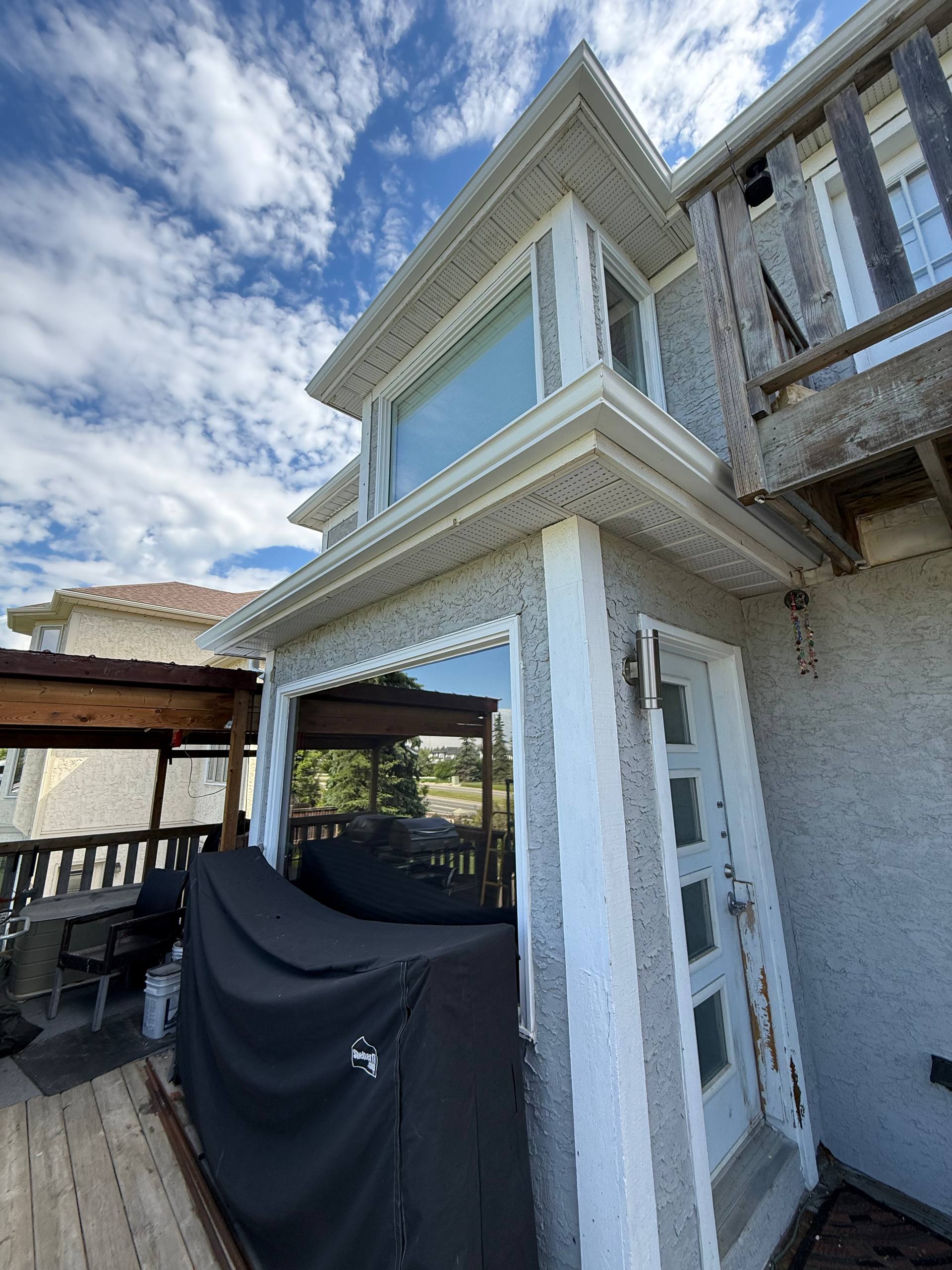
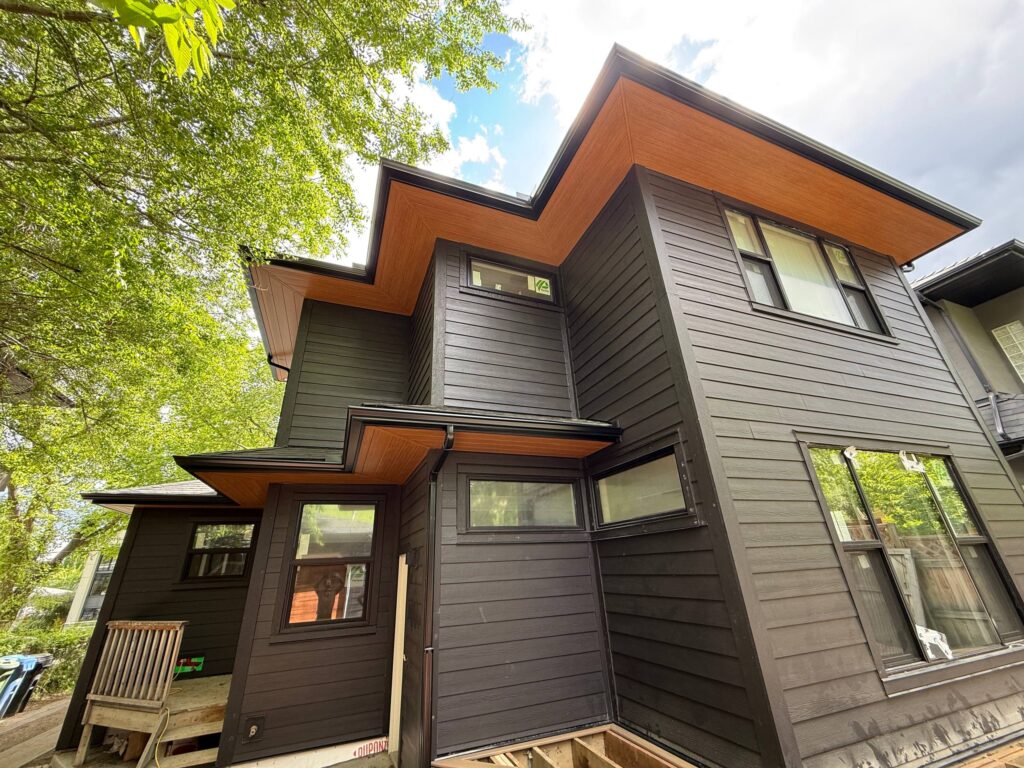
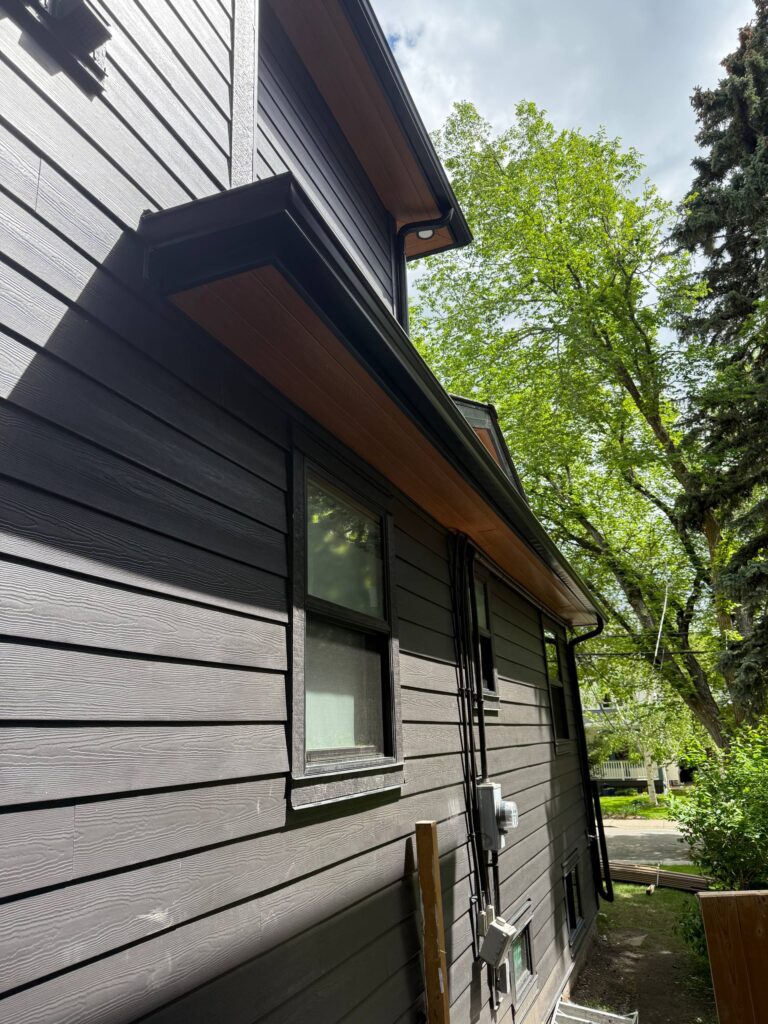
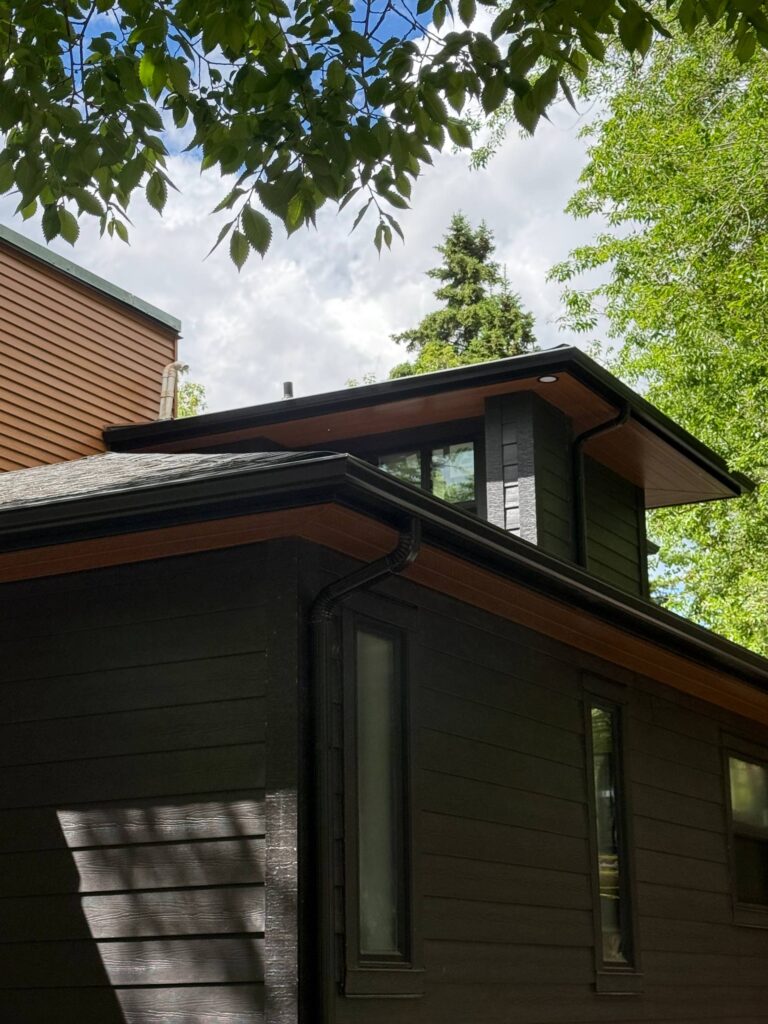
Recent Eavestroughs Projects
Common Questions About Eavestroughs
Do you install gutter guards?
Yes, as part of a gutter job rather than as a separate product, and we are not tied to one brand. Which type suits your house depends on roof pitch, the trees around it and how the trough handles ice — in Alberta the failure that matters is freeze-up, not leaves. No guard ends maintenance; it lengthens the interval. Our guide compares which guard suits your house.
What size eavestrough does my house need?
It comes out of a calculation rather than a catalogue: the roof area draining to each run, how steep those slopes are, and how many downspouts carry it away. Two houses the same size can need different systems if one has longer runs or fewer outlets. We work it out at the measure and put the reasoning in the quote.
Will ice damage my eavestroughs in winter?
Ice forms in Alberta troughs, and no system prevents that entirely. What reduces it: correct fall, hangers spaced for the load, and outlets placed where the run actually drains. What is outside our control is heat escaping into the attic, which is what causes ice at the roof edge in the first place — that one is a ventilation question.
Do you repair eavestroughs, or only replace them?
Both, and we will come out for small work — a pulled hanger, an opened seam, a section that has lost its fall, one corner. What is not worth repairing is a run deformed along its whole length or a system hanging on fascia that has gone soft. We will tell you which one you have rather than quoting the whole house by default.
Why do my eavestroughs overflow when they are not blocked?
Usually one of three things: the run is undersized for the roof area feeding it, the fall is wrong so water sits instead of moving, or there are too few downspouts. A clear trough that still overflows in a downpour is a sizing problem, and adding an outlet often solves it more cheaply than replacing the run.
Where should the downspouts let the water out?
Well clear of the foundation, onto a splash block or an extension that carries the water past the backfill, and away from anything you walk on — an outlet over a path will ice it every thaw. Where a buried line takes the water, we check that the line actually runs before connecting anything to it, rather than assuming it does.
Can you match my existing trim?
Yes. Eavestroughs come in a range of factory colours, and we match them to your existing trim and fascia rather than defaulting to white. If the match matters to you, bring it up at the measure — we will show you the options against the house.
Do you do the work yourselves, or subcontract?
Ourselves. Every crew on your house works for us and only for us — no subcontracted trades on any part of a gutter job — which is why the person who measured the roof is there when the trough goes up. We are licensed and WCB-covered, our workmanship carries a 10-year warranty, and a clearance letter is available on request.