5 Signs Your Eavestroughs Need Replacing Before Winter
Start here
Why This Is Worth Ten Minutes in October
Eavestroughs are the cheapest part of your exterior and they protect the most expensive parts of it. When they fail, the damage does not appear in the eavestrough. It appears in the fascia, in the basement, and on the ceiling under an ice dam.
Autumn is the right time to look, because whatever is wrong now will be worse and more expensive once it is frozen.
Short answer. Sagging runs, separated seams, water overflowing the front edge in rain, staining or rot on the fascia behind, and pooling against the foundation are the five signs that matter. In Alberta an eavestrough that no longer holds its slope becomes an ice problem, and ice at the roof edge is how water gets back under the shingles.
Sign by sign
The Five Signs
Sagging or an Uneven Line
Sight along the eavestrough from the corner of the house. It should run in a straight line with a slight, consistent fall toward the downspout. Dips mean either the hangers have pulled or the fascia behind has softened. Both matter, and the second one matters more: if the fascia is going, new eavestroughs screwed to it will sag again within a season. That is why eavestrough and fascia work so often belong on the same estimate — the signs to look for are in 7 signs your soffit and fascia need replacing.
Separated Seams and Visible Leaks
Watch the house during a decent rain, or run a hose onto the roof. Drips at joints, corners and downspout outlets mean the seals have failed. Sectional eavestroughs have a seam every few feet, and every seam is a future leak. Seamless eavestroughs are formed in one continuous length on site, which removes most of those failure points.
Water Overflowing the Front Edge
If water sheets over the front lip during rain, one of three things is happening: the eavestrough is blocked, it is undersized for the roof area feeding it, or it has lost its slope and is holding standing water. Cleaning solves the first. Persistent overflow in one spot after cleaning is not a maintenance issue, it is a design or a slope issue.
Staining, Peeling or Rot on the Fascia Behind
Look at the board the eavestrough is attached to. Dark streaks, peeling paint, soft wood — that is water that has been running behind the trough rather than through it, for long enough to soak in. At this point you have two problems and only one of them is the eavestrough. Replacing the trough alone and leaving compromised fascia behind it is work you will pay for twice.
Pooling Water Against the Foundation
Walk the perimeter after rain. Puddles against the house mean downspouts are discharging too close, or a section of eavestrough is emptying where it should not be. This is the sign with the most expensive consequence. Water against a foundation through Alberta freeze-thaw cycling finds its way in, and basement water is not a trim repair.
The deadline
Why Winter Is the Deadline
| A run that has lost its slope | Holds standing water, which freezes. Ice is heavy and it expands — it pulls hangers, opens seams and bends the trough further out of line. |
|---|---|
| A blocked or misaligned trough | Meltwater cannot drain through it, freezes at the edge and builds a ridge of ice. Subsequent meltwater then backs up under the shingles. |
| Shingles asked to hold water uphill | They are designed to shed water flowing downhill, not to hold it back. That is how a fifty-dollar gutter problem becomes a ceiling repair. |
Which one is it
Repair or Replace
Repair is reasonable when
- An isolated leak on an otherwise sound system
- A single pulled hanger
- A downspout that needs redirecting
Replace when
- The run has lost its slope
- Multiple seams are failing
- The trough is visibly deformed
- The fascia behind needs work anyway — the gutters have to come off for that regardless
That last point is worth repeating: if the fascia is being replaced, the eavestroughs are coming off either way. Doing both at once means paying for access, setup and a crew day once instead of twice.
Covers
What About Gutter Guards?
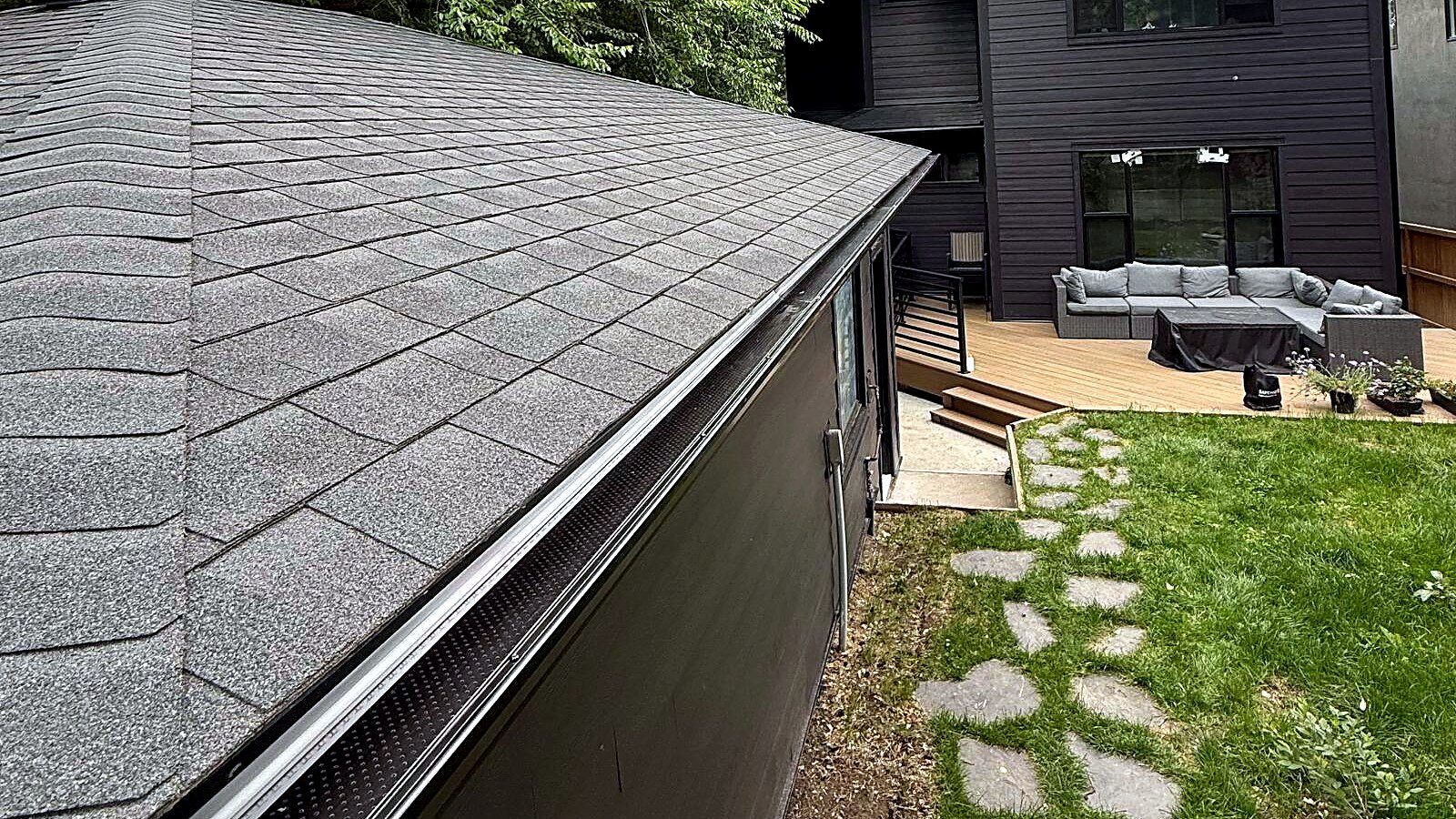
Thinking about covers instead of cleaning? We wrote a plain guide to the six types of gutter guard and what Alberta winters do to each of them.
The short version
Before You Book Anything
Most of what matters can be seen from the ground in ten minutes: sight the lines, look behind the trough at the fascia, and walk the perimeter after the next rain.
If it turns out to be the whole system rather than one section, our seamless eavestrough installation in Calgary and Airdrie page walks through what comes off, how the trough is formed on site in one continuous length, and what a complete quote covers.
FAQ
Frequently Asked Questions
How long do eavestroughs last in Alberta?
Can eavestroughs be replaced in winter?
Are gutter guards worth it?
Do I need bigger eavestroughs?
Do I have to replace the whole system or just the bad section?
From the blog
More guides for Calgary homeowners
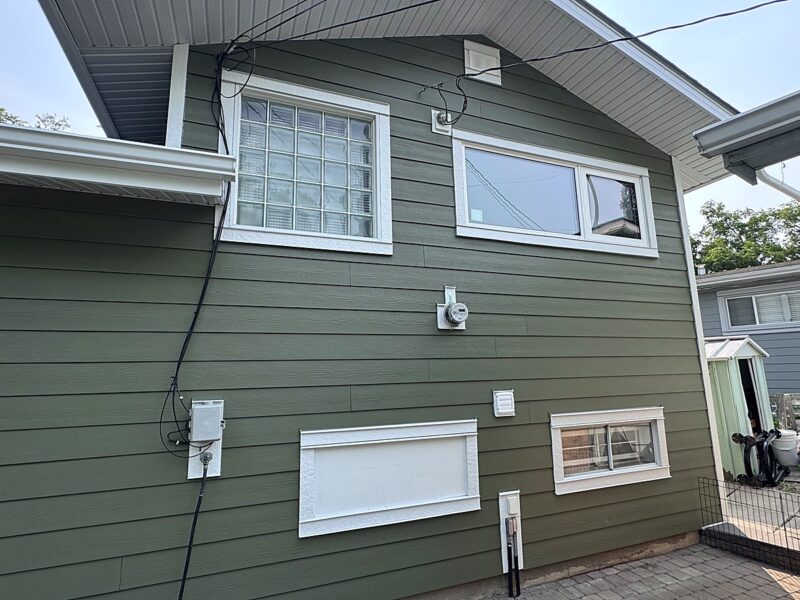
7 Signs Your Siding Needs Replacing (Alberta Homes)
Siding rarely fails all at once. Seven signals that the wall behind your cladding is taking water, and the plain difference between…
Read article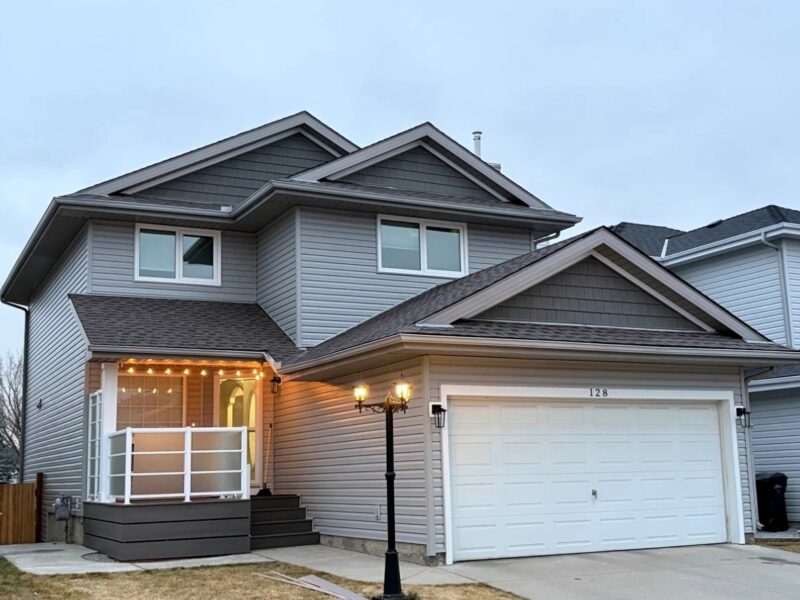
What Vinyl Siding Costs in Calgary and Airdrie
Vinyl siding is priced by the square foot of wall, installed. Here is every line that belongs in a quote, what moves…
Read article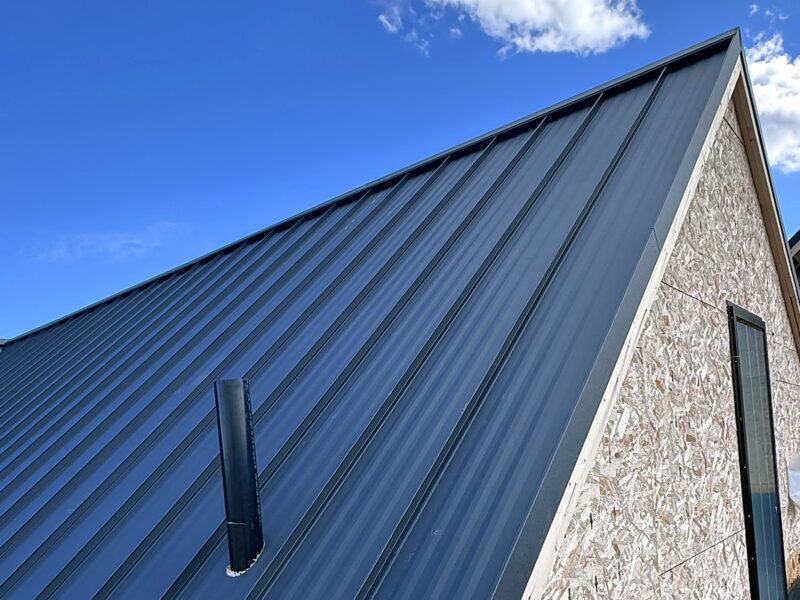
Is Metal Roofing Really Hail-Resistant? What Alberta Homeowners Should Know
Metal roofs resist hail better than shingles, but they can dent. What Alberta hail actually does to metal and what UL 2218…
Read article