Is Metal Roofing Really Hail-Resistant? What Alberta Homeowners Should Know
After the storm
Why Homeowners Ask This After a Hail Storm
Every summer, after the first serious storm rolls through, we get the same call. Someone stood at the window watching hail bounce off the neighbour’s metal roof, looked at their own shingles collecting in the eavestrough, and started doing math.
The honest answer has two halves, and most contractors only tell you the first one.
Short answer. Metal roofing resists hail far better than asphalt shingles, but it is not dent-proof. Hail can leave shallow dimples in a metal panel while the roof keeps doing its job perfectly. What matters is whether the coating and the seams are still intact — that is the line between a cosmetic dent and real damage.
Because the failure modes look completely different from the ground.
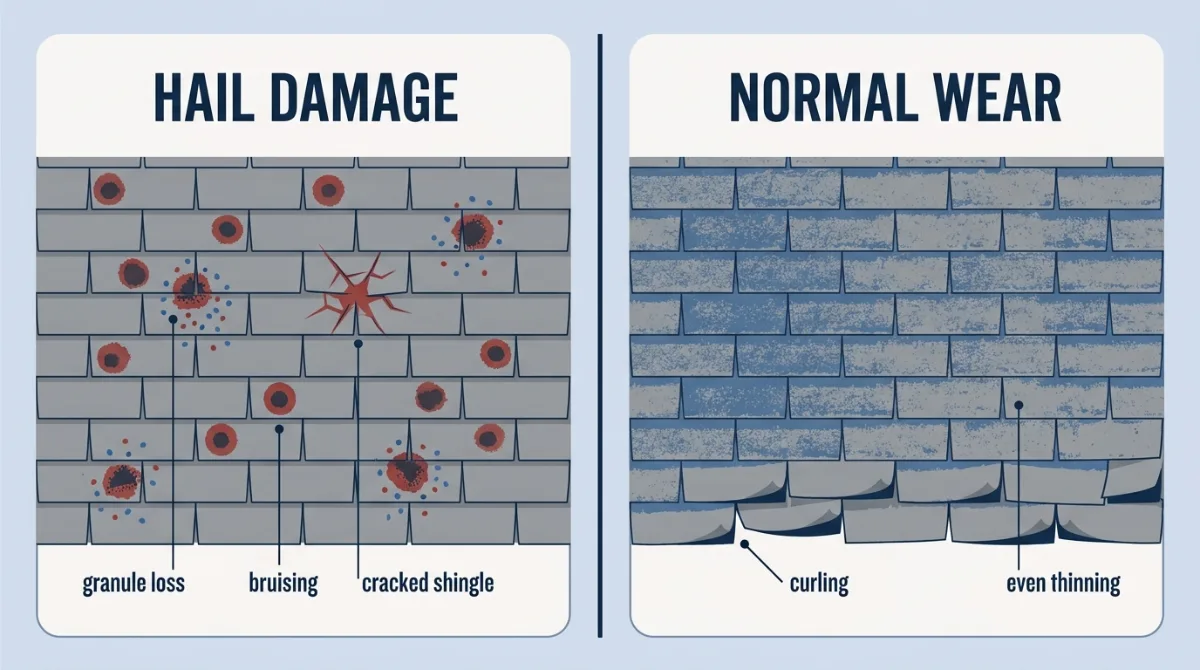
An asphalt shingle that takes a hailstone loses granules and the mat underneath fractures. Nothing looks wrong that day. The roof quietly ages faster from that spot onward, and two winters later there is a stain on a bedroom ceiling. We wrote about that separately in how to spot hail damage on your roof.
A metal panel that takes the same hailstone may show a visible dimple immediately — and then carry on shedding water for years afterward.
So one roof shows damage you cannot see, and the other shows damage you can see that may not matter. That inversion is the whole confusion, and it is why “which one is better in hail” is the wrong question. The right question is what kind of damage you are willing to live with.
Impact
How Metal Roofing Handles Hail Impact
Four things decide how a metal roof takes a hit. When someone quotes you a metal roof, these are the four to ask about.
Panel thickness — the gauge
Gauge is the thickness of the steel, and it runs backwards: the lower the number, the thicker the metal. A 24-gauge panel is meaningfully thicker than a 26, which is thicker than a 29. Thicker steel resists denting more, costs more, and weighs more. Residential quotes commonly come in at 26 or 24 gauge — ask which one yours is. The difference between them shows up specifically in hail country.
Material matters too. Aluminum is softer than steel and dents more readily from the same stone — it has other virtues, but dent resistance is not one of them.
The coating
The paint system on a metal roof is not decoration. It is the barrier between the steel and the weather. A high-quality coating flexes with a dent instead of chipping off it, which is exactly what you want, because a dent with intact coating is a cosmetic issue and a dent with chipped coating is the start of corrosion.
Ask which coating system is on the panel you are being quoted and what its warranty actually covers — chalk, fade, and chipping are usually covered separately.
The profile
This is the one nobody mentions and it changes everything about how a hailed roof looks.
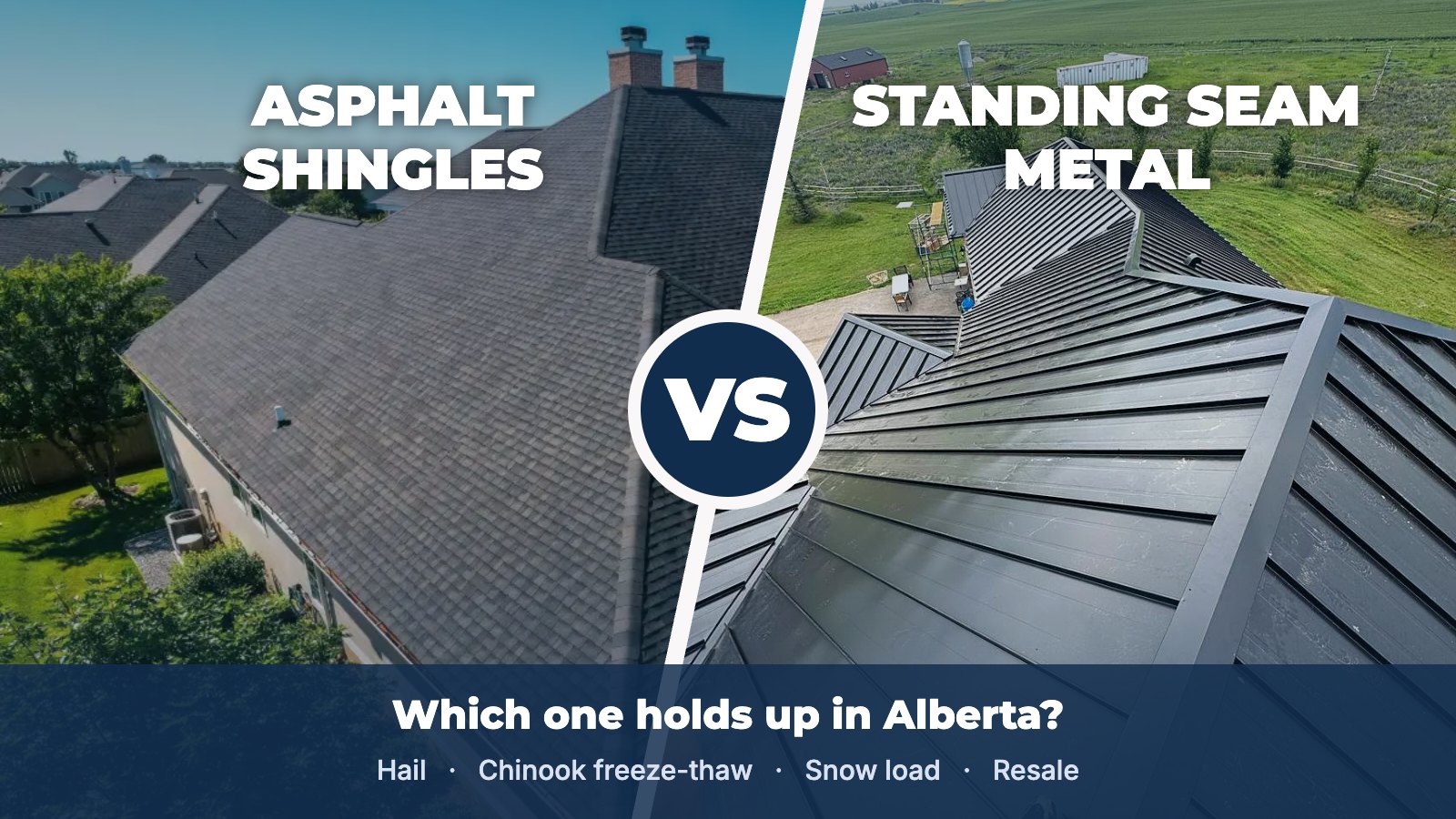
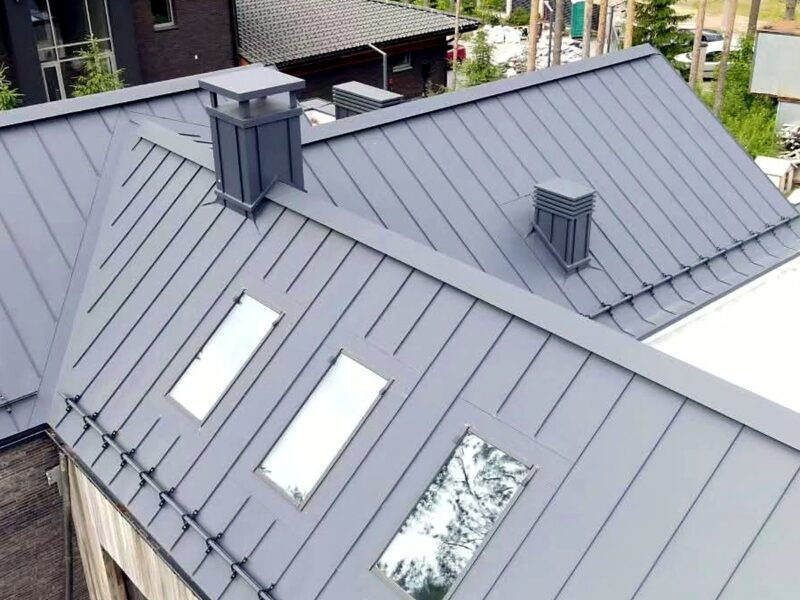
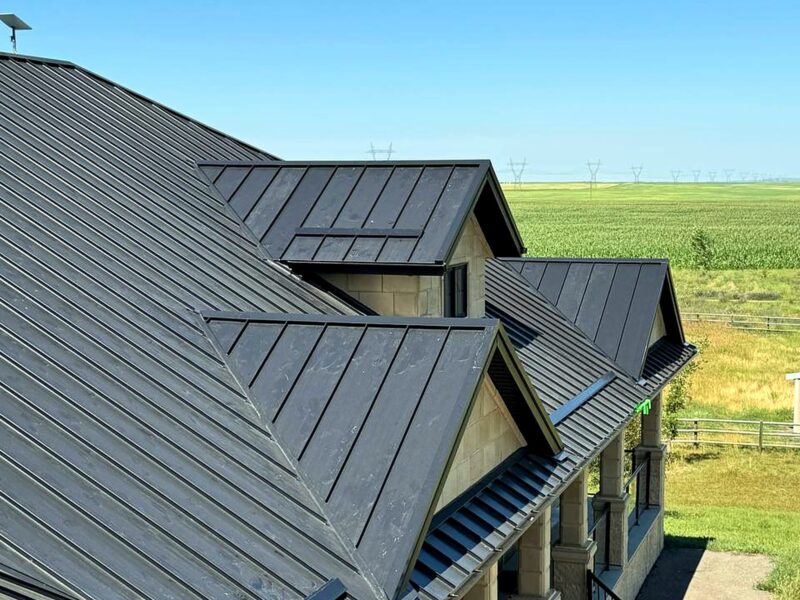
A wide, flat standing seam pan is a drum head. Every dimple in it catches light and reads from the street. A panel with ribs, striations or a stone-coated texture breaks up the surface, and the same dents largely disappear into it.
If cosmetic appearance after a storm matters to you — and for most homeowners it does — profile is a bigger lever than gauge.
What is underneath
A panel fastened over solid decking with underlayment beneath it has something to push against when a stone lands. The same panel spanning open battens has air behind it, and air does not resist much. Two identical roofs can behave differently in the same storm purely because of what sits under the metal.
Metal vs shingle
Metal vs Asphalt Shingles in Hail
| Metal roof | Asphalt shingles | |
|---|---|---|
| What hail does | Dents the panel, may chip coating | Knocks granules off, fractures the mat |
| Visible right away | Usually yes | Usually no |
| Does it still work | Almost always, if the coating held | Often yes, for a while, then it does not |
| How damage progresses | Only if the coating broke and corrosion starts | Steadily, as exposed asphalt weathers |
| What an inspection looks for | Coating breaks, seam movement, flashing and fastener damage | Bruising, granule loss, cracked shingles |
| Repair options | Individual panels can often be replaced | Isolated repair possible, matching is difficult |
| After a bad storm | Frequently cosmetic | Frequently a replacement conversation |
The line that matters is the last one. In this climate a metal roof usually comes out of a hailstorm looking worse and performing fine. An asphalt roof usually comes out looking fine and performing worse.
Dents
Cosmetic Dents vs Functional Damage
This distinction decides everything that follows, including how your insurer looks at it.
A cosmetic dent is a dimple in the panel with the coating intact. The roof sheds water exactly as it did the day before. It affects appearance and resale, not performance.
Functional damage is any of the following: the coating is chipped or cracked and bare metal is exposed; a seam has separated or lifted; a fastener has been driven or pulled; flashing, valley metal or vents are deformed enough to break the water path; the panel is punctured.
The practical test is simple. Ask whether water still has to travel the same path it did before the storm. If yes, you have a cosmetic problem. If no, you have a roofing problem.
Worth knowing before you call anyone: policies differ on cosmetic damage to metal roofing, and some carriers exclude it specifically. That is a conversation with your insurer, not with us — we do not adjust claims and will not tell you what yours will cover. What we can do is document precisely which of the two you have.
Ratings
What Impact Ratings Mean — and what they do not promise
You will see UL 2218 Class 4 on metal roofing brochures. It is worth understanding what that test actually is.
UL 2218 drops steel balls of increasing size onto the roofing material from a set height. Class 4, the highest rating, uses a two-inch steel ball dropped twice on the same spot, and the material passes if the layer underneath does not rupture. Class 1 uses the smallest ball, Class 4 the largest.
It measures function, not appearance. A panel can earn Class 4 and still dent visibly. The test asks whether the roof was breached, not whether it still looks new.
A steel ball is not a hailstone. Real hail arrives at an angle, driven by wind, in irregular shapes, sometimes with rain and sometimes with a temperature swing right behind it. The rating is a useful comparison between products. It is not a forecast for your roof.
Some insurers offer a premium credit for impact-rated roofing, and some do not. If that is part of your reasoning, get it confirmed by your own insurer in writing before it becomes a reason to spend more.
And a word we will not use: hail-proof. Nothing installed on a house in this province is hail-proof. Anyone who tells you otherwise is selling.
Worth it?
Is It Worth Switching to Metal After Hail Damage?
It usually makes sense when: this is not your first storm claim; you plan to stay in the house long enough for the longer service life to matter; your roof has a straightforward shape without many valleys and penetrations; and you would rather deal with dimples than with another replacement.
It usually does not when: you are moving in a couple of years; the roof geometry is complicated enough that the labour cost jumps; or the visual of a dimpled panel would bother you more than the shingles ever did.
There is also a middle path people forget. If your shingles are only partway through their life and the damage is limited, replacing them like for like now and switching to metal at the natural end of that cycle is a perfectly sensible plan. Metal is not a decision you have to make under storm pressure.
If you are weighing it up, we covered the broader case in why Calgary homeowners are switching to metal, and we price both options side by side — metal roofing installation in Calgary and Airdrie and asphalt shingles — on the same estimate.
Our position
How We Build a Metal Roof, and What We Will Not Do
Everything above is about metal roofing in general. This part is about us, because the way a roof is built decides how it behaves in hail far more than the brochure does.
| Gauge | We install 24 or 26 gauge steel. 26 is the lighter and cheaper of the two and it is what most houses here get; 24 is heavier and holds its shape better under impact. We will tell you which one your quote is priced on, and we will price both if you ask. |
|---|---|
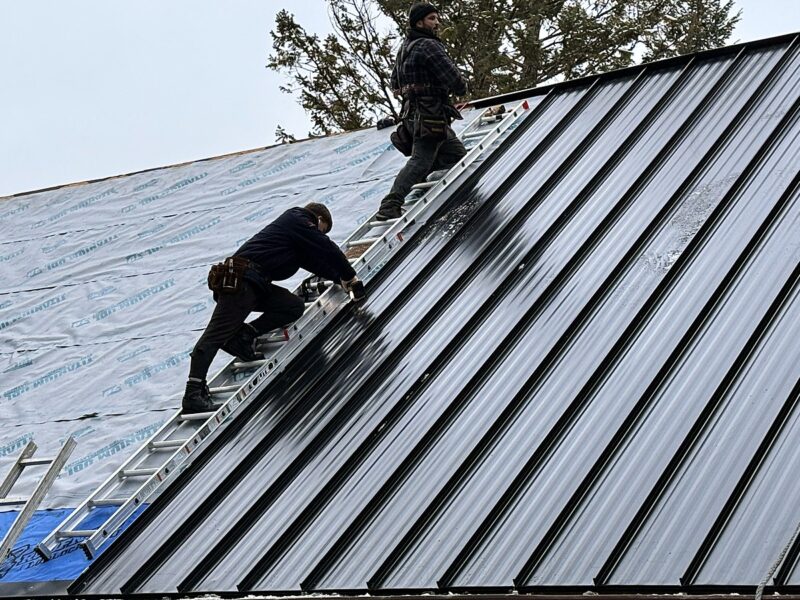
| The old roof comes off | We never lay metal over existing shingles. Not once, not to save a day, not on a garage. The old layer comes off, the deck gets walked and inspected, rotten sheathing gets replaced, and only then does anything new go down. |
| What we do not claim | We do not advertise an impact rating for our roofs. A UL 2218 Class 4 rating belongs to a specific panel a manufacturer paid to test, not to metal as a category, and it does not mean the panel will not dent. Anyone quoting you a class for the whole roof is quoting you the wrong thing. |
| Who is on your roof | Our own crew, about twenty people. No subcontractors, on any job. The person who measured your roof is the person you call if something is wrong two years from now. |
| What is behind the work | A 10-year workmanship warranty from us, separate from whatever the panel manufacturer covers. Two different things, and we keep them separate in writing. |
If a quote does not say the gauge and does not say the old roof is coming off, those two omissions are worth more than any number on the last page.
FAQ
Frequently Asked Questions
Does metal roofing dent in hail?
Yes, it can. Whether it does depends on the gauge of the panel, the material, the profile and what sits underneath it. The more useful question is whether a dent affects performance — usually it does not, as long as the coating has not been broken.
Is a metal roof cheaper to insure in Alberta?
Some insurers offer a credit for impact-rated roofing and some do not, and the amount varies. If that credit is part of why you are considering metal, get it confirmed by your own insurer in writing before it becomes a reason to spend more.
Can metal be installed over existing shingles?
Sometimes, but it is not automatically the cheaper choice. Going over the old roof means nobody inspects the deck, and any soft sheathing stays where it is. Local requirements also limit how many layers a roof can carry. We will tell you which approach your roof suits after looking at it.
How long does a metal roof last in Alberta?
Ask what service life the manufacturer states for the specific product, and get it from the warranty document rather than from a brochure. The coating warranty is usually the number that matters most.
Will a dent in my metal roof cause a leak?
Usually not. A dent deforms the panel without breaching it, and the roof carries on shedding water. What does cause leaks is damage at the fasteners, seams, flashings and penetrations — which is why an inspection looks at those points rather than counting dents from the driveway.
Is a metal roof noisy in hail?
Louder than shingles during the storm itself, yes — though far less than people expect, because the panels sit on a deck with underlayment rather than open framing. The comparison most homeowners actually make is one noisy afternoon against a roof that survives the afternoon.
Next step
Comparing metal and shingles for your house?
From the blog
More guides for Calgary homeowners
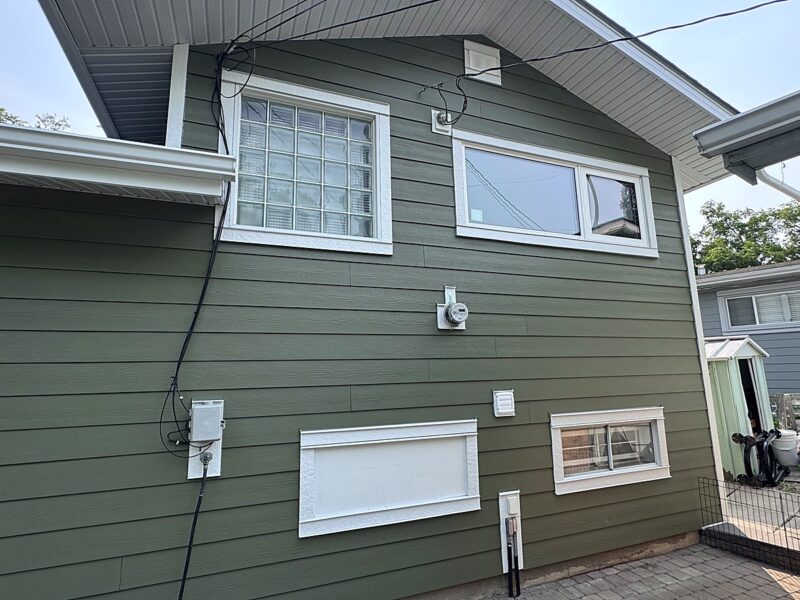
7 Signs Your Siding Needs Replacing (Alberta Homes)
Siding rarely fails all at once. Seven signals that the wall behind your cladding is taking water, and the plain difference between…
Read article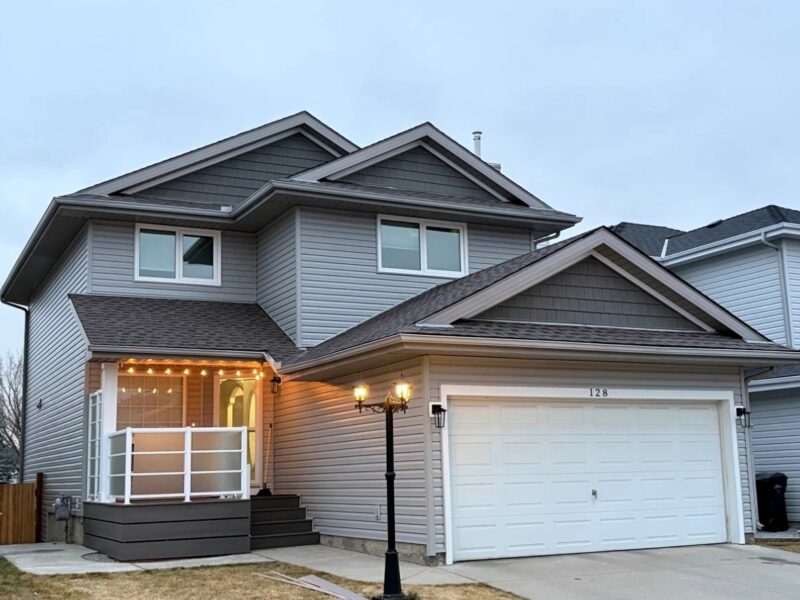
What Vinyl Siding Costs in Calgary and Airdrie
Vinyl siding is priced by the square foot of wall, installed. Here is every line that belongs in a quote, what moves…
Read article
7 Signs Your Soffit and Fascia Need Replacing (Alberta Homes)
Peeling paint, soft boards, sagging, birds and ice dams: seven signs Alberta soffit and fascia are done, and what replacement involves.
Read article