Soft sheathing, usually at the edges
Around vents, along valleys, at the eave where ice sat. It is local, it is fixable, and it is invisible until the covering is off.
Full tear-off, a deck we have actually looked at, and our own crew on the roof.
Doing this work at the same time as the walls? Our siding services in Calgary and Airdrie page compares James Hardie, vinyl and metal side by side, and explains what a complete exterior quote covers — the access and setup are paid for once when the jobs run together.
What follows is the part of a shingle job you cannot see once it is finished: what comes off, what the deck looks like underneath, how the edges and the penetrations are detailed, and who is actually standing on your roof. The shingles themselves are the least interesting decision on this page.
A second layer of shingles can be laid over the first. It is legal in most cases, it is faster, and the disposal bill disappears. We do not work that way, and the reason has nothing to do with the shingles.
It is the deck. Every nail on a shingle roof holds into the sheathing, and while the old covering is in place nobody can see what state that sheathing is in. Nail into a soft sheet and the nail is doing nothing, whatever the manufacturer’s fastener schedule says. A second layer also traps the first one’s heat, hides the flashings rather than replacing them, and means the next roofer is stripping two layers instead of one.
Everything comes off before anything goes on. The deck is walked and looked at while it is bare, and you are told what we found.
Most decks are sound and the inspection costs an hour. The point is not to expect bad news. The point is that a roof you did not look at is a roof nobody can stand behind.
Not sure which option suits your house?
Shingles are a water-shedding covering, not a waterproof one. What keeps a house dry is the deck under them, the membranes on top of the deck, and the detailing at every place the roof is interrupted. Almost nothing leaks in the middle of a slope.
Soft or delaminated sheathing gets cut out and replaced before anything is laid. This is the one item nobody can price from the ground, which is why the estimate says in advance how it will be handled and measured.
Every shingle has a nailing zone, a specified number of fasteners and a depth they are meant to sit at. Overdriven nails cut the shingle, high nails miss the layer they were supposed to hold, and both are invisible from the ground on the day. The manufacturer’s own warranty is written around this being done correctly.
The layer that keeps water out while the roof is open and backs up the covering for the rest of its life. It is also the layer that is easiest to skip a metre of and hardest to check afterwards.
Self-adhering membrane where meltwater backs up behind an ice ridge and where two slopes drain into one. In this climate the eave is not a place to save on.
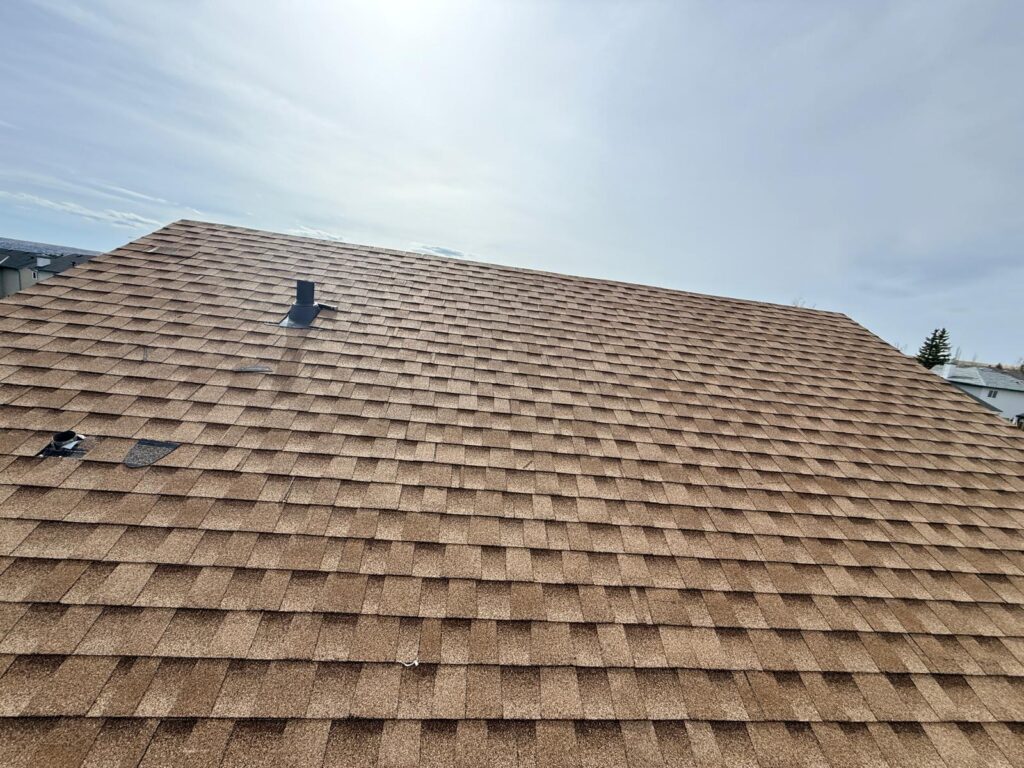
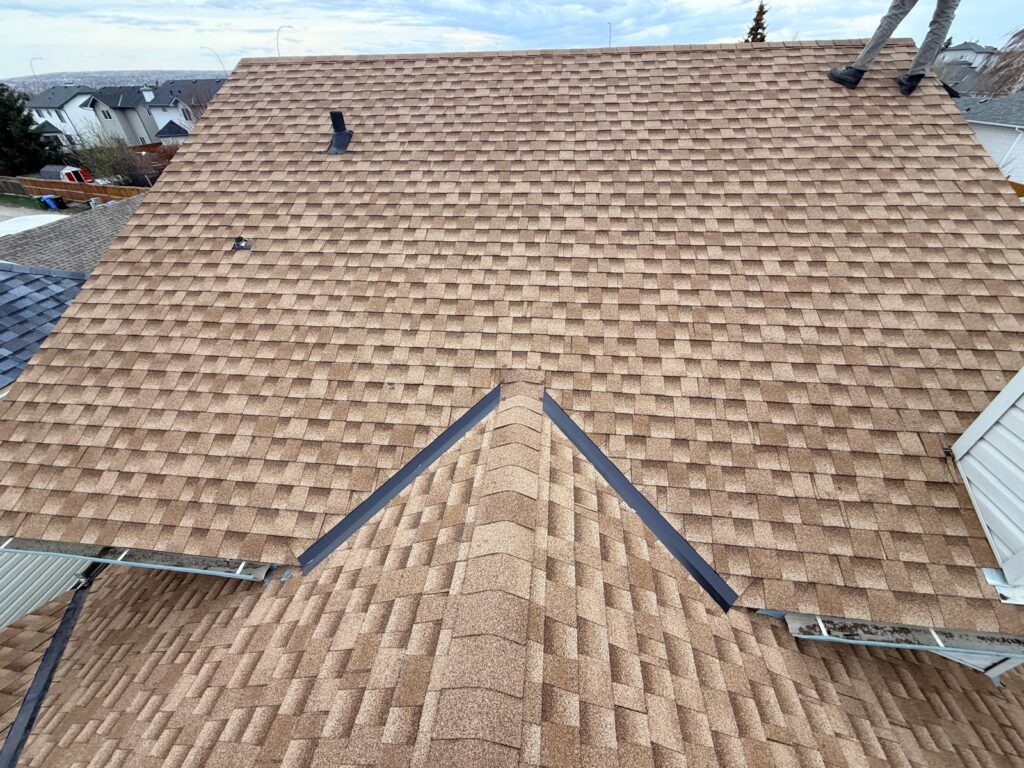
Every stack, vent, skylight, chimney and wall junction. Flashings get replaced, not bent back and resealed. This is where roofs leak, and it is the part of the quote worth reading closely on anybody’s estimate.
Ridge cap and ventilation go on together, and the exhaust only works if the intake below it does. That part is a soffit question, not a shingle question.
Ready to price your project?
Two constructions cover almost every residential roof in Alberta, and the difference between them is physical rather than a matter of grade.
Where people get misled is on the wind and durability figures. Those belong to the manufacturer, they apply to a specific product installed exactly to that manufacturer’s published instructions, and they are printed on their documentation, not ours. We will show you the sheet for whatever we are quoting and we will not put a number of our own next to it. What we can promise is the installation those numbers depend on.
Colour is the part homeowners spend the most time on and the part that matters least to how the roof performs. Take the samples outside and look at them against the siding and the trim in daylight rather than under a showroom light.
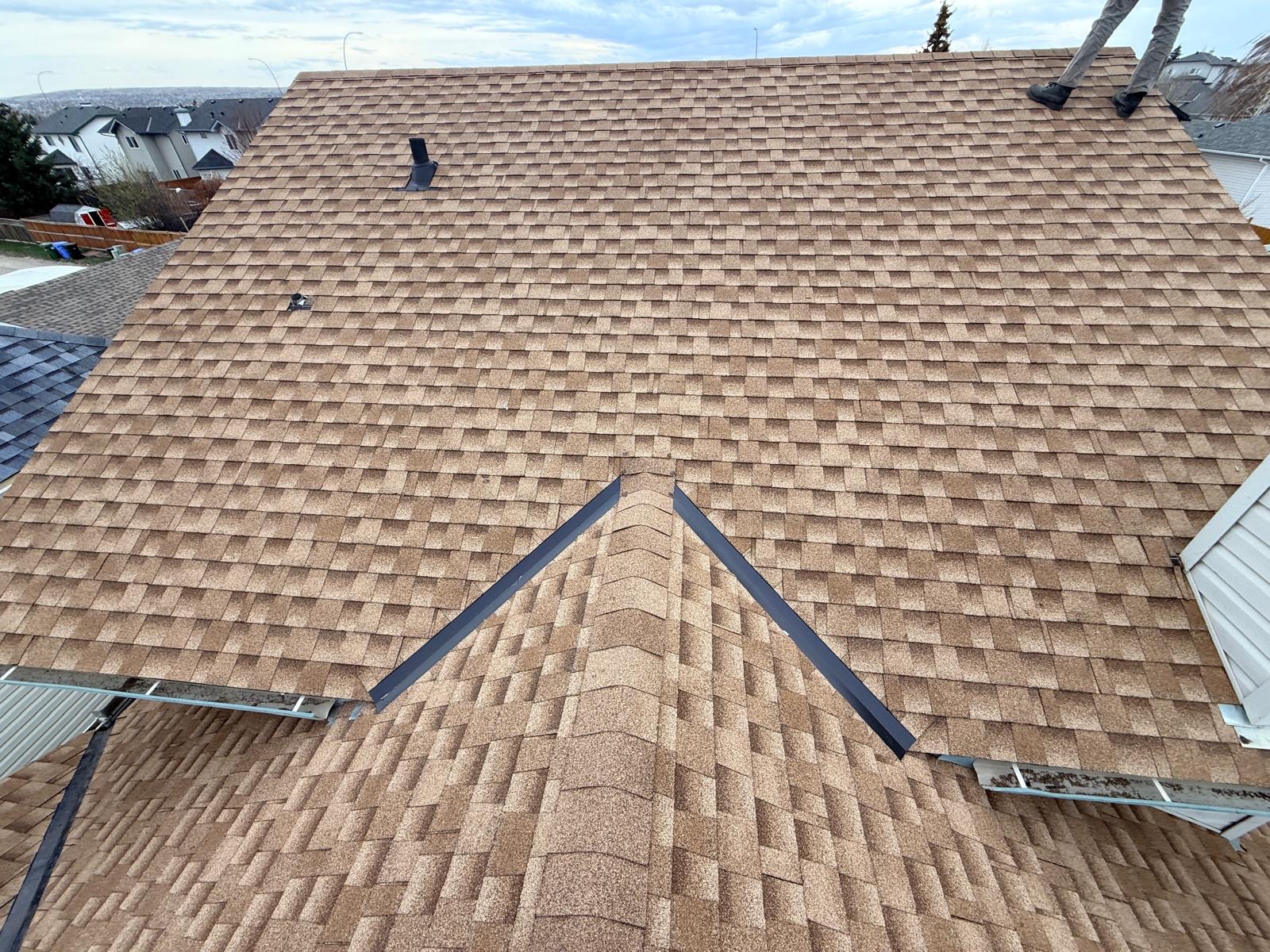
A shingle roof that cannot breathe cooks itself from underneath and builds ice along its own edge. Both of those get blamed on the shingles, and neither is caused by them. Ventilation is a chain, and the chain fails at whichever link is missing.
Air gets in at the eave
Through the soffit, along the underside of the roof. If the vents are painted shut, stuffed with insulation, or the boards have gone soft, nothing else in the system does anything at all.
It travels up the underside of the deck
Carrying heat and moisture away from the sheathing. This is what keeps the deck dry in winter and stops the shingles baking from below in July.
It leaves at the ridge
Through ridge vent or roof vents sized to the intake below them. Exhaust without intake pulls air from the house instead of from outside, which is worse than no vent at all.
What happens when the chain is broken
A warm attic melts snow high on the slope, the meltwater runs down to the cold overhang and freezes there, and the ridge of ice that forms holds the next melt back under the shingles. No covering, in any material, solves that from the outside.
Because of that chain, a roof job is also a look at the intake and at where the water goes once it is off the roof. If the boards behind the eavestrough are soft, soffit ventilation and fascia is the page for it, and if the water is coming over the front of the trough instead of down it, that is eavestroughs and downspouts.
Four things wear an asphalt roof out here, and they wear it out faster than the brochure photographed in a milder province suggests.
Asphalt takes hail worse than metal does. A big enough stone knocks granules off and bruises the mat underneath, and a bruise is not a hole — it is a spot that will fail years earlier than the rest of the roof. Damage after a storm is worth looking for rather than waiting for.
A chinook can put a roof through a melt and a refreeze in a single day, and repeat it through the winter. Water that got into a seam expands every time it turns to ice. This is what opens laps and lifts edges.
Shingles seal to each other with a strip of adhesive that needs warmth to bond. Until that has happened, and anywhere it never happened properly, wind gets under the edge. Losses almost always start at a rake, a ridge or a previously repaired patch, not in the middle of a slope.
Ultraviolet light drives the volatiles out of the bitumen and the granules are what shields it. As granules go, the mat ages faster, and the roof reaches the point where it is brittle rather than worn.
If hail is the reason you are reading this, how metal and asphalt compare in hail sets the two materials side by side properly, and standing seam and metal roofing covers the alternative if you are weighing it. We are not going to make that argument here — asphalt is the right answer on plenty of houses, and both pages say so.
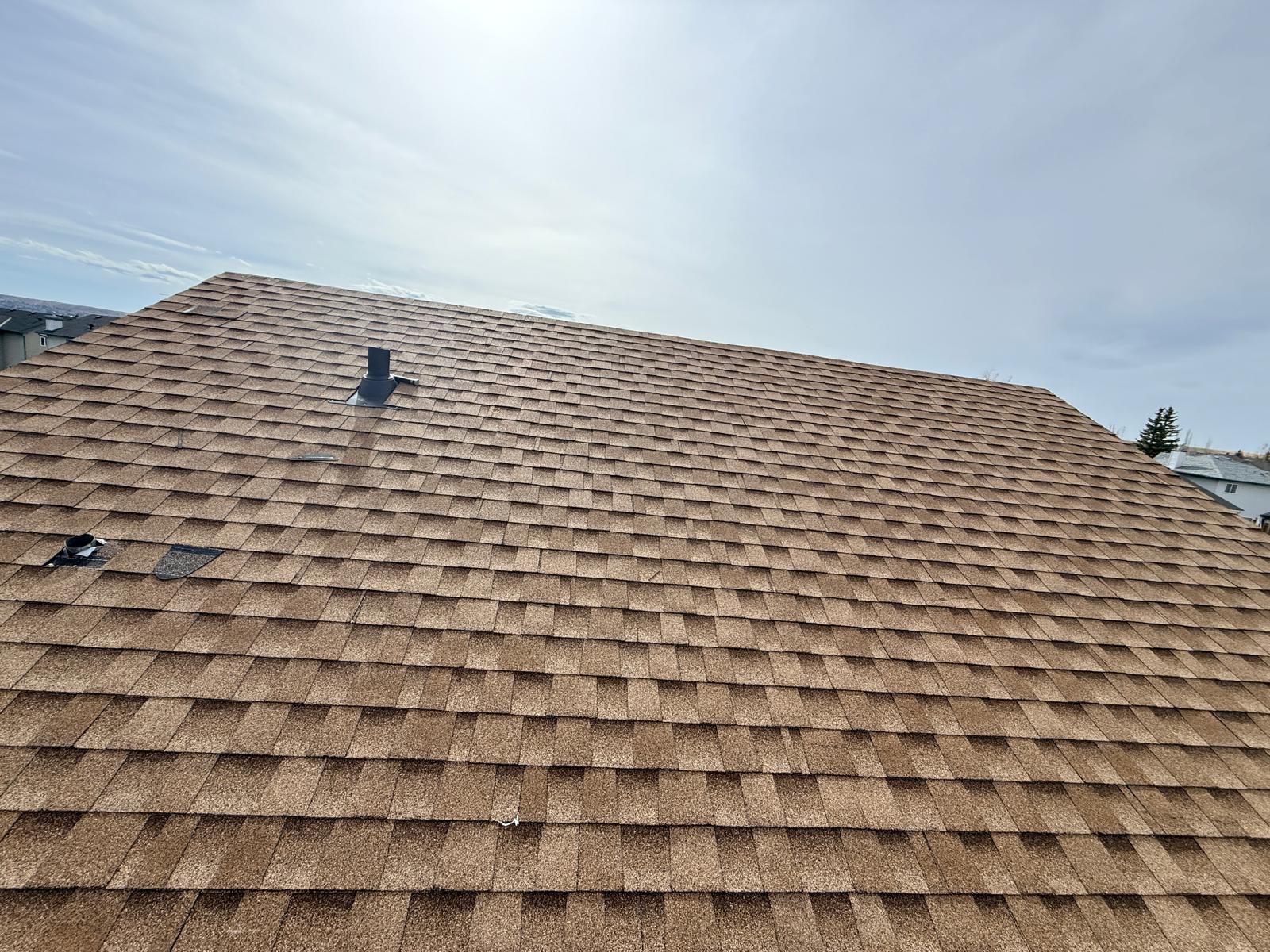
We repair roofs as well as replace them, and we will come out for a small job. That is worth saying plainly, because a lot of roofing companies quietly will not, and homeowners end up replacing a roof that had years left in it because nobody would come and fix four shingles.
Usually a repair
Past repairing
The honest test is arithmetic rather than opinion. If the damage is local and the rest of the roof has years in it, repair is the cheaper answer and we will say so. If we would be patching a roof that is going to need replacing inside a couple of seasons, spending money twice is the worse outcome, and we will say that too. What we will not do is quote a replacement for something that needs a repair.
A roof is a hard thing to shop for: the quotes look alike, the work is finished before you can inspect it, and the difference between a good job and a bad one shows up years later. Six things are worth asking any roofer in Alberta, us included. Our answers are on this page, but the questions work on everybody.
The order matters less than the fact that all of it happens, and that you know which day you are on.
The measure
We come out, get on the roof where it is safe to, look into the attic where there is access, and go through what we find with you rather than emailing a number.
A fixed written estimate
Written down before anything starts, naming the product, the scope and what happens if the deck needs work. What we quote is what you pay.
A schedule you have in writing
Once the scope is agreed the timing goes in writing. We do not promise a date on a website; we commit to one once we have seen the roof.
Protecting the ground and the walls
Beds, windows, walkways and the driveway get covered before the first shingle moves. This is the step that separates a tidy job from an argument.
Tear-off and disposal
Everything off, into the bin, gone. Nothing goes back on the roof.
Deck inspection and repair
Walked and checked while it is bare. Anything soft is cut out and replaced, and you are shown it if you want to see it.
Underlayment, ice and water, flashings
Membrane over the whole deck, self-adhering membrane at the eaves and valleys, and new flashings at every penetration.
Shingles, ridge and ventilation
Laid to the manufacturer’s fastener schedule, then the ridge cap and the exhaust vents.
Magnet sweep and cleanup
The magnet goes over the lawn, the beds and the driveway, more than once, before anyone leaves.
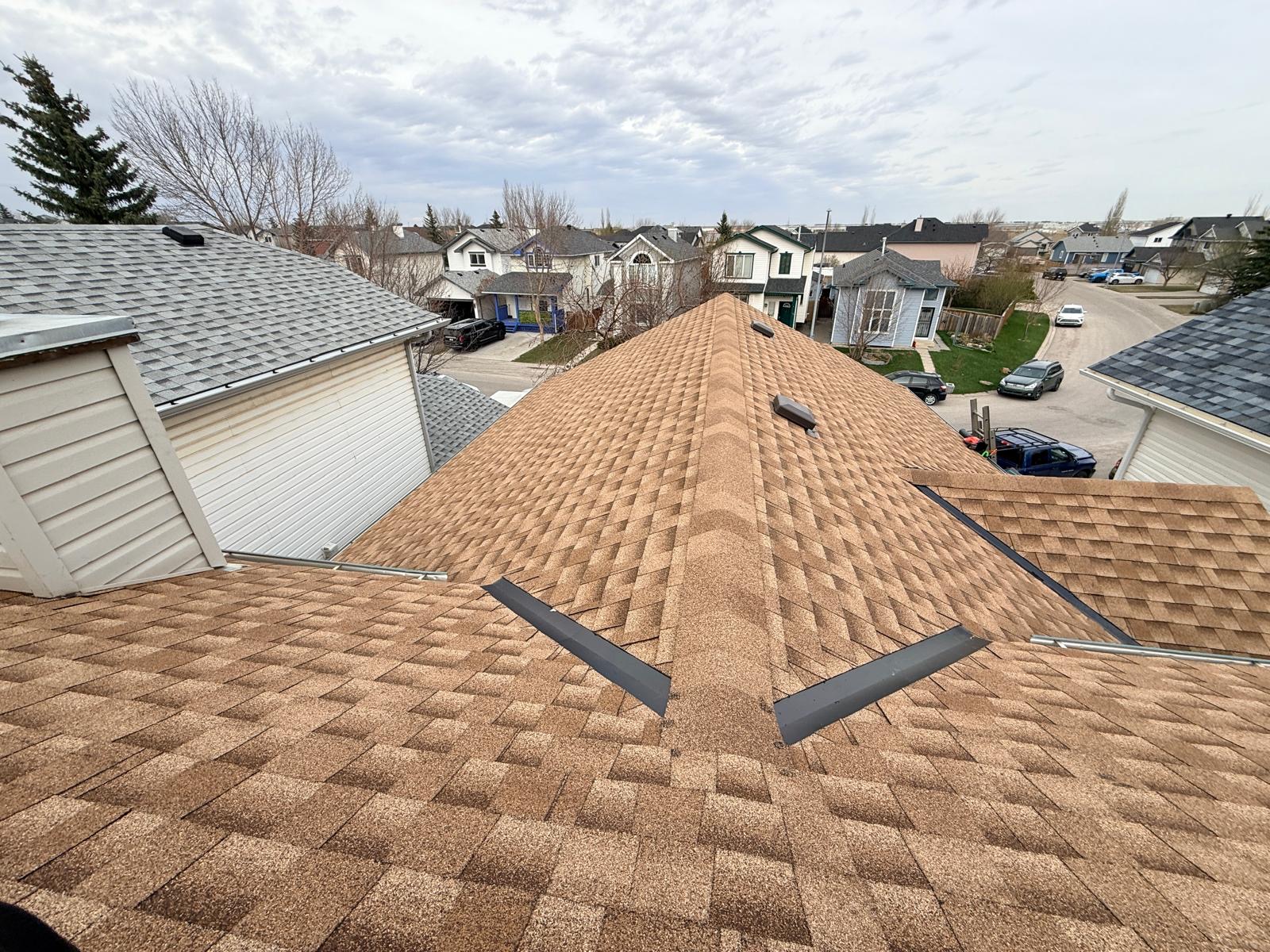
We do not put prices on the website. A roof is priced off the roof, not off a page, and a number here would be wrong for most houses. What we can do is tell you what moves it, so nothing in the estimate arrives as a surprise.
Pitch changes everything about the labour. A walkable slope and a steep one of identical area are not the same job, because one of them needs staging and fall protection before a single shingle moves.
Valleys, dormers, skylights, chimneys, stacks and vents. Every one of them is a flashing detail, and details are where the hours go. A plain gable is the cheapest roof shape there is.
One layer, two, occasionally three. It changes the tear-off, the bin and the disposal, and it is not always knowable before we look.
Where a bin can sit, how far material has to be carried, what is under the eaves that has to be protected, and how tight the lot is.
The one unknown on every roof. It is handled as a stated allowance and a measured extra, approved by you before the work is done.
Three-tab or laminated, the underlayment and membrane specified, the ventilation being added or replaced.
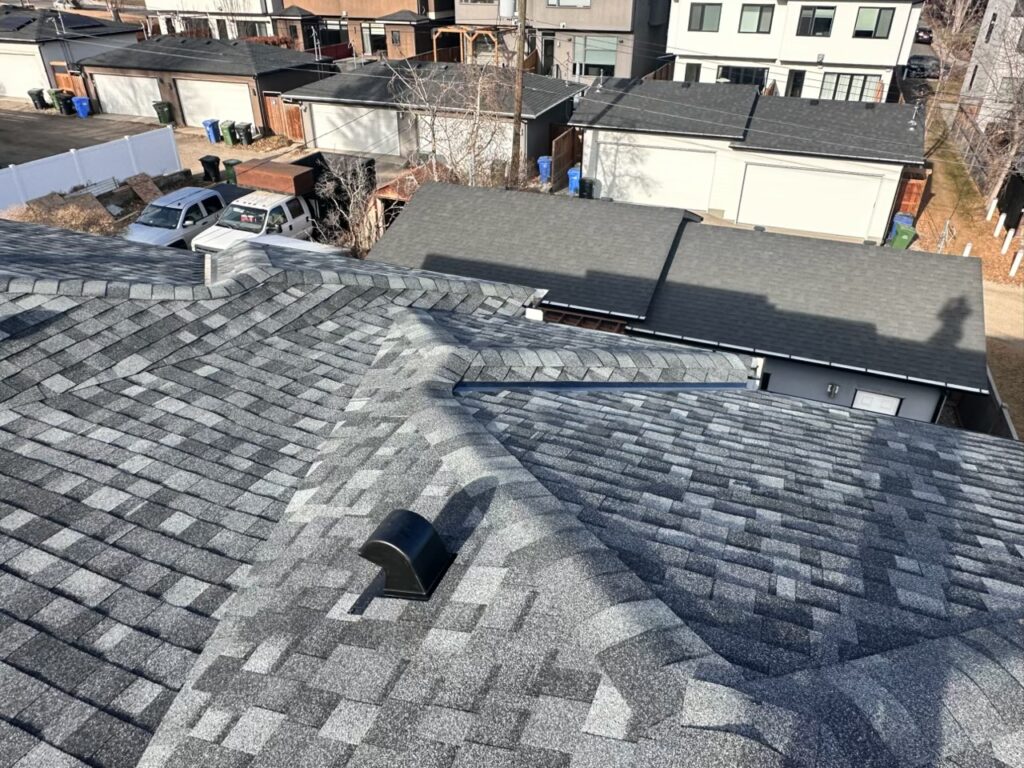
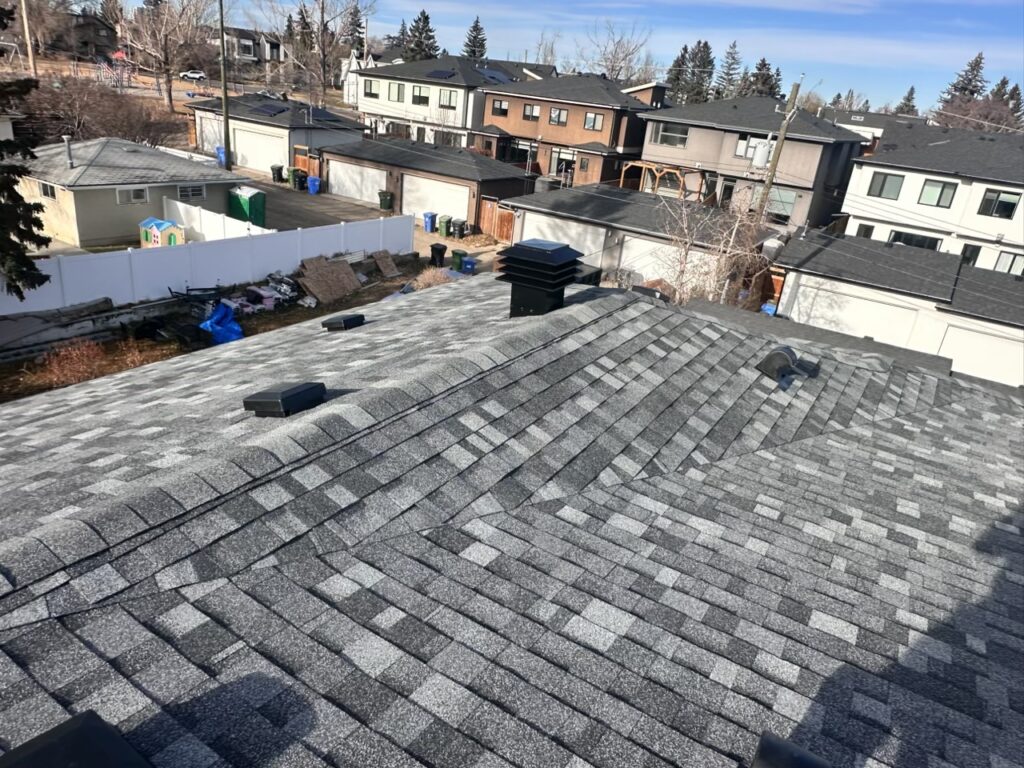
Everything comes off, every time, and the deck is inspected while it is bare. Soft sheathing is replaced, not nailed through. New flashings at every penetration, membrane at the eaves and valleys, and a fastener schedule that matches what the material warranty is written around. Intake at the soffit and exhaust at the ridge, treated as one system. We repair as well as replace, including small jobs, and we will tell you which one your roof actually needs. Our own crew, a fixed written estimate, and a magnet over the yard before we leave. Licensed, WCB-covered and insured, with a 10-Year Workmanship Warranty.
Want a fixed written quote for your house?
Two pieces worth reading if you are still weighing the decision.
Why Calgary homeowners are choosing metal roofing — the honest case for the alternative, including what it costs against shingles and who it does not suit.
7 signs your soffit and fascia need replacing — the intake half of the ventilation chain, and how to tell from the ground whether yours is working.
Doing this work at the same time as the walls? Our siding services in Calgary and Airdrie page compares James Hardie, vinyl and metal side by side, and explains what a complete exterior quote covers — the access and setup are paid for once when the jobs run together.
Send us a few details and we’ll prepare an honest, tailored quote.