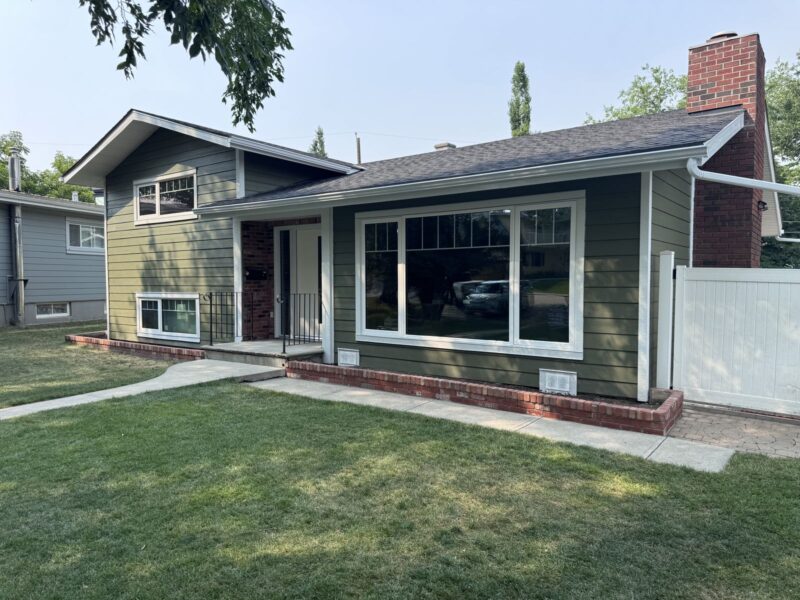
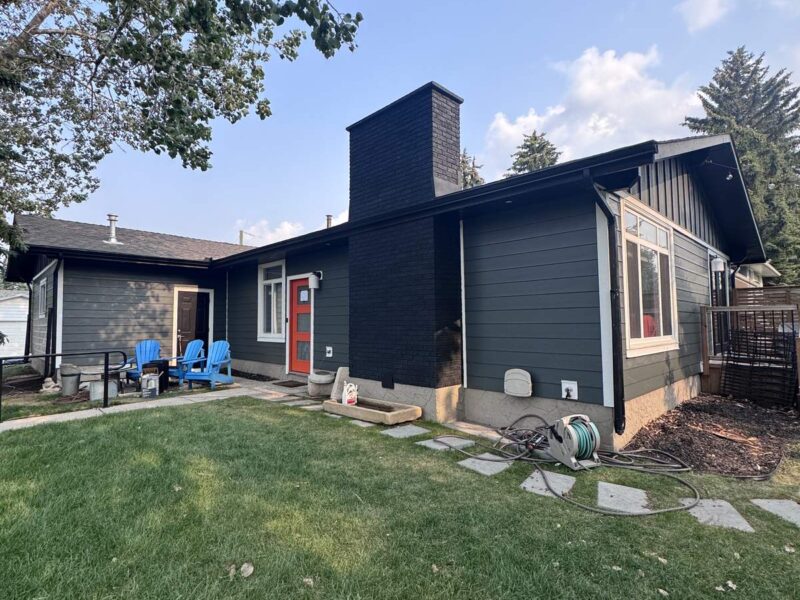
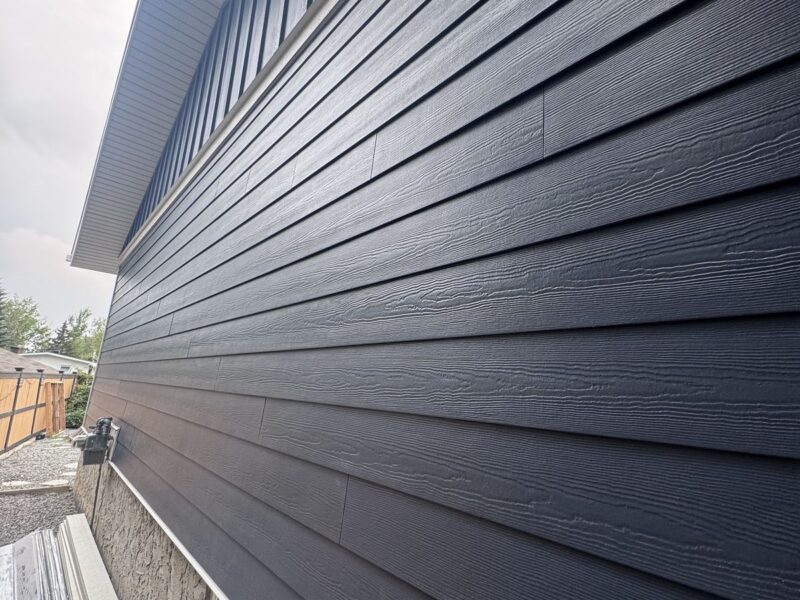
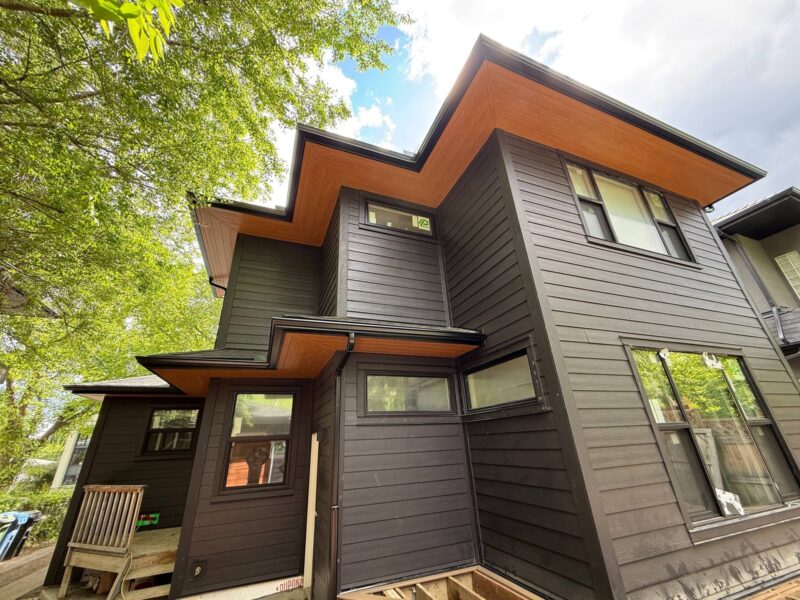
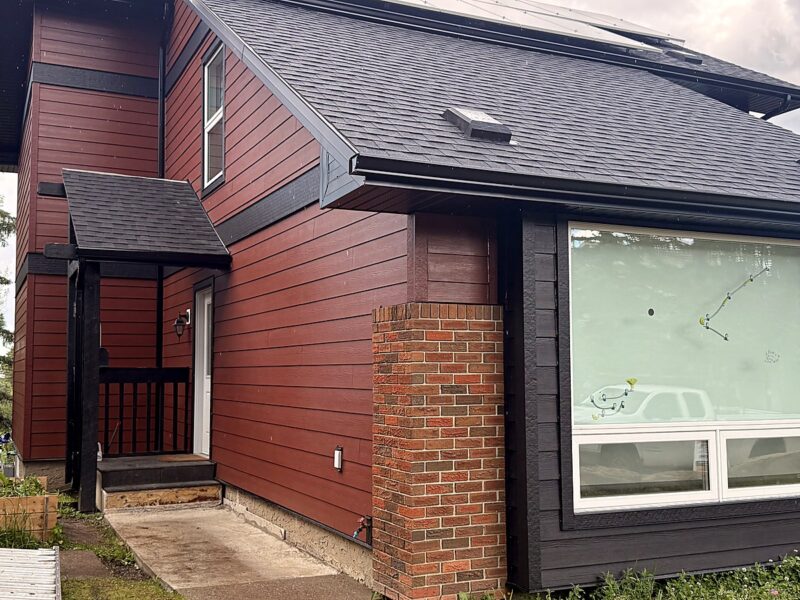
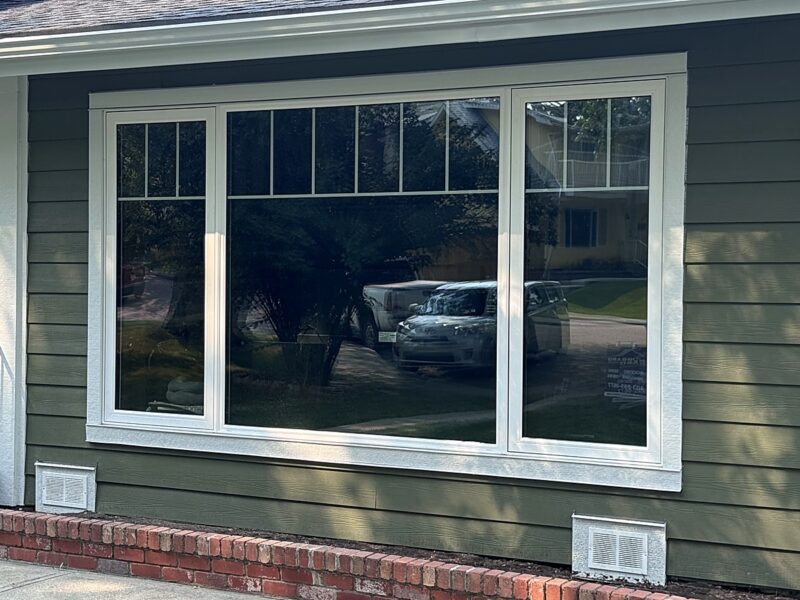
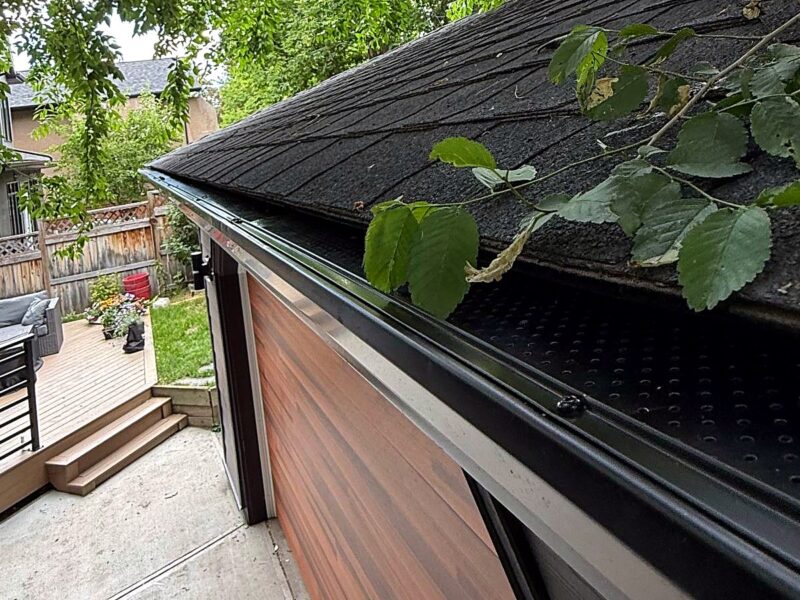
Hail and impact. This is the sharpest difference. Vinyl cracks or punctures on impact, and it does so more readily when it is cold. Fibre cement can chip at the surface but rarely fails all the way through. After a serious storm a vinyl elevation often needs whole sections replaced, while a fibre cement wall usually needs touch-up.
Cold and chinooks. Vinyl stiffens as the temperature drops, so an impact that would bounce off in July can crack it in January. It also expands and contracts a great deal, which is why it must hang rather than be pinned tight. Vinyl nailed too hard buckles visibly after a few chinook seasons. Fibre cement moves far less and is fastened solidly.
Cost and repairs. Vinyl costs less to buy and less to install, and most of that gap is labour rather than material. Its weakness is repair: a replacement panel has to match a colour that has been fading on your wall since it went up, and older profiles get discontinued. Fibre cement asks a little more upkeep but almost everything on it is repairable, and a damaged board is swapped and painted to match.
You do not have to choose one material for the whole house. Fibre cement on the front and the weather-facing elevations with vinyl on the rest is a common, sensible split, as long as it is planned before anything is ordered.
The full side-by-side breakdown is here: Hardie vs vinyl siding.