What James Hardie Siding Costs in Calgary — and What Actually Drives the Price
The line items
What Goes Into a Hardie Siding Quote
You have settled on James Hardie, and now you want a number. Every contractor you call says the same thing — it depends — which is true, and completely useless when you are trying to plan a budget. This article breaks down what actually sits inside a Hardie quote in Calgary and Airdrie, so you can read any estimate you are handed and tell whether it is complete.
Short answer. James Hardie siding is priced by the square foot of wall, installed, and the only accurate figure comes from measuring your house. The number moves with wall area, the number of storeys, how much old cladding has to come off, what the sheathing underneath turns out to look like, and how much trim work the design needs.
A siding quote is not one price. It is roughly a dozen line items bundled into a single number, and the gap between two estimates almost always comes down to which of those items one of them left out.
Here is what a complete Hardie quote covers:
| The board itself | lap, vertical panel, or shingle, primed or factory-finished, in the exposure you have chosen. Narrower exposure means more rows, more fasteners, and more labour per wall. |
|---|---|
| Trim and corners | window and door surrounds, outside corners, frieze, band board. This is where quotes quietly diverge, because trim in a cheaper material saves money on paper and shows up badly in three winters. |
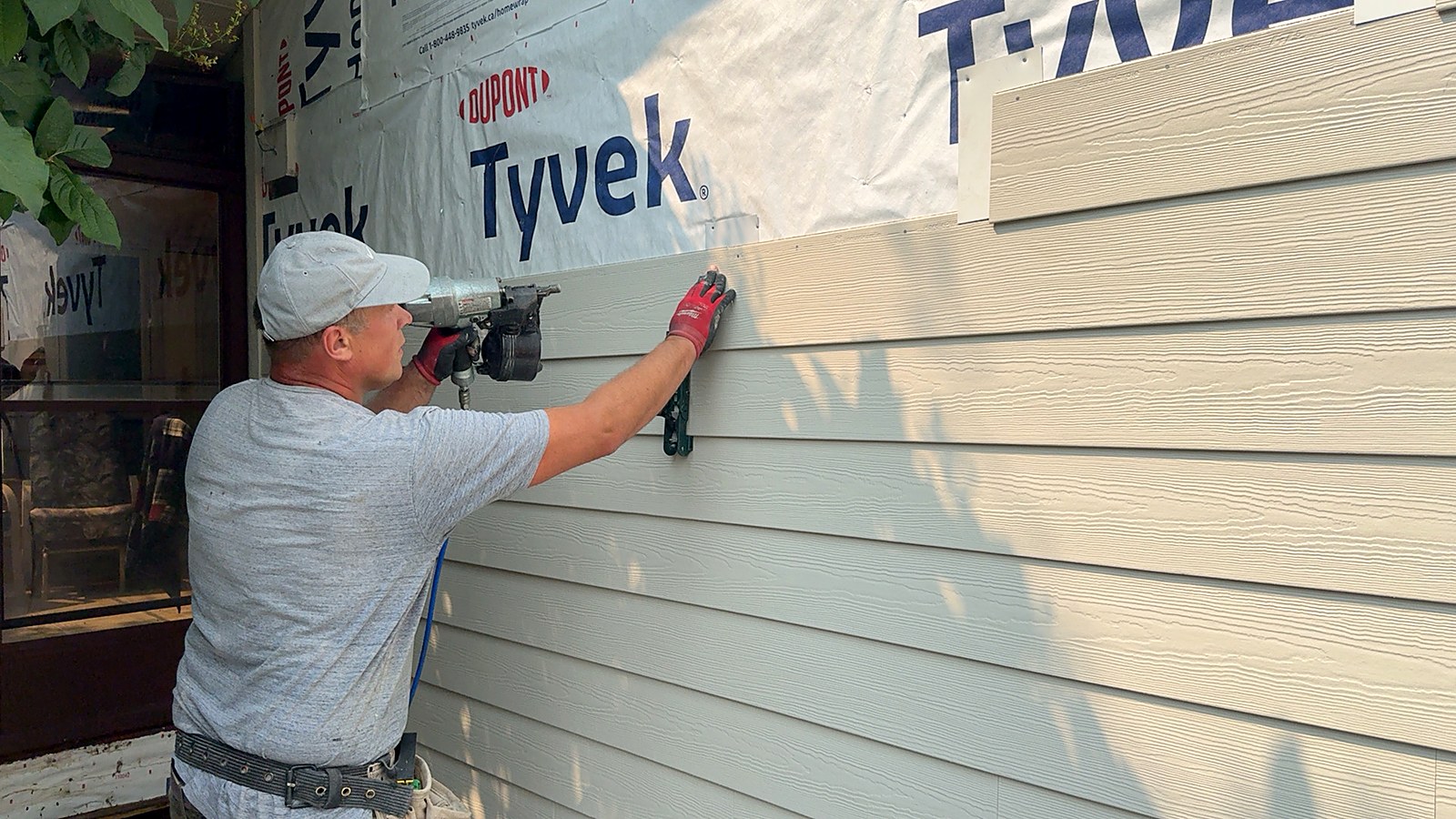
| Tear-off and disposal | pulling the old cladding, bagging it, hauling it, paying the dump fee. On an older Calgary bungalow this can mean two layers. |
| Sheathing repair | nobody knows what is behind the old siding until it comes off. A good quote carries a stated allowance and a per-sheet rate beyond it, not silence. |
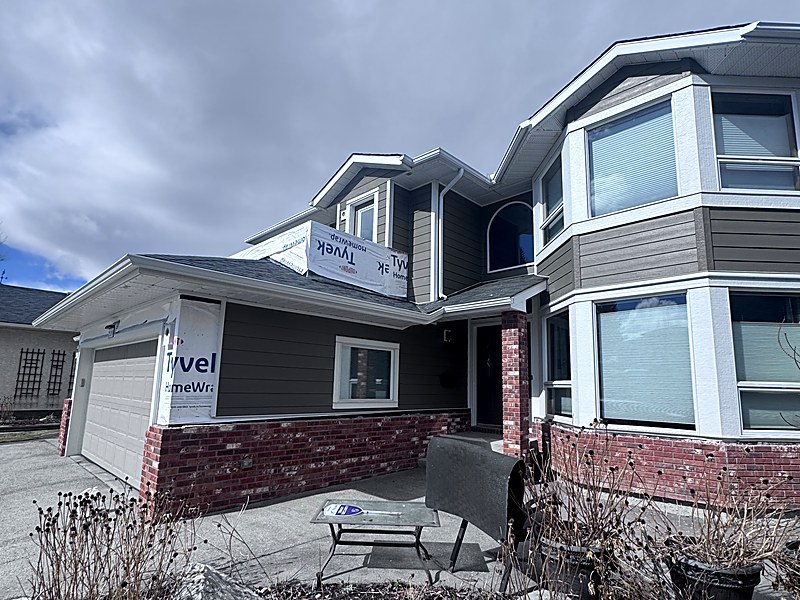
| Weather barrier | house wrap, seam tape, and flashing at every penetration. On a rainscreen assembly, the strapping as well. |
| Insulation | if you are adding it while the walls are open. This is the one moment in a house’s life when exterior insulation is inexpensive to add. |
| Fasteners and sealant | fibre cement has a specified fastener schedule and specified sealants. Both cost more than the generic equivalent, and both are the difference between a wall that holds and one that opens up at the joints. |
| Access | scaffolding, a lift, or staging on a tight lot. |
| Cleanup | including magnet sweeps for fasteners and offcuts, which matters more than it sounds if you have children or a dog. |
| Insurance and WCB coverage for everyone | Insurance and WCB coverage for everyone who sets foot on your property. |
When you compare two estimates, do not compare the totals. Line them up item by item and find the ones that appear on only one of them. That is your real difference.
Local reality
Why Calgary and Airdrie Pricing Differs From the National Average
Search “Hardie board cost per square foot” and you will get a national average. It will be wrong for your house, and here is why.
Most published averages are American, in US dollars. They carry US labour rates, US material pricing, and no exchange. Before you do anything with that number you are already well off.
Our working season is short. The reliable window for exterior work in this part of Alberta runs from roughly May to October. Everyone books into the same months, which compresses a year of demand into half a year. A quote made in February and a quote made in July are not made under the same conditions.
Our weather is hard on the details, not on the board. Chinooks push us through freeze-thaw cycling that much of the country sees a handful of times a season and we can see repeatedly in a single week. That cycling works on sealant joints, fastener holes, and every place where two materials meet. Doing those details properly takes time, and time is the largest single input in a siding price.
Wind exposure is real here. On the northern and western edges of Calgary and around Airdrie, houses sit on open ground with nothing upwind. Fastener spacing and edge detailing get tighter — not because a contractor is being fussy, but because the wall has to hold in gusts a sheltered infill lot never sees.
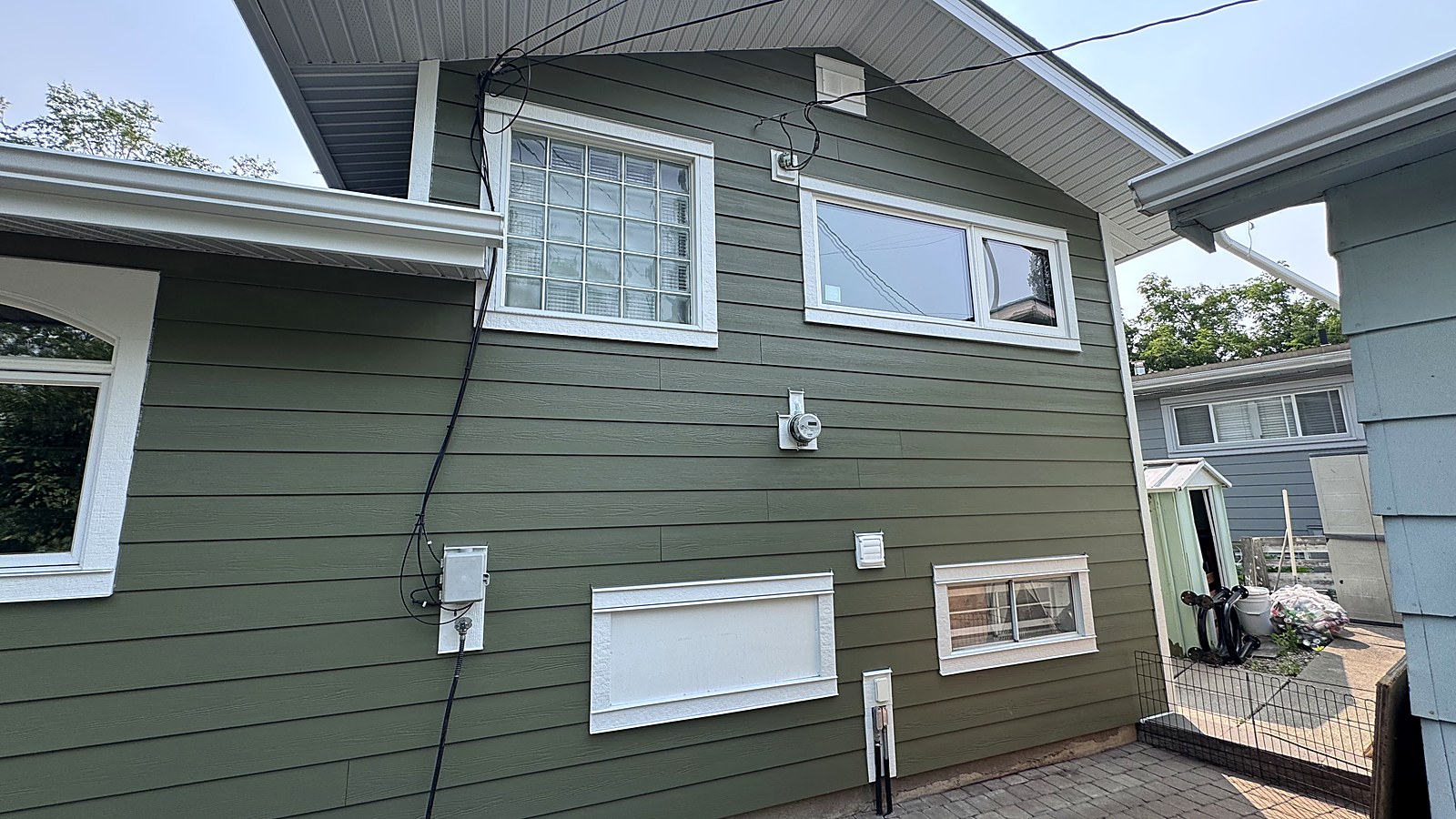
Hail is why many people are reading this at all. Fibre cement takes an impact considerably better than a vinyl panel, and after a hail summer the phone rings with homeowners who have watched their cladding get chewed up once and do not intend to repeat it.
And the houses themselves are taller. Two-storey homes with walkout basements are everywhere in this market. That is three storeys of wall on the back elevation, and it changes the access line on your quote before a single board is cut.
Hardie vs vinyl
Hardie vs Vinyl — Where the Money Difference Actually Shows Up
Homeowners usually assume the gap between Hardie and vinyl is a material gap. It is mostly a labour gap.
Fibre cement is heavy. It needs specific blades, dust control, and generally two people on a wall where vinyl needs one. It does not flex into place — cuts have to be right the first time. Every one of those facts adds hours, and hours are what you are actually paying for.
What you get back for it is worth naming plainly. Fibre cement does not soften in summer heat or go brittle at minus thirty. It does not melt from a neighbour’s fire pit. It holds a factory-applied colour far longer than a painted surface holds paint. And it takes a hailstone far better than vinyl does.
Vinyl is not a bad product. It is the right answer on plenty of houses and plenty of budgets, and we install it. If you are still weighing the two, we wrote a longer comparison in Hardie board vs vinyl siding, and the vinyl siding page covers what that installation involves.
The honest framing is this: Hardie costs more up front and buys you a longer interval before you think about your walls again. Whether that trade is worth it depends on how long you plan to own the house.
What to watch
Red Flags in a Low Quote
A cheap quote is not automatically a bad quote. But a cheap quote is always cheap for a reason, and the reason should be written down somewhere. Watch for these.
WHAT A COMPLETE QUOTE SHOWS
- Every line item priced separately, so you can compare like with like.
- A sheathing allowance with a written per-sheet rate.
- Trim in the same material as the board.
- An access line where the house needs staging or a lift.
- A written scope, signed before anything starts.
- A WCB clearance letter on request.
- A deposit sized to materials, not to most of the job.
RED FLAGS IN A LOW QUOTE
- No tear-off or disposal line. Either it was forgotten, or somebody is planning to side over what is already there. Going over old cladding hides the sheathing you most need to look at.
- “Assumes existing sheathing is sound.” Nobody can assume that before the wall is open. What you want instead is a number — an allowance for so many sheets, and a stated rate beyond it.
- Trim in a different material than the board. Vinyl or wood trim against fibre cement will not weather at the same rate, and the joint between them is exactly where water gets in.
- No access line on a two-storey. Somebody is planning to do a full second storey off ladders. It gets done faster and it gets done worse.
- A verbal scope. If the work is not written out, there is nothing to compare against when the job is half finished and a change comes up.
- No WCB clearance letter. If a worker is hurt on your property and the contractor has no coverage, that exposure can land on you. Ask for the letter — it takes one email to produce.
- A deposit that covers most of the job. Materials have to be paid for, and that is fair. A deposit far beyond the material order is not about materials.
How we quote
What You Get From Roof Bros
We come out, measure the walls, look at what is behind the old cladding where we can, and put a fixed written quote in your hands. What we quote is what you pay. If we open a wall and find rot, you hear about it with a photo before anything is decided — not on the final invoice.
We are licensed and WCB covered, and the clearance letter is available on request. You get photo updates as the job moves, which matters when the work is happening on a wall you cannot see from the ground.
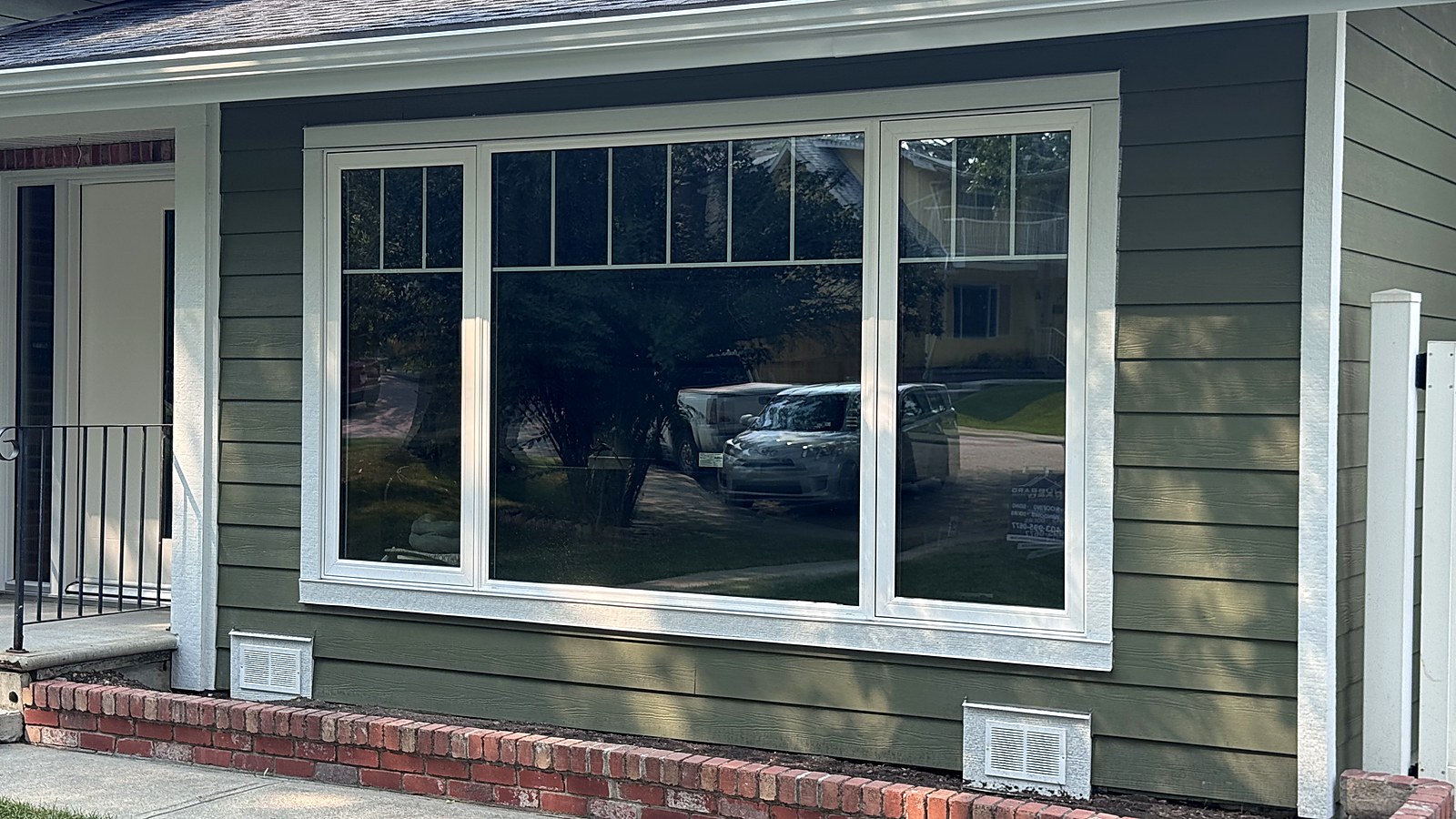
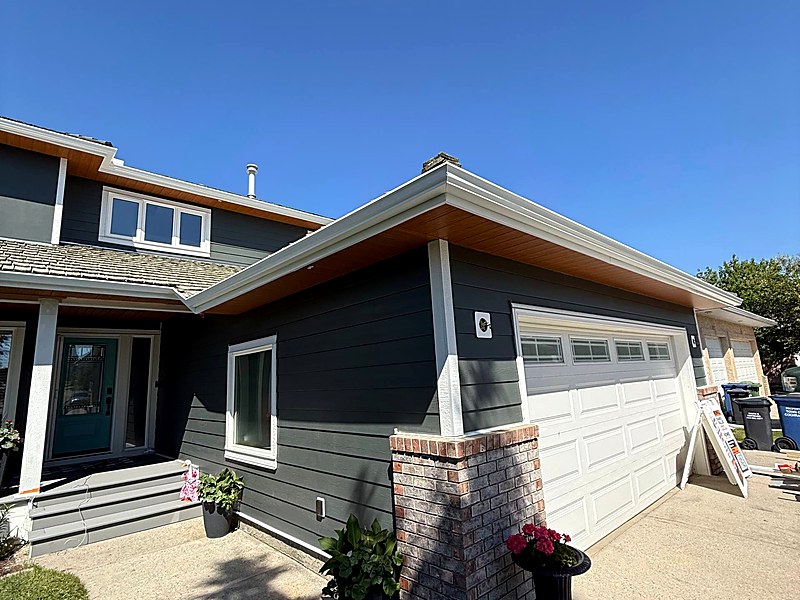
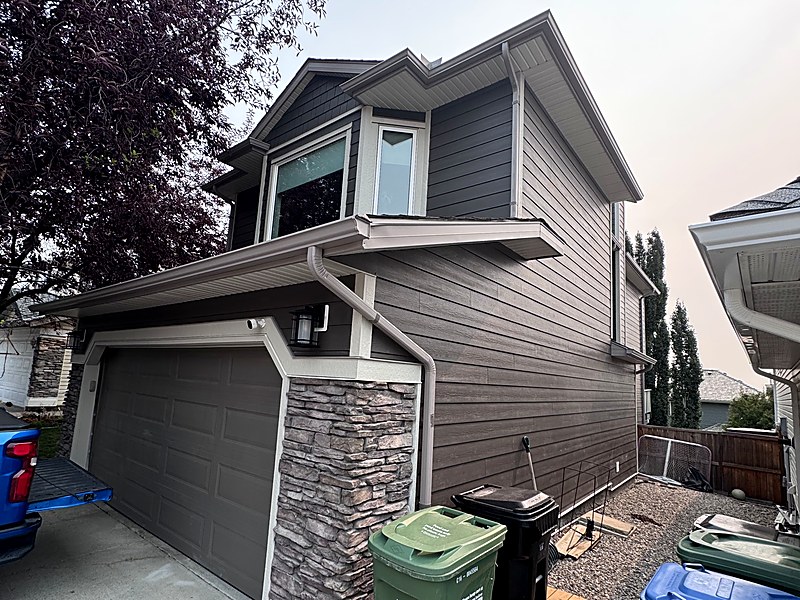
You can look at finished James Hardie siding installation work, and a broader set of completed siding projects, before you decide anything.
We are not going to quote you a return-on-investment percentage either. The figures circulating online were measured in other markets, and pasting them onto a house in Airdrie does not make them true.
When you want a real number instead of an average, get a free written estimate.
FAQ
Frequently Asked Questions
How much does James Hardie siding cost in Calgary?
It is quoted per square foot of wall, installed, and the spread is wide because the work behind the board varies so much. Wall area, number of storeys, how much old cladding comes off, the condition of the sheathing and the amount of trim detail all move the number. The only accurate figure comes from an on-site measure.
Why will no contractor give me a price over the phone?
Because the two things that move a siding price most — access and what is behind the old cladding — cannot be seen from a phone call. A number given blind is either padded to cover the unknown or low enough that it will change later. Neither helps you plan.
Is Hardie siding worth the extra cost over vinyl?
It depends how long you plan to own the home. Hardie costs more up front, mostly in labour, and buys better hail and fire performance, better colour retention, and a longer interval before the walls need attention again. On a house you plan to sell in two years, that trade is harder to justify.
What is usually missing from a cheap siding quote?
Most often the tear-off and disposal, an allowance for sheathing repair, and access staging on anything above one storey. Trim quietly downgraded to a cheaper material is the other common one. Compare estimates line by line rather than by total.
Can Hardie siding be installed over existing siding?
It can be done in some situations, but it means nobody looks at the sheathing or the weather barrier underneath. On a re-side that is the part most worth seeing. We would rather pull the old cladding and show you what is behind it.
Does Hardie siding need painting?
Not if you choose a factory-finished product — the colour comes on the board, and the finish carries its own warranty document worth reading. Primed board is painted after installation. The factory finish costs more up front and holds colour longer under Alberta sun exposure.
What happens if you find rot once the old siding is off?
You get a photo and a number before we carry on. Sheathing repair is priced per sheet in the original quote, so there is a rate already agreed rather than a figure invented on the spot. Nothing gets covered up without you seeing it first.
What time of year should I book siding work in Alberta?
The reliable window runs from roughly May to October. Booking in late winter usually gets a better place in the schedule than calling in July, when everyone is trying to get exterior work done at once.
Next step
Book a Free Measure
From the blog
More guides for Calgary homeowners
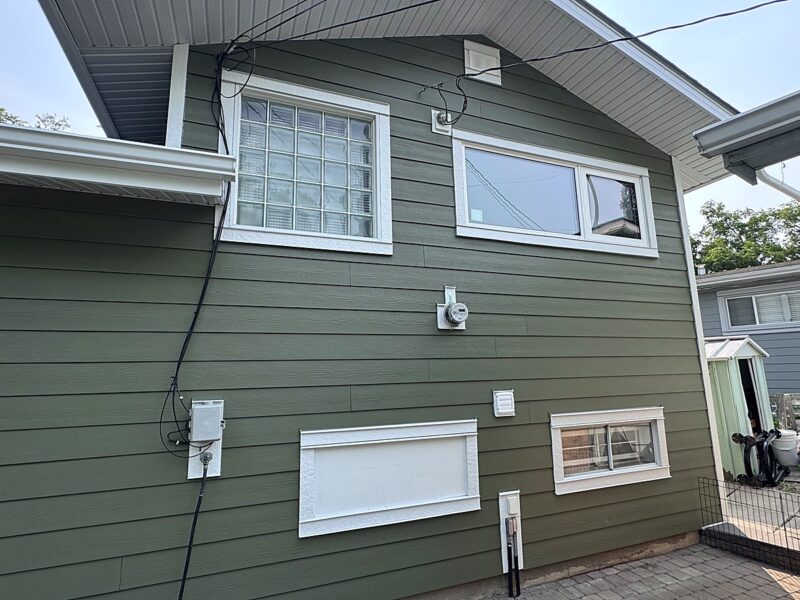
7 Signs Your Siding Needs Replacing (Alberta Homes)
Siding rarely fails all at once. Seven signals that the wall behind your cladding is taking water, and the plain difference between…
Read article
What Vinyl Siding Costs in Calgary and Airdrie
Vinyl siding is priced by the square foot of wall, installed. Here is every line that belongs in a quote, what moves…
Read article
Is Metal Roofing Really Hail-Resistant? What Alberta Homeowners Should Know
Metal roofs resist hail better than shingles, but they can dent. What Alberta hail actually does to metal and what UL 2218…
Read article