7 Signs Your Soffit and Fascia Need Replacing (Alberta Homes)
The job they do
What Soffit and Fascia Actually Do
Soffit and fascia are the two parts of a house nobody thinks about until water is coming through a bedroom ceiling. They sit at the roof edge, out of sight from where you normally stand, doing two jobs that only become visible when they stop.
Here is how to catch the failure a year early, while it is still a trim job and not a roof and ceiling job.
Short answer. Peeling paint, soft or sagging boards, birds getting into the eaves, stains on upstairs ceilings and ice dams every winter are the clearest signs. In Alberta the freeze-thaw cycle does most of the damage. By the time rot is obvious from the ground, the board behind it is usually gone.
Fascia is the vertical board running along the roof edge. It caps the ends of the rafters and it is what your eavestroughs are screwed to. Every litre of water coming off that roof is hanging off the fascia.
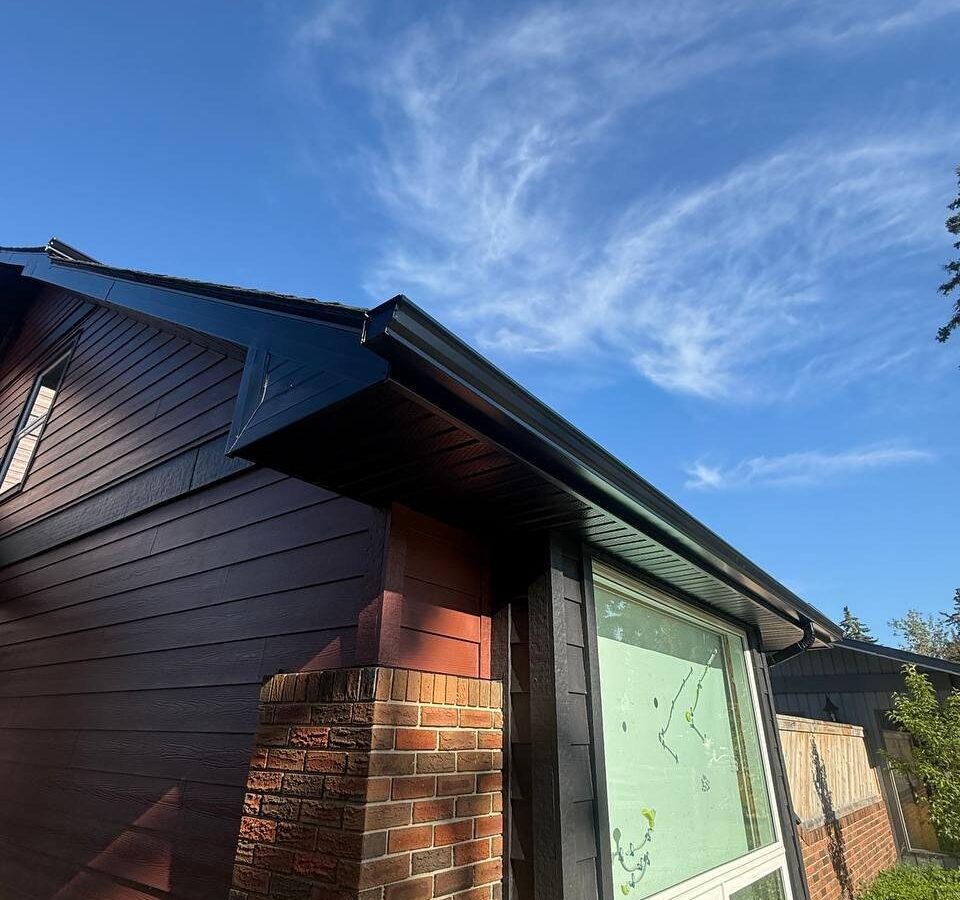
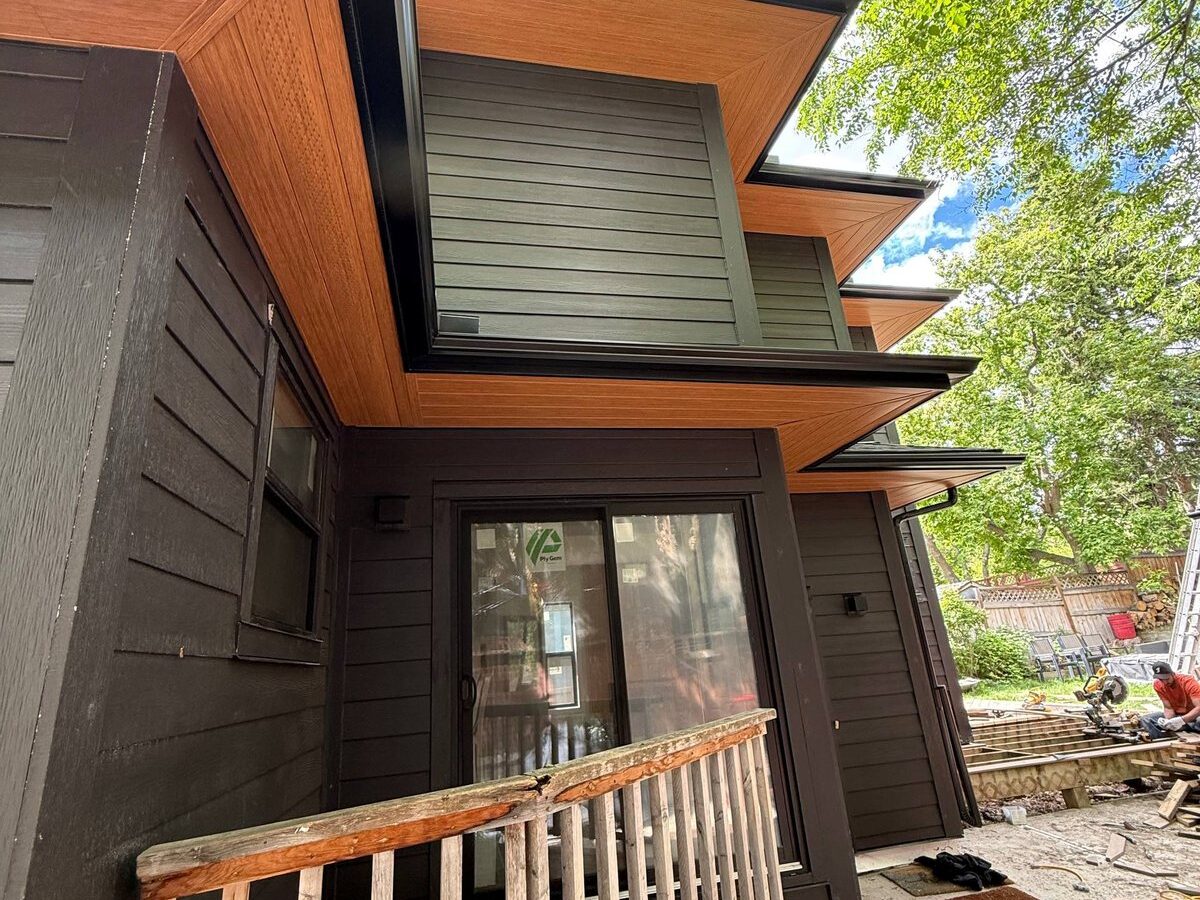
Soffit is the panel closing in the underside of the roof overhang. It is not decorative. It is the intake side of your attic ventilation: air enters through the soffit vents, travels up under the roof deck, and exits at the ridge.
Which leads to the part homeowners rarely connect. Blocked or damaged soffit does not just look bad — it stops the attic breathing. A roof deck with no airflow beneath it collects moisture, and moisture in an attic through an Alberta winter is how you get frost on the nails, damp insulation and, eventually, a stain on the ceiling below.
The 7 signs
The 7 Signs
1. Peeling, bubbling or blistering paint
Paint fails from behind when the board underneath is holding moisture. If it is peeling on the fascia and nowhere else on the house, the board is wet — and it has been wet for a while.
2. Soft or spongy board
The definitive test. Press a screwdriver handle against the fascia. Sound wood pushes back. Rotten wood gives. If it gives, replacement is not optional, and the rot is always larger than the soft patch you found.
3. Sagging, waviness or a line that is no longer straight
Sight along the roof edge from the corner of the house. It should be a straight line. Dips and waves mean the fascia is no longer holding its fasteners, usually because the wood behind them has softened — and your eavestroughs are hanging off that.
4. Birds, wasps or squirrels getting into the eaves
Animals do not chew through sound soffit. They find a gap that already exists. If something is nesting up there, there is an opening, and the opening has been letting weather in for longer than it has been letting birds in.
5. Stains on upstairs ceilings, or frost in the attic
Look at the ceiling in upstairs corners, particularly where the ceiling meets an outside wall. Then look in the attic on a cold morning: frost on the nail points or damp insulation near the eaves means the ventilation path through the soffit is blocked or broken.
6. Ice dams, every single winter
Some ice at the roof edge in this climate is normal. The same house forming a serious ice ridge every winter is telling you something, and blocked soffit ventilation is one of the two usual causes — the warm attic melts snow from underneath, the water runs down to the cold edge and freezes there. That ice then works its way back under the shingles.
7. Visible gaps, missing panels, daylight from below
Stand under the overhang and look up. You should see continuous panel. Gaps, drooping sections, panels out of their channel or daylight showing through mean the system is already open to the weather.
Alberta winters
Why Alberta Winters Are Hard on Soffit and Fascia
Freeze-thaw, repeatedly, in one season. A chinook can lift the temperature above zero and drop it back within a day. Every cycle expands and contracts whatever moisture is sitting in a wood fascia board, and that is what opens paint, loosens fasteners and eventually breaks the board down.
Meltwater with nowhere to go. Snow on the roof melts from underneath in a warm spell, runs to the cold edge and refreezes. That cycle puts standing ice and water directly against the fascia, week after week.
Wind. Chinook winds get under loose soffit panels and lever them out of their channels. One loose panel becomes three.
Repair or replace
Repair or Replace — How to Decide
Repair makes sense when the damage is genuinely localised — one board on one elevation, sound wood either side, and the rest of the system in good condition.
Replacement makes sense when you find rot in more than one place, when the fascia has softened along a run rather than at a spot, when the material is at the end of its service life anyway, or when patching would leave you with mismatched sections along the most visible line on the house.
The honest test: if a contractor is going to set up ladders or scaffolding anyway, the marginal cost of doing the whole elevation instead of one board is small. Most of the expense is access and mobilisation, not material.
The work
What Replacement Involves
The sequence is straightforward: eavestroughs come off, old soffit and fascia come off, any rotten rafter tails or sheathing get repaired, new fascia goes on, new soffit is fitted with the correct ventilation opening, then the eavestroughs go back.
Notice what has to happen in the middle of that list. The eavestroughs come off either way.
Which is why doing the eavestroughs at the same time is meaningfully cheaper than doing them separately later. You pay once for setup, once for access, once for the crew day. Splitting the two jobs across two years means paying for all of that twice — and reinstalling old troughs onto brand-new fascia, only to take them off again when they fail.
If your eavestroughs are already showing their age, this is the moment. We wrote about what that looks like in 5 signs your eavestroughs need replacing.
One more timing note: hail damages soffit, fascia and eavestroughs before it shows anything on the shingles. If your last storm was recent, worth reading how to spot hail damage on your roof before you book anything.
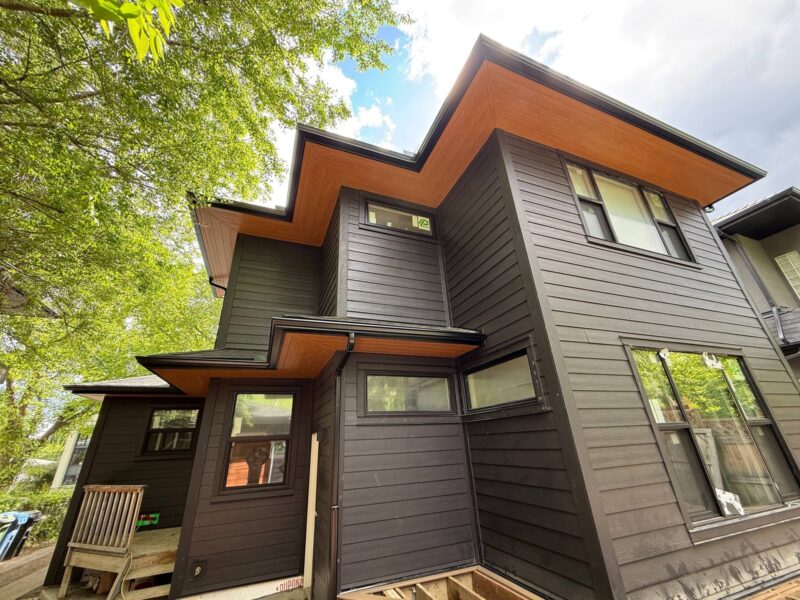
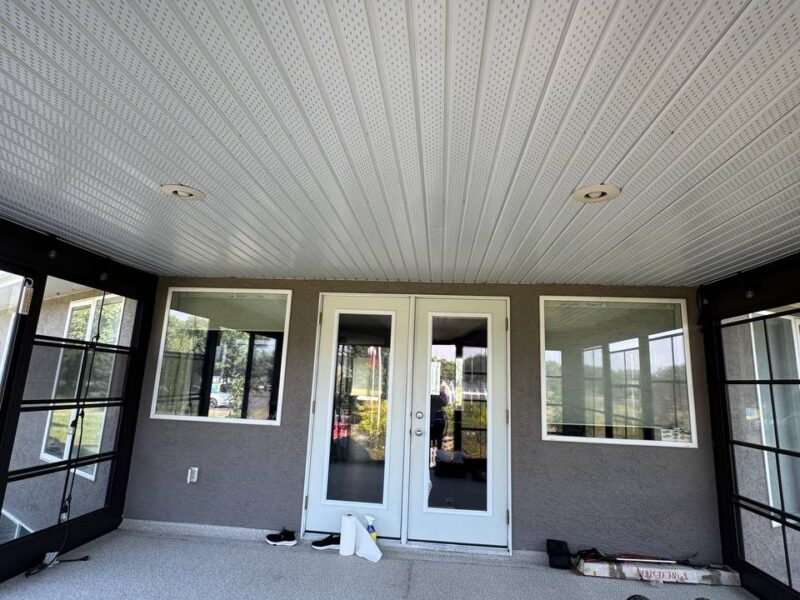
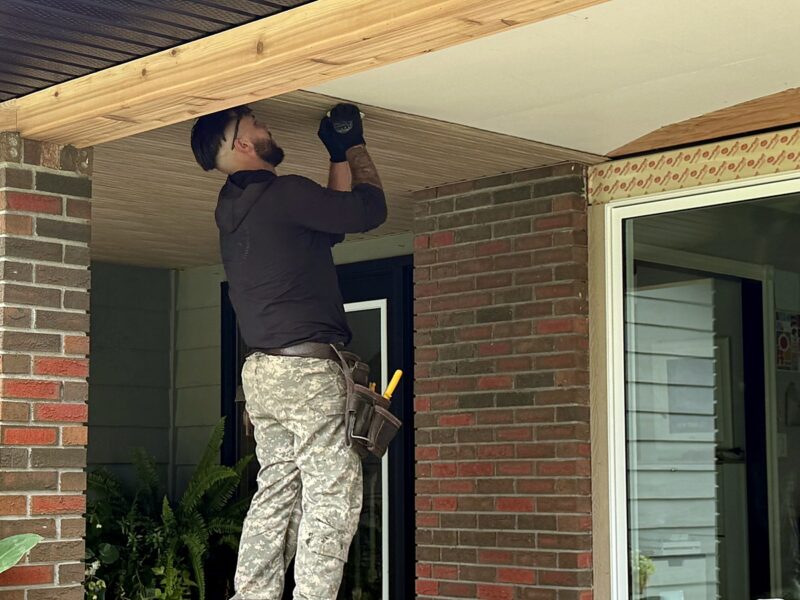
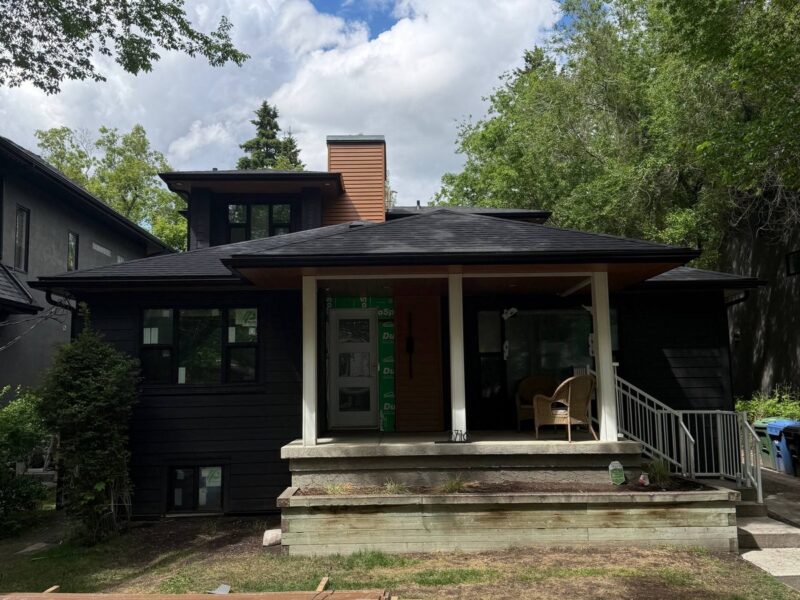
When it is past the point of a patch, our soffit and fascia repair and replacement page covers what comes off, what goes back on, and what the quote includes.
FAQ
Frequently Asked Questions
How much does soffit and fascia replacement cost?
It depends on the linear footage around the roof edge, the height of the house, how much rot is found behind the old material, and whether eavestroughs are being replaced at the same time. Because access is a large part of the cost, the price per foot drops considerably when the whole house is done at once.
Can soffit and fascia be replaced in winter in Alberta?
Some of it, in the right conditions. But the work involves opening the roof edge, and doing that with snow load on the roof and short daylight hours is neither fast nor pleasant. Unless something has failed and is actively letting water in, this is work that belongs in the May-to-October window.
Do I need to replace the eavestroughs at the same time?
Not necessarily, but you should price it. The eavestroughs have to come off for the fascia work regardless, so if they are near the end of their life, replacing them now costs far less than doing it as a separate job later.
Why are birds getting into my soffit?
Because there is already a gap. Birds and wasps do not create openings in sound soffit — they find damaged panels, sections that have dropped out of their channel, or holes where a fastener pulled through.
How long does a soffit and fascia replacement take?
On a typical single-family home it is a short job compared with siding or roofing — the crew is working along the roof edge rather than over whole walls. Access, house height and how much rot turns up behind the old boards decide the rest. You get a written timeline with the quote.
Do I need to replace soffit and fascia when I replace the roof?
Not always, but it is the cheapest moment to do it. The roof edge is already open, the crew is already up there, and the fascia is easiest to inspect honestly with the shingles off. If it is borderline, doing it then costs a fraction of doing it as its own job later.
Can damaged soffit cause problems inside the attic?
Yes, and that is the reason it matters beyond appearance. Soffit vents are the intake for attic ventilation. Block them, crush them, or leave gaps that let birds and insulation shift, and airflow stops — which shows up as moisture on the underside of the deck and, in winter, as ice at the roof edge.
Next step
Seeing any of these on your house?
From the blog
More guides for Calgary homeowners
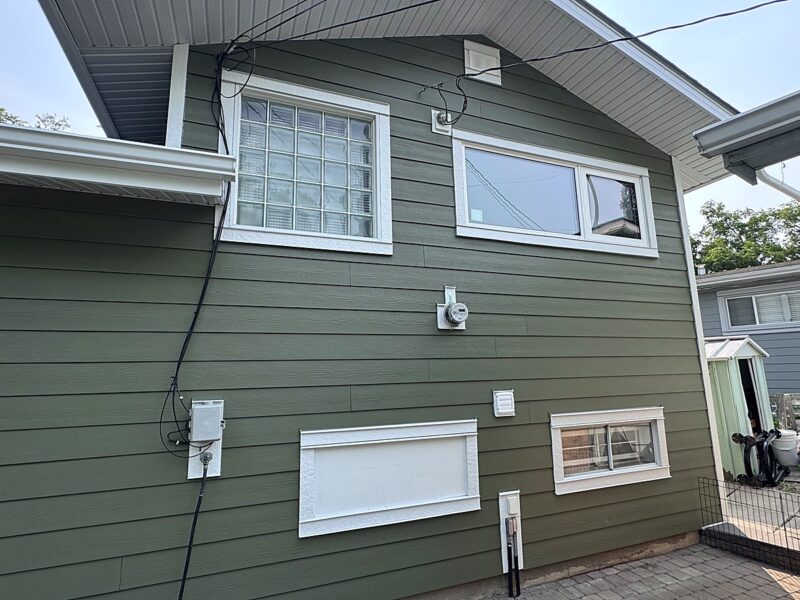
7 Signs Your Siding Needs Replacing (Alberta Homes)
Siding rarely fails all at once. Seven signals that the wall behind your cladding is taking water, and the plain difference between…
Read article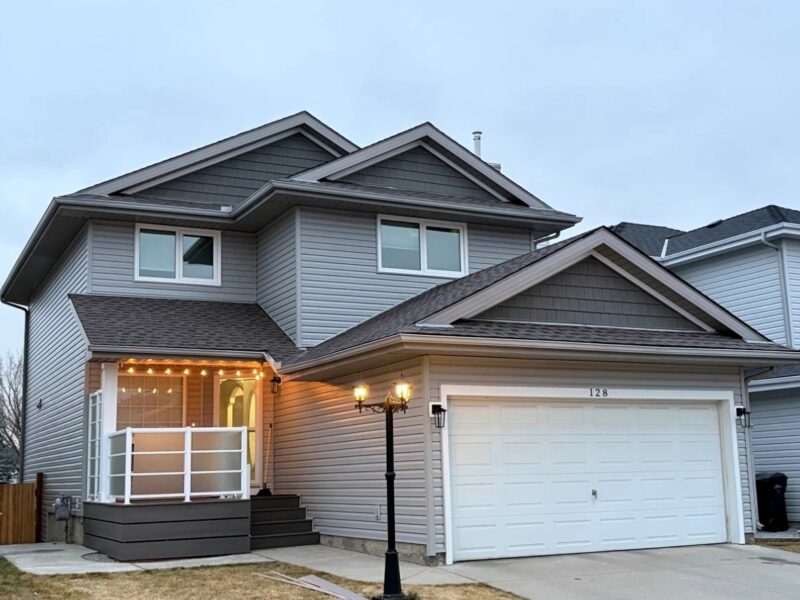
What Vinyl Siding Costs in Calgary and Airdrie
Vinyl siding is priced by the square foot of wall, installed. Here is every line that belongs in a quote, what moves…
Read article
Is Metal Roofing Really Hail-Resistant? What Alberta Homeowners Should Know
Metal roofs resist hail better than shingles, but they can dent. What Alberta hail actually does to metal and what UL 2218…
Read article