What Vinyl Siding Costs in Calgary and Airdrie
The short answer
Why Nobody Can Price Vinyl Siding Over the Phone
Short answer. Vinyl siding in Calgary and Airdrie is priced by the square foot of wall, installed — not by the square foot of floor, and not by the number of bedrooms. The material is the small part of the number. The wall behind it is the big part, and nobody can see that wall from a phone call.
Every week somebody asks us what vinyl siding costs on a two-storey house in Calgary. It is a fair question and it deserves a real answer, so here it is: the panel is one line on a quote with a dozen lines, and the lines that move the total are the ones you cannot see from the curb. Until somebody has walked the house with a tape and lifted a corner of the old cladding, any figure you are handed is a guess wearing a quote’s clothing.
That matters more than it sounds. A low number given over the phone does not stay a low number. It becomes the figure you budgeted around, and then somebody arrives, opens a wall, finds soft sheathing behind a north-facing corner, and the conversation starts again — this time with you feeling misled and the crew feeling rushed. We would rather have the awkward conversation before the scaffolding goes up.
The honest version of the answer is a method, not a price. Below is exactly what goes into a vinyl siding quote in this market, what makes two houses on the same street land in different places, and how to read two quotes that do not match. If you want the equivalent breakdown for fibre cement, we wrote that one separately: what James Hardie siding costs in Calgary.
The line items
What Actually Sits Inside a Vinyl Siding Quote
A complete quote is boring to read and easy to compare. Every one of these is real work, real material, or real disposal, and every one of them costs something whether or not it appears on the page you were given.
| The panel itself | Profile and grade: double 4, double 5, dutch lap or board-and-batten, in a standard or a heavier gauge. Narrower exposure means more rows, more fasteners and more labour across the same wall. |
|---|---|
| Tear-off and disposal | Taking the old cladding off, bagging it, and paying to put it in a bin. On a full re-side this is a real cost and it belongs on the page, not in somebody's margin. |
| Sheathing repair | Whatever is found once the wall is open. Sound sheathing costs nothing extra. Soft plywood behind a leaking window costs time, material and a carpenter. |
| Weather barrier | House wrap, taped and lapped properly, plus flashing at windows and doors. This is the layer that actually keeps water out. The siding is the raincoat over top of it. |
| Rigid or fanfold insulation | Optional on some houses, sensible on many Alberta ones. It changes the thickness of the wall assembly, which in turn changes the trim details around every window. |
| Trim and accessories | Starter strip, J-channel, outside and inside corners, F-channel, utility trim, window and door surrounds. A house with a lot of windows is mostly trim work, and trim is slower than field panel. |
| Soffit and fascia | Very often replaced at the same time, because the eaves come apart anyway. Doing it later means paying twice for the same access. |
| Eavestrough removal and rehang | Troughs come down to get behind the fascia and go back up afterwards, or get replaced if they are already tired. |
| Access and staging | Ladders on a bungalow, staging or lifts on a two-storey with a walkout. Height is not a detail — it is a schedule. |
| Site protection and cleanup | Covering decks, gardens and windows, and running a magnet over the yard at the end. Fasteners in a lawn are how a good job gets remembered badly. |
Notice what is not on that list: a fudge line. If a quote has one number and no breakdown, you are not comparing prices with anybody. You are comparing confidence.
What moves the number
Six Things That Change the Price of the Same House
1. Wall area, not floor area
Siding is bought and hung by the square foot of wall. A 1,600 square foot bungalow and a 1,600 square foot two-storey do not have the same amount of wall, and neither has the same amount of wall as a bi-level with a walkout. Add gables, dormers and a bump-out and the number climbs while the floor plan stays the same.
2. How many storeys, and how you reach them
Everything above the first storey is slower. Material goes up by hand or by lift, offcuts come down the same way, and safety setup takes time before a single panel is hung. This is the single biggest reason two houses with identical wall area come back with different numbers.
3. What comes off first
Old vinyl over sound sheathing is a clean tear-off. Cedar over strapping, stucco, or two layers of cladding that somebody sided over in the nineties is a different job with a different bin bill. We look under a corner before quoting for exactly this reason.
4. What the sheathing looks like
This is the line that surprises people, and it is the one nobody can price from the driveway. Rot around windows, at the base of walls, or on the weather side of the house is common in this climate and it has to be fixed before new siding goes on. Covering it up is cheaper today and much more expensive later.
5. Trim, colour and profile
A plain rectangle of a house with four windows is mostly field panel. A house with eleven windows, two gables, a chimney chase and a covered porch is mostly detail work. Darker colours and heavier profiles sit at a different point in the range than a standard light colour in a standard exposure.
6. When the work happens
Vinyl is temperature sensitive. It expands and contracts more than most cladding, so cold-weather installation needs different gapping and a slower hand. Work in the shoulder seasons books out fast in Airdrie and Calgary, and a job squeezed into the wrong week is a job that costs somebody something.
Comparing quotes
How to Read Two Quotes That Do Not Match
When two numbers are far apart, one of them is usually missing work rather than being generous. Here is what to look for on both pages before you decide anything.
WHAT A COMPLETE QUOTE SHOWS
- Wall area measured on site, with the number stated, so you can check it against the other quote.
- Tear-off and disposal priced as their own line.
- A named product line and profile, not just the word vinyl.
- Weather barrier and flashing described, not assumed.
- An allowance or a stated rate for sheathing repair, so a surprise has a price attached before it happens.
- Trim, corners and window surrounds counted, because that is where the labour hides.
WHAT A THIN QUOTE LEAVES OUT
- No tear-off line. Either it was forgotten, or somebody intends to side over what is already there — which hides the exact wall you most need to look at.
- No mention of the weather barrier. The barrier is the part that keeps the wall dry. Leaving it off the page usually means leaving it off the house.
- No sheathing allowance. Rot will still be found. The only question is whether the price for it was agreed in advance or invented mid-job.
- Trim rolled into a single word. Corners, J-channel and window surrounds are most of the finish work on a detailed house.
- No soffit and fascia decision. If the eaves are opening up anyway, not deciding now means paying for the same access twice.
- A number with no measurement behind it. If nobody measured, nobody knows — including the person who wrote the quote.
Alberta specifics
What Calgary and Airdrie Add to the Job
Cladding here does not get an easy life. Wind off the foothills, hail in July, chinooks that swing the temperature thirty degrees in a day, and a freeze-thaw cycle that runs all winter instead of once in spring. All of it lands on the same wall.
For vinyl specifically, three things follow. Panels have to be hung so they can move — nailed to allow slide, not pinned tight — because a panel fastened hard in January has nowhere to go in July. Fastener schedules matter more on exposed elevations, especially west and northwest walls that take the wind. And the layers behind the panel matter more here than in a mild climate, because wind-driven rain and blowing snow find every unsealed lap.
None of that changes the price of a box of siding. All of it changes how long the job takes and how it is detailed, which is where the money actually lives.
Hail deserves its own sentence. Vinyl can crack under a hard hit, and a cracked panel is a water path, not a cosmetic problem. If you are choosing between materials partly because of hail, read our comparison of fibre cement and vinyl before you decide — the honest answer depends on the elevation and the exposure, not on a slogan.
Choosing
Where Vinyl Makes Sense, and Where It Does Not
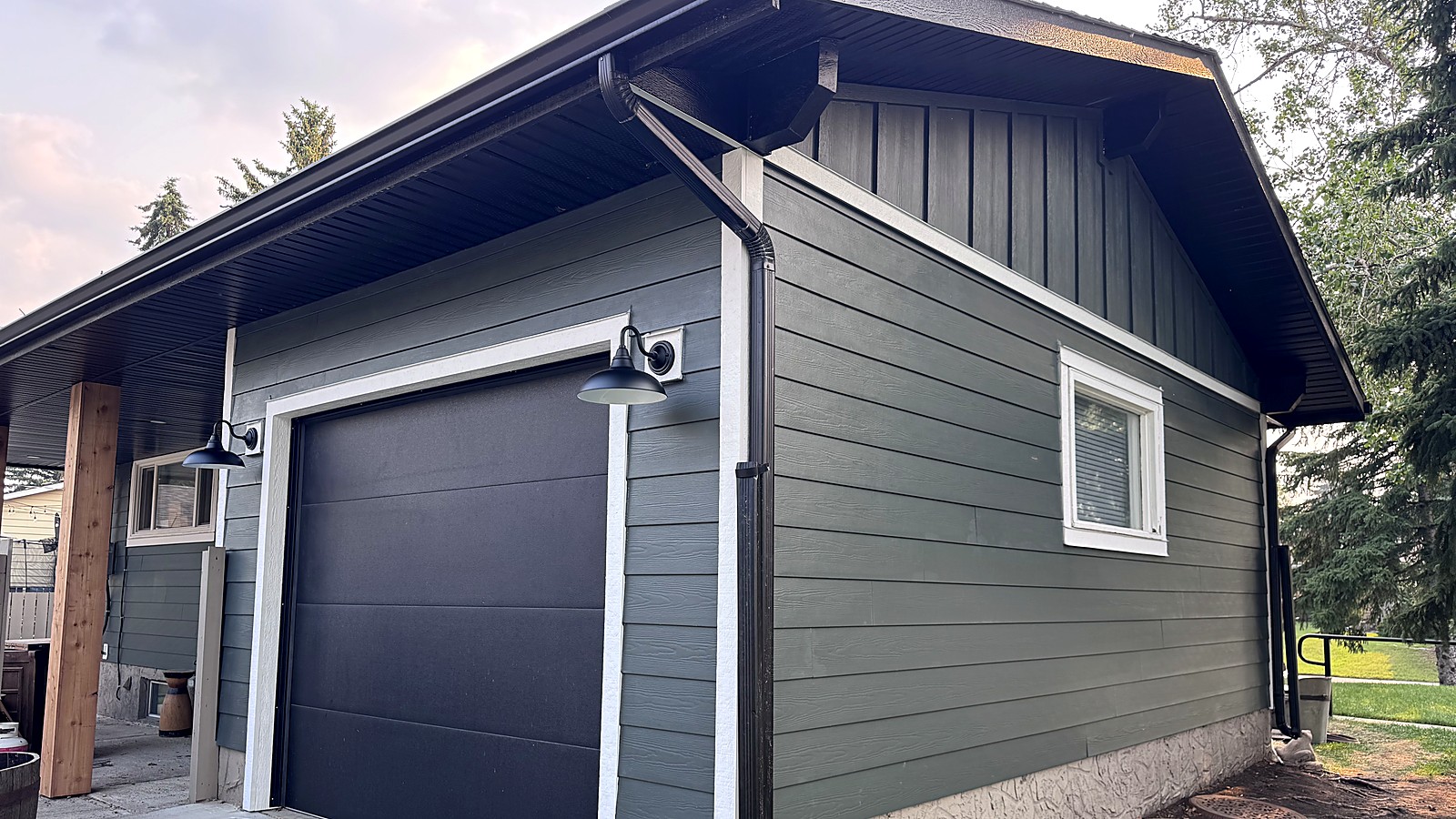
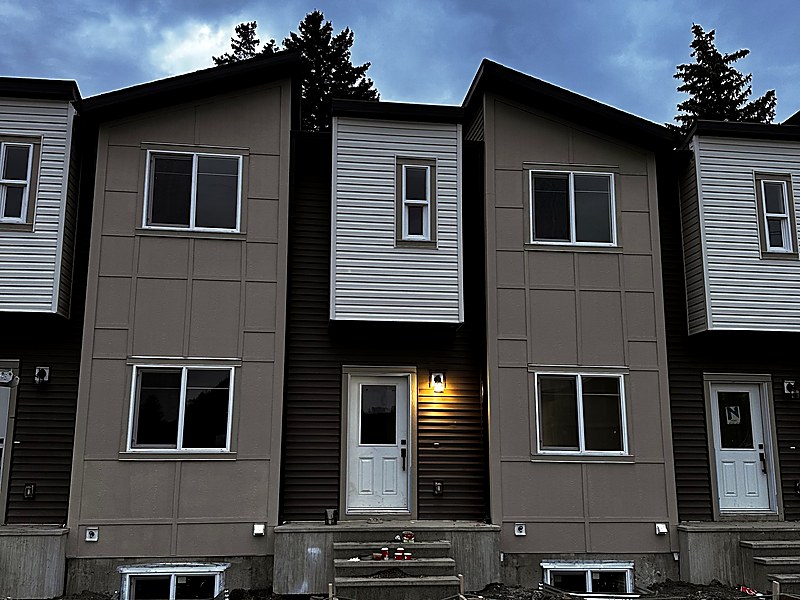
Vinyl earns its place on a lot of Alberta houses. It is quick to hang, it comes in a wide range of profiles and colours, it does not need painting, and on a straightforward elevation it gives you the biggest visual change for the smallest disruption. On rentals, on bungalows, on townhouse rows and on any project where the budget has to cover the whole envelope rather than one showpiece wall, it is often the right call.
It is a weaker choice where impact is the main worry, where you want a heavy shadow line and a thick board look, or where a specific architectural detail needs a material that can be cut and trimmed like wood. That is the conversation to have on site, in front of the actual wall, rather than in a comparison table.
Most of our work is siding rather than roofing, and most of it starts with the same walk-around. If you want the full picture of what we install and how the trades stack up, start at the siding overview, or go straight to the detail on vinyl siding. If the eaves are part of the plan — and on a re-side they usually are — the soffit and fascia page explains why doing them together costs less than doing them twice.
We install Gentek, Mitten and Royal. Which line goes on your house depends on the profile you want and what is actually in stock in the colour you have chosen, and that is a conversation worth having before anything is ordered.
Questions we get
Vinyl Siding Costs: Straight Answers
How much does vinyl siding cost in Calgary?
It is priced per square foot of wall, installed, and the spread is wide because the work behind the panel varies so much. Wall area, number of storeys, what comes off first, the condition of the sheathing and the amount of trim all move the number. That is why we measure on site instead of quoting from a photo — the measurement is free.
Is vinyl siding cheaper than James Hardie?
On most houses, yes, both in material and in labour, because vinyl is lighter and faster to hang. But the gap is smaller than people expect once tear-off, sheathing repair, barrier and trim are counted, since those lines are nearly identical whichever cladding goes on top. Our side-by-side comparison goes through the trade-offs.
Can you install vinyl siding over the old siding?
Physically, sometimes. It is rarely the right call. Siding over old cladding hides the sheathing, adds thickness that throws off every window and door detail, and traps whatever moisture is already in the wall. It also means nobody ever inspected the layer that keeps your house dry.
Do I need insulation under the new siding?
Not always, but a re-side is the one moment in the life of a house when adding it is straightforward, because the wall is already open. It changes the wall thickness and therefore the trim details, so it is a decision to make before ordering material rather than halfway through.
Does the colour affect the price?
It can. Darker colours and some premium finishes sit at a different point in a manufacturer’s range than standard light colours, and availability varies by line. Dark panels also absorb more heat, which is a real consideration on a south or west wall in an Alberta summer.
Can vinyl siding be installed in winter?
Yes, and it happens here every year. It has to be done with the temperature in mind: vinyl moves a lot, so gapping and fastening are adjusted for the conditions on the day. What it is not is faster — cold slows everything down, including the people.
How long does a full re-side take?
It depends on wall area, height and how much repair turns up once the walls are open. A straightforward bungalow is a short job; a detailed two-storey with a lot of trim is a longer one. We give you a schedule with the quote rather than a guess on the phone.
What brands of vinyl siding do you install?
Gentek, Mitten and Royal. Which one we recommend depends on the profile and colour you want and on what is actually available when you are ready to go, not on which brand pays for a display in a showroom.
From the blog
More guides for Calgary homeowners
7 Signs Your Siding Needs Replacing (Alberta Homes)
Siding rarely fails all at once. Seven signals that the wall behind your cladding is taking water, and the plain difference between…
Read article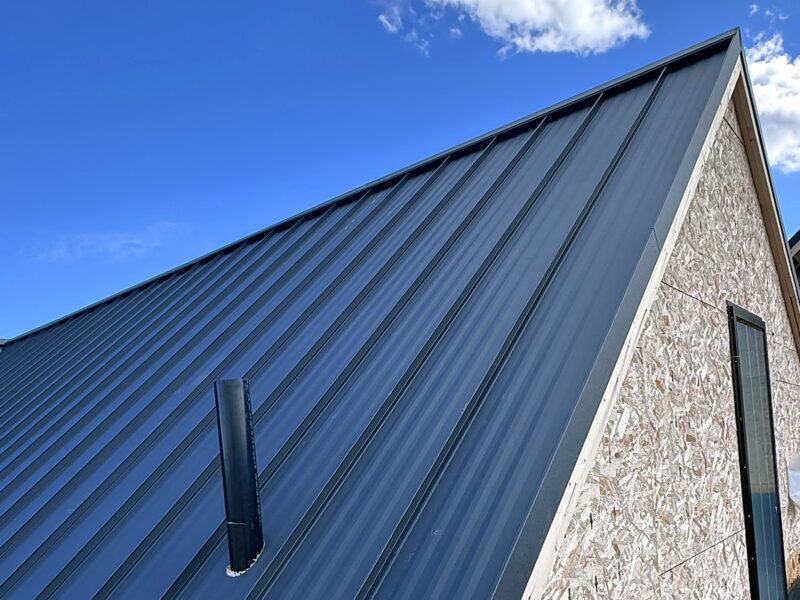
Is Metal Roofing Really Hail-Resistant? What Alberta Homeowners Should Know
Metal roofs resist hail better than shingles, but they can dent. What Alberta hail actually does to metal and what UL 2218…
Read article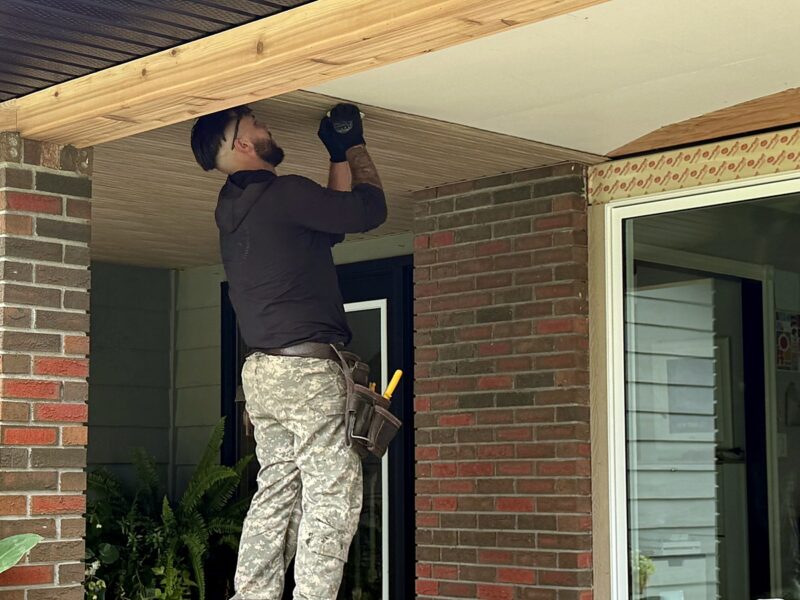
7 Signs Your Soffit and Fascia Need Replacing (Alberta Homes)
Peeling paint, soft boards, sagging, birds and ice dams: seven signs Alberta soffit and fascia are done, and what replacement involves.
Read article